
One Of North America's Least Visited National Parks Is A Remote Mountain Gem For Outdoor Fun
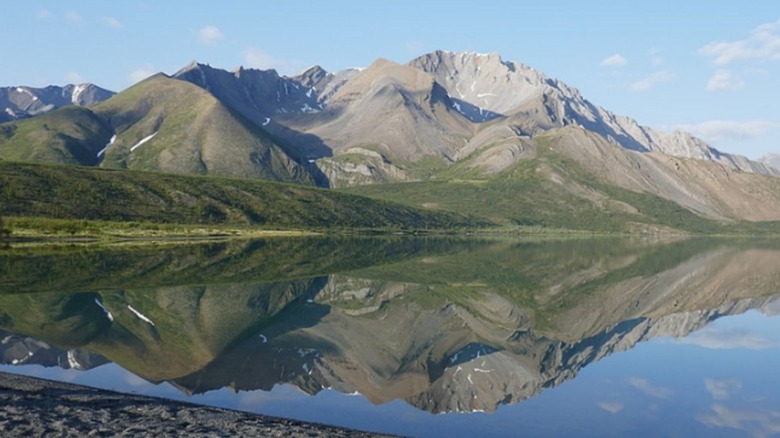
Like many other remote national parks that are difficult to reach, Nááts'įhch'oh National Park Reserve (pronounced "Nat-chee-oh") in Canada receives very few visitors throughout the year – just 103 were recorded in 2025. Located in the southwestern reaches of the Northwest Territories, not far from the Yukon border, the land here is a vast mountain wilderness, where high peaks and plateaus are a stark contrast to lush river valleys and stunted evergreen forests. Fast-flowing rivers carve a rocky path through the landscape, drawing dedicated adventure seekers keen to tackle the rapids, brave the mountainsides, and experience the spiritual power of a land where the Shúhtaot'ine have traveled for thousands of years.
A sacred place to the Sahtu Dene and Métis, who manage the park with Parks Canada, many of the place names are in the Dene Language. Nááts'įhch'oh means "the mountain that's sharp like a porcupine", taking its name from the mountain that rises above Moose Ponds. The Shúhtaot'ine believe the sacred mountain to have special powers, where children were traditionally brought in the hope they would have a good life, grow strong, and receive medicine power.
The stories may be ancient, but the 1,890 square mile park itself was created as recently as 2012. With a lack of road access, visitor center, or other facilities, getting here usually means flying into Yellowknife or Whitehorse, then onto Norman Wells, Tulita, or Fort Simpson before taking a floatplane into the park. Popular landing lakes include Nı́onep'eneɂ Tué (Backbone Lake, formerly Grizzly Bear Lake), Dechı̨baa Tué (formerly Margaret Lake), and Ǫtaa Tué Fehto (Divide Lake), while paddlers frequently begin at Nááts'įhch'oh Tué (Moose Ponds). Otherwise, entry is via the rivers. Once in the park, a world of backpacking, mountaineering, whitewater rafting, and backcountry camping awaits.
Outdoor fun in Nááts'įhch'oh National Park Reserve
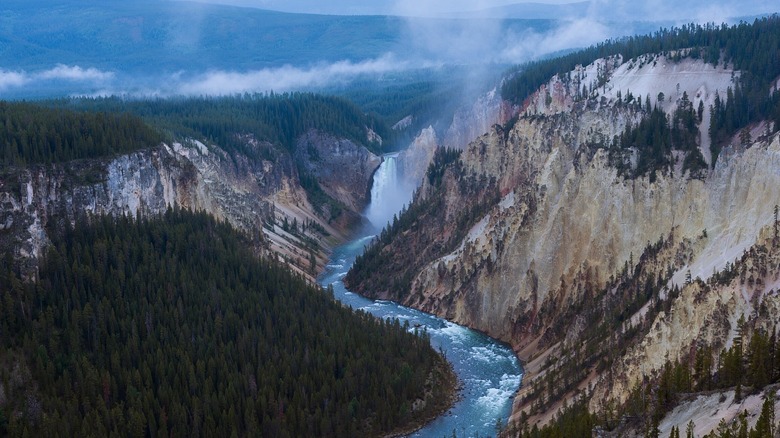
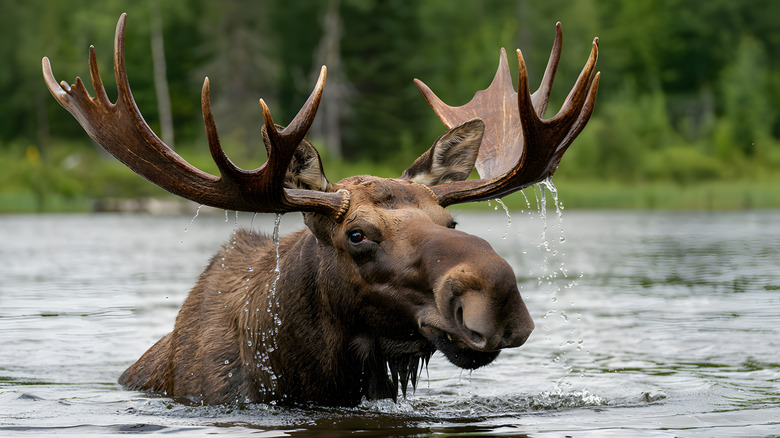
Nááts'įhch'oh National Park Reserve may be remote, but there's no shortage of outdoor fun to be had. Like the scenic, yet little visited Quttinirpaaq or Auluvik, a gem for outdoor adventure, these untamed northern landscapes provide ample opportunities to explore the farthest reaches of Canada. The South Nahanni River flows right through the heart of the park, and is a magnet for paddlers worldwide. Starting at Moose Ponds, its famous Rock Gardens follow over 30 miles of continuous Class II-IV rapids, and a chance to spot grizzlies, moose, and caribou in the nearby valleys. Experienced paddlers can tackle the river in its 373 mile entirety on a 21-day expedition organized by Nahanni River Adventures. The route continues into neighboring Nahanni National Park Reserve to reach the spectacular Náįlįcho (Virginia Falls).
Even if solitude beckons, there's no better way of getting to know the historic and spiritual side of a national park than by exploring it on foot with the help of an indigenous guide. Especially when there are no marked trails to speak of. Or, combine both activities and go packrafting, an increasingly popular activity in the Northwest Territories.
The best time to visit is from June to September, with the midnight sun giving nearly 24 hours of light in June and July, and the aurora borealis sometimes visible in August and September. While temperatures can sometimes reach up to around 86°F, the weather is famously unpredictable, with blizzards, rainstorms, and sunny spells all possible in one day. Hot springs are a welcome diversion, with their relaxing mineral-rich waters ideal for soaking weary muscles at the end of a hard day's exploring.
Camping in Nááts'įhch'oh National Park Reserve
With no accommodation in Nááts'įhch'oh at all, backcountry camping is your only option. There may be no facilities, but on the plus side, you can choose your own site, with a couple of exceptions. Guests are asked not to camp too close to sacred Mount Nááts'įhch'oh, which is closed to visitors, and camping isn't allowed at any of the hot springs either. Park authorities also ask that you favor durable surfaces such as rock, gravel, and dry grass and leave no trace behind. Before entering the park, you're required to reserve and register with Parks Canada. Fees are roughly $26 per night or $186 for an annual permit, valid at several other national park reserves.
As many paddling journeys begin at Moose Ponds, this is a handy spot for camping, with a relatively flat area next to an old airstrip. It's also achingly beautiful, with views of the turquoise lakes and sacred mountain. You're in bear country here, so take these bear safety precautions to avoid any dangerous encounters. Beyond Moose Ponds, Divide Lake is another convenient place to camp before heading off on a paddling adventure, and has a small cabin which serves as an emergency shelter.
Several established outfitters can take care of most of the logistics for you. Black Feather organizes expeditions lasting from 10 days up to four weeks, combining camping, canoeing, hiking, and wildlife watching. They take care of everything from transportation and meals to camping and canoeing equipment. Their trips cater to different experience levels, but some of the more challenging river expeditions require strong paddling skills. Outside the park, Norman Wells has a few places to stay, and you can stock up on supplies at Northern Store before heading into the wilderness.