
One Of North America's Least Visited National Parks Is A Remote Gem For Outdoor Adventure
Beautiful Canada boasts 37 different national parks along with 11 national park reserves. While the busiest parks draw more than a million visitors every year, a few Canadian parks remain well off most travelers' radars. One of these is the arctic wonderland of Aulavik National Park, where typically only only a few dozen humans wander in every year. The arctic wonderland is located in the Northwest Territories, a gorgeous Canadian region with a number of amazing national parks.
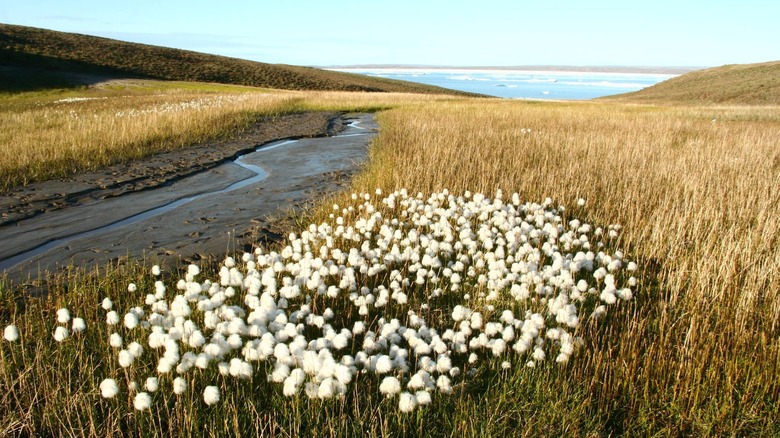
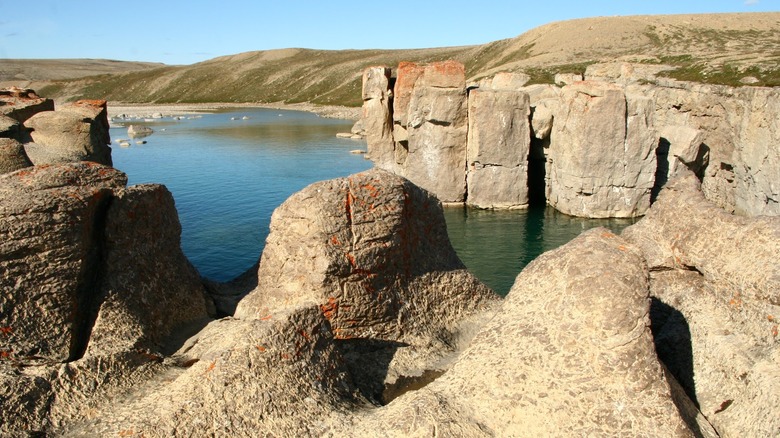
Aulavik encompasses 4,600 square miles of Western Arctic Lowlands on Banks Island, the westernmost island in the Canadian Arctic Archipelago. The park is home to the Thomsen River, one of North America's northernmost navigable rivers — a shining, 100-mile ribbon winding through the soft beiges and greens of the polar terrain. Besides the fertile river valley, landscapes in the park range from polar deserts and rolling hills to badlands and seacoasts. These settings are diverse but with one notable similarity: the absence of trees. The tallest plants you'll find here are no more than a few feet high.
Yet other kinds of vegetation as well as wildlife thrive throughout Aulavik, including more than 10,000 muskoxen. These enormous, shaggy hooved mammals, which can weigh upward of 600 pounds, are the most conspicuous living things in the park. Aulavik is also home to 150 different species of flowering plants, 57 bird species, six freshwater fish species, and mammals such as Peary caribou, grizzlies, polar bears, and arctic foxes, hares, and wolves. Another elusive creature appears briefly during the summer months: the human being. This animal is usually found gliding down the Thomsen River in a canoe or kayak, gazing awestruck at their surroundings.
Experiencing Aulavik National Park's remote wonders
The park's name, Aulavik, means "place where people travel" in the language of the Inuvialuit people, who have hunted muskoxen here for hundreds of years. You, too, can become an Aulavik traveler, but be prepared for the adventure of a lifetime.
Unlike Ivvavik National Park, a Canadian Park with incredible Arctic hiking experiences, Aulavik National Park is better suited for two- to three-week paddling expeditions, where you paddle by day and camp on land near the river at night. River trips begin at a few different locations in the park — headwater lakes, the park's southern boundary, or Green Cabin — and they end at Muskox River or Castel Bay. From the river, day hikes are possible to explore the tundra and visit archaeological sites, including 1,000-year-old meat caches, ancient tent rings, and muskox kill sites. Despite the unforgiving environment, the Class 1 Thomsen River is surprisingly placid, with no rapids or major obstructions that require portaging. These trips are a prime way to spot caribou, snow geese, snowy owls, and muskoxen, the latter of which are often seen grazing near the river.
This kind of trip requires not just paddling skills but also backcountry camping experience, wilderness first aid knowledge, and the ability to be extremely self-sufficient. In an emergency, help may be one to two days away or more depending on location, the weather, and other factors. For these reasons, visitors may prefer to hire a professional outfitter instead of going it alone. An outfitter handles the logistics of the expedition and may also supply boating, camping and safety equipment. Depending on the package, they may also provide meals and guiding services for the length of the trip.
Planning your trip to Aulavik National Park
Located 370 miles north of the Arctic Circle, this region experiences 24-hour daylight under the midnight sun during the summer months. Thus, summer (particularly late June to late July if you're doing a river trip) is the best time to visit to take advantage of the more hospitable light, weather, and water conditions. Even then, expect fierce winds and temperatures ranging from freezing to the high 60s in the center of the park. Coastal areas of the park tend to be cooler.
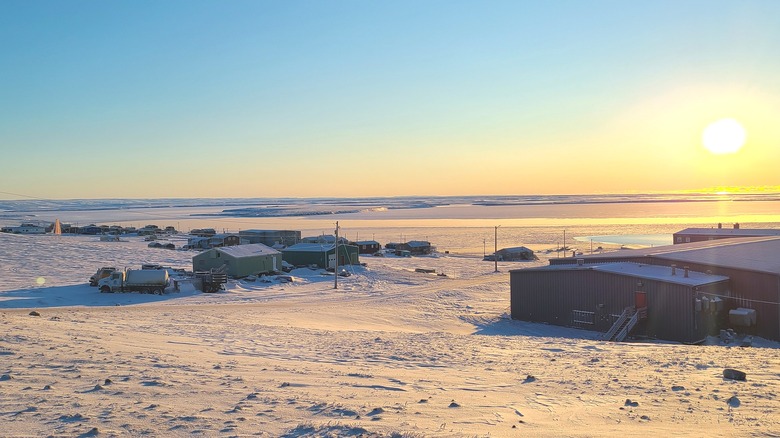
Getting to the park is almost as challenging as the expeditions themselves. The Northwest Territories town of Inuvik (population 3,450) is connected to southern Canada via commercial flights and roads. From Inuvik, it's possible to charter a flight into the park during the short summer access window. Another option is to fly via Aklak Air to the one town on Banks Island, Sachs Harbour. With a population of around 120 people, Sachs Harbour offers a few precious resources: a guest house, a small grocery store, a health center staffed by a nurse, local artists selling muskox horn carvings, and hunting and fishing guides knowledgeable about the area. There's also a visitor center in town that can assist folks with trip preparation and transportation to the park.
If you're a fan of Canadian national parks and want to hit as many as you can in a single vacation, you should also consider this coast-to-coast road trip that stops in Canada's major national parks.