

The Most Impressive Castles In All Of Europe
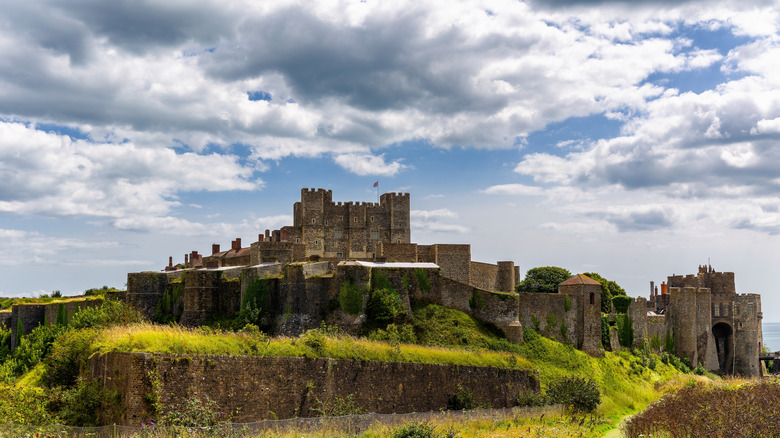
The Agricultural Revolution took place some 12,000 years ago and transformed humans from a nomadic, hunter-gatherer species into a society based on a complex, hierarchical structure. Humans congregated in much greater numbers, job descriptions diversified, and the daily struggle of existence pivoted from short-term wins to potential excess. Grain silos became a thing as humanity discovered the need to house resources between harvests. Soon after, defensive structures designed to protect them began to show their face.
The idea of a castle is fixed in the collective imagination. Walled cities abounded throughout history; indeed, some of the most gorgeous walled cities around the world are still well worth a visit. Castles, however, offered something more: a structure that existed for defense, yes, but one that also found itself doubling up as an administrative center, a jail, and, in many cases, a place for political elites to live. For millennia, they dominated military thinking. The oldest castle still standing — the Citadel of Aleppo in Syria — is well over 5,000 years old. The most recent castle ever constructed — Castle Drogo in the United Kingdom — wasn't finished until 1930.
Still, the golden age of castles in Europe was a medieval affair, reaching its peak between the 11th and 14th centuries. The Renaissance brought with it increasingly sophisticated governance, the decline of feudalism, and advancements in weaponry that made the efficacy of thick stone walls increasingly moribund. Castles fell into disuse. At least, most of them did. Still, the notion of one remained viable. Many a château was used, and thought of as a fortification of old. And more than one palace was built with luxury within and the imposing lines of a castle without.
Neuschwanstein Castle, Germany
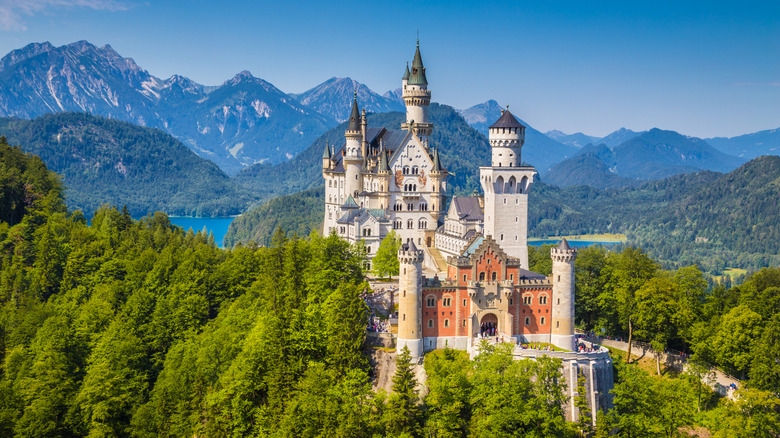
In the early days of castles , defense was front and foremost in design. The crenelated parapets offered a place to shoot from; the pointed arches and narrow windows provided cover for archers. Such early examples are most properly assigned to Norman or Romanesque style, but later designs brought in the Gothic elements that today are synonymous with our idea of what a castle should look like. As time went on, romanticization of the past led to an approach that blended defense with the aesthetics of the day. By the time castles had ceased to be of any real military advantage, the Neo-Gothic movement was in full swing, a Romanesque revival had become en vogue, and the age of the fairytale castles had arrived.
Neuschwanstein Castle in southern Germany was commissioned in 1864 by the Bavarian King Louis II; the construction was something of a fantasists' dream. Inside, the building was decorated with scenes from myth and legend. Outside the fort was a thing of whimsy; conical towers, walled gardens, and robust foundations met with an intimidating folly of a gatehouse and a slew of rooms that had long fallen into anachronism. Initial estimates of a three-year build proved woefully inadequate, and the castle was still only partially completed by the time Louis died in 1886.
Today, the castle serves as a museum and is, without doubt, one of the most stunning buildings of its kind in all of Europe. Guided tours are available throughout most of the year, but the inaccessibility of its location means that during winter, the castle is often closed. Booking ahead is essential, and tickets cost around $28 per person with discounts available for children, students, and seniors.
Château de Chambord, France
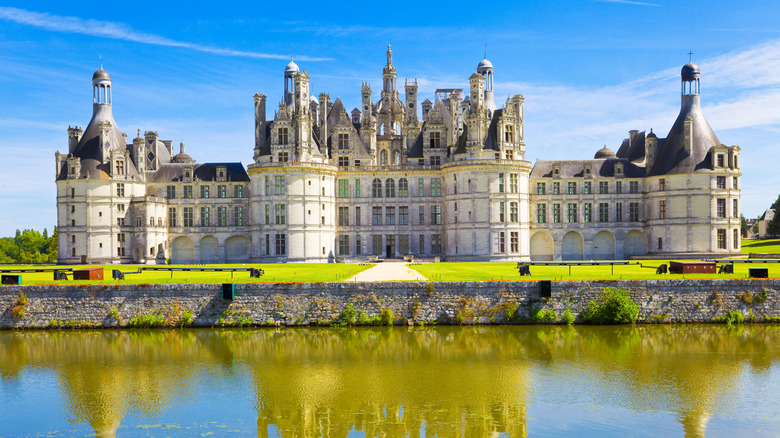
France's Loire Valley is not only a place renowned for its wine, but it also just so happens to be an absolute gold mine for castle adventures. The onset of the Renaissance brought with it the end of the age of castles; the need to create symbols of secular opulence began to rise. The French King Francis I envisioned a royal residence of uncompromising opulence. The chosen architect, Domenico da Cortona, was tasked with the design and took inspiration from none other than Leonardo Da Vinci himself. Work began in 1519. The lines blurred; Chambord retained the title of "château," but indulged in the defensive lines of the traditional castle. Indeed, past and future uprisings certainly demonstrated the need for a secure retreat outside of the capital.
Today, the UNESCO World Heritage Site stands as a testament to the innovation and beauty of French Renaissance architecture. Set in 5,440 hectares of sculpted landscape, the utilitarian nature of defensive structures gave way to the ornamental brilliance of antiquity. Bell towers and spires lent the castle a Gothic feel, but the emphasis on symmetry, steep slate roofs, and motifs was self-consciously modern.
A robust curtain wall and turreted façade furnished the castle with a militaristic air. Within driving distance of Paris, the château is open to the general public with tickets starting at around $22 per person. The gardens are best viewed in the summer and spring, but even during the shoulder season, the castle's 426 rooms are a sight to behold and well worth the trek.
Mont Saint Michel, France
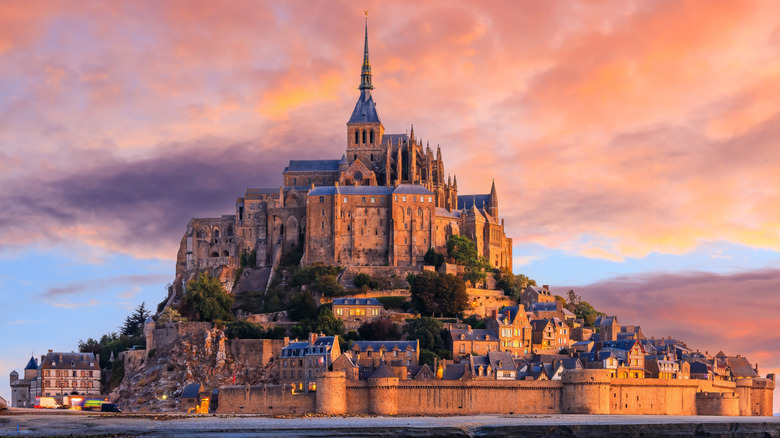
The thought of castles as secular centers of military power brings with it thoughts of knights in jousting for the attention of their betters, enrobed lords, feasting in halls of stone and battlements crawling with heavily armed soldiers. In truth, the need for a defensible position often cut across whole strata of society. Indeed, the concept of a fortified church or monastery was far from an alien idea. Enter, Mont Saint‑Michel.
A single causeway connects the tiny island to the mainland, and even that disappears under the waves during high tides. From there, the walled town rises some 300 feet above sea level and is crowned with one of the most well-preserved medieval monasteries in all of Europe. It is a thing of thick stone walls, towering spires, and defensible locations. In 1318, 30 pilgrims lost their lives simply trying to cross the narrow stretch of water in which the island lies. It is not a place an army would relish attacking.
A monastery was built there in 966 C.E., and although it was partly destroyed in 1203, its reconstruction led to eventual fortification and the Gothic masterpiece that is still in situ today. Attempts to capture the Abbey during the Hundred Years War — that internecine struggle for dominance between England and France that quite famously lasted more than 100 years — met with repeated failure. The scars of battle led to the addition of Romanesque elements to the design that completed the fairytale castle look. Today, the UNESCO World Heritage site located just 40 miles north of Rennes — itself an underrated city you should seriously visit — attracts 2.5 million visitors each year.
Bran Castle, Romania
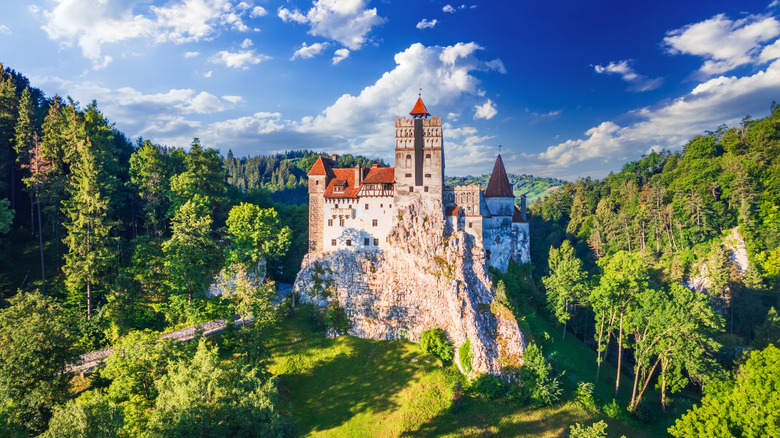
Transylvania's mountainous terrain and heavily forested wilderness mark it as one of the most beautiful places in Europe to enjoy a fall vacation. It is home to one of the world's most unique theme parks, a refuge for Europe's few remaining bears, and a place of alpine meadows, glacial lakes, and perfectly preserved Gothic towns. Oh, and it was the home of no less auspicious a person as Dracula himself. Well, sort of.
The principality of Wallachia first came into existence in 1290 in what is today part of Southern Transylvania, but, back then, lay within the Hungarian sphere of influence. During the 15th century, it was ruled by Vlad III, a man whose behaviour was so beyond the pale that history remembers him as Vlad the Impaler. His father's name, Dracul, stemmed from the Latin word for Dragon, with Dracula itself translating as son of Dracul. Irish literary icon Bram Stoker was certainly familiar with Vlad's misdeeds, and, although he never visited Romania, he included real-world locations in the final draft of his masterpiece. One such location was the 14th-century fortification known as Bran Castle.
Vlad never used the stronghold as a residence, but Bran Castle fits the literary description of Dracula's abode so perfectly that it has become synonymous with the fictional character. Built upon an outcropping of rock and served by thick walls and conical towers, the fort presents itself as an imposing silhouette backed by one of Europe's most unspoiled frontiers. Visitors can enjoy private tours, fairytale weddings are common, and a weekend Halloween experience at the infamous lodging is as bucket-list worthy as it gets.
Prague Castle, Czech Republic
The French writer Voltaire once noted that the Holy Roman Empire was in no way holy, Roman, or an empire. It was a witty quip to be sure. It was also wildly inaccurate. The collection of states in Europe had, for most of its history, an emperor of sorts; the people who lived there were no less holy than anyone else in Europe, and as for Roman? Back then, being Roman was synonymous with being Christian. And it was most assuredly that.
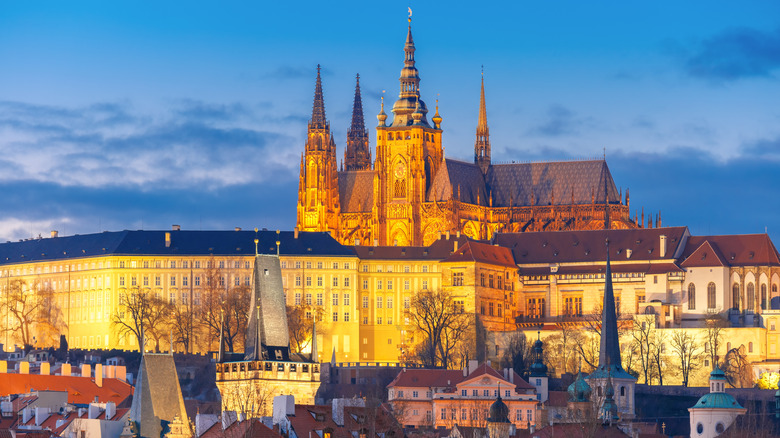
The Kingdom of Bohemia — most of which is now located in the Czech Republic — was, for most of its history, one of the most influential of the continental states. It changed hands constantly; the internecine nature of European politics meant that Prague was one of the greatest prizes in all of central Europe. A castle of some sort protected the city since at least the ninth century and was expanded over the years to become something of a small, fortified town.
Today, it is the largest ancient castle complex in the world, covering around 753,000 square feet of prime real estate. A mix of styles is on display for those making the trek up the hill towards the fortification. The oldest surviving church — St. George's Basilica — is of 10th century Romanesque design. Queen Anne's Summer Palace is a Renaissance masterpiece of 16th-century vintage. You'll find genuine Gothic architectural lines in the form of St. Vitus Cathedral, Baroque elegance on display at the Matthias Gate, and the stark realism of the Mannerist Ball Game Hall is genuinely breathtaking. Indeed, there is so much to see here that exploring all that is on offer is a day out in and of itself.
Warwick Castle — England
The name, the United Kingdom, refers to the joining of four distinct countries: England, Scotland, Wales, and Northern Ireland. For much of British history, Wales was something of a thorn in the side of its English neighbors, and it is not for no reason that the small principality has more fortresses per square mile than anywhere else in Europe. Still, while medieval kings poured money and resources into securing the Welsh border, the need to maintain control over the rest of the country remained a pressing need. England, too, had its share of malcontents, and one of Rick Steve's all-time favorite castles has the pedigree to prove it.
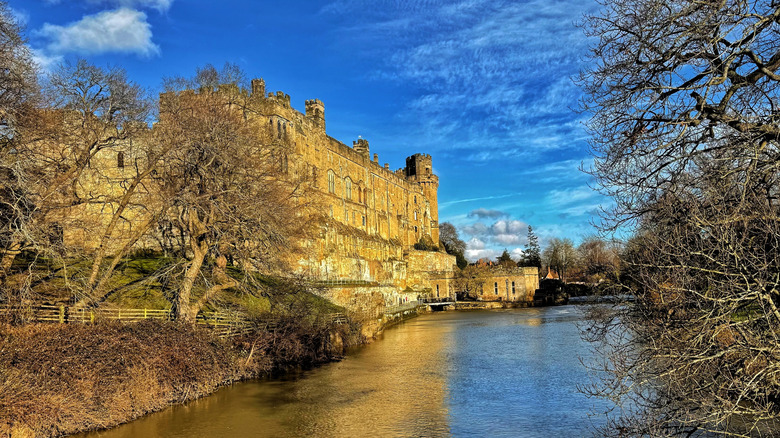
The town of Warwick is as quintessentially English as they come. Located some 100 miles north of London, and close to Stratford Upon Avon, the birthplace of William Shakespeare, Warwick began life as a Saxon fortress designed to protect the fast-flowing river Avon from Viking incursions. After the Norman conquest of 1066, the newly established William I recognized its strategic importance and, just two years later, the fort gave way to the castle that is still in situ to this very day.
Few such places have weathered the tides of history so well. A Norman fortress to its core, it was updated in the 14th century and renovated in the Gothic Revival style during the 18th century. Today, it is every bit a castle out of the pages of history. Fully restored from its medieval heyday, day trips, themed events, and even overnight stays. makes it something of a must-see attraction.
Malbork Castle, Poland
The Teutonic Knights began life in the 12th century as a military-religious order tasked with regaining Christian control over what was then referred to simply as the Holy Lands. Their mission — known to historians as the Third Crusade — ended in stalemate in 1192, and the order shifted its focus to Eastern Europe. By 1309, the area around Marienburg, Prussia, located in modern-day Poland, had become a Teutonic principality.
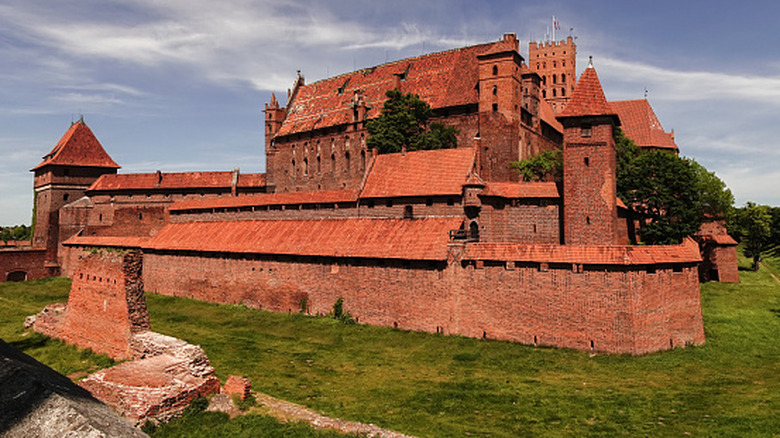
Control over the territory was maintained thanks to the construction of an enormous, defensible structure. Today, it is a UNESCO World Heritage Site, and while Prague Castle takes the title for the largest castle complex, Malbork is the largest in terms of total area. At 1,545,600 square feet, its red-bricked, gothic design certainly makes for an intimidating presence.
The castle is open to visitors seven days a week, and guided tours are available for around $22 per head. Special exhibitions are run throughout the year, and the active research taking place here means that there is always something new to discover. Best of all, at around an hour's drive southeast of Gdańsk, home to one of the cheapest city breaks in all of Europe, the complex makes for an affordable and most assuredly unforgettable day trip.
Chillon Castle, Switzerland
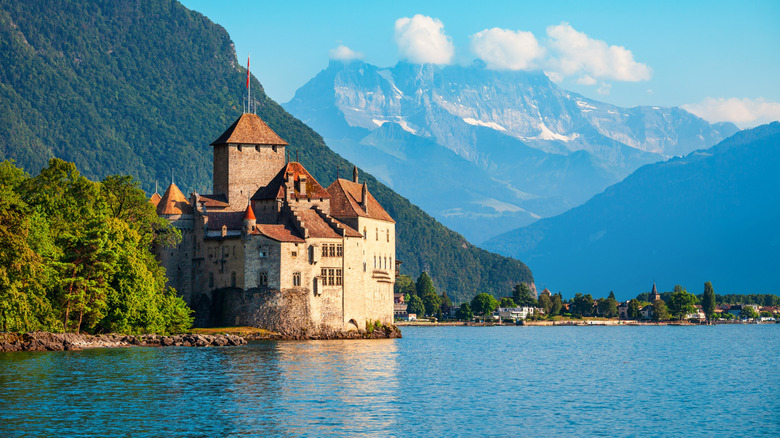
Nestled on the far eastern shore of Lake Geneva sits a picturesque castle with a history that spans almost 1,000 years. The early Counts of Savoy took control of the waters around the lake early in the 11th century, and by 1250, the strategic importance of the town of Chillon had led to the construction of a mighty fort. As time wore on, work continued: by the 15th century, Chillon Castle (also known as Château de Chillon) was being used as a summer residence. In subsequent years, the site found itself besieged, fell into disrepair, and during the Napoleonic era, it became a site of national importance thanks to the chaos of the Vaudois Revolution.
Today, the picturesque setting and meticulous restoration that took place since the 1815 Congress of Vienna ratified its modern-day borders make it one of the most beautiful medieval fortifications in the world. Approaching the site from the lake on board a vintage local boat is by far the best way to appreciate the aesthetics on display.
Gothic towers supported by white-stoned walls issue forth silent disdain towards those who approach. The Alps tower in the background. Waves lap against its shore. Artists were much-enamoured by the castle's stark beauty, and those visiting its dungeons can still see Byron's name carved into its very foundations. A family ticket that allows you to explore all that the ancient fort has to offer for less than $50, while a three-hour cruise across the lake from the nearby town of Lausanne comes in at just under $70.
The Tower of London, UK
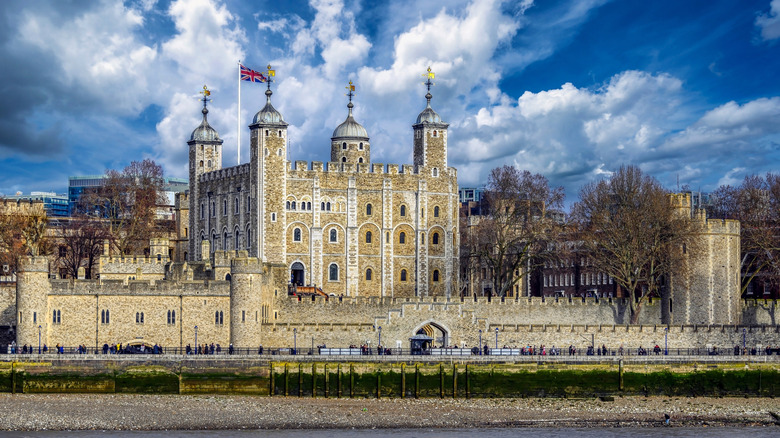
1066 is often considered to be the most important year in English history. It was the year of the Battle of Hastings, fought by Harold II of England and William of Normandy. William won, and from that point onwards, historians would refer to him as William the Conqueror. The new king wasted little time securing his position. Installing surrogates in key positions, he commissioned the construction of somewhere between 500 and 1,000 castles. Some, such as Warwick, withstood the ravages of time. But nowhere was there a mightier example of the King's stranglehold over the population than the White Tower, built in the capital as a symbol of absolute power.
The planning and construction of the White Tower took almost half a century to build, and by the time of its completion in 1000, William I had long passed away, his son, William II, was on his deathbed, and the newly crowned Henry I was still surveying his new domain.
The Tower of London, in its present-day iteration, refers not only to the keep itself but to the entire complex, including its walls, chapel, barracks, and associated buildings. Its rich and bloody history makes it a must-see attraction in London and one of the few "touristy" places in the capital that live up to expectations. The Crown Jewels are on display — all $3 billion worth of them — year-round, and tours of the keep's long and bloody history by resident Beefeaters are well worth the entrance fee. Indeed, the tower is so far away from being a London tourist trap best avoided that no itinerary is complete without a visit.
Tintagel, UK
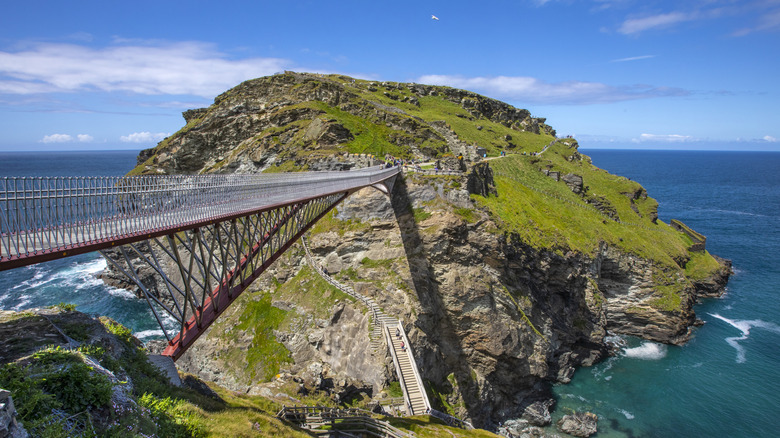
Cornwall, England's southernmost county, is best known as a foodie hub within a nation little-known for its cuisine, as a charming spot for a beach vacation, and as a center of treasure-hunting activity. It is also a place filled to the brim with things to see and do. And few places carry as much cachet as the birthplace of the legendary King Arthur himself.
You'll find Tintagel about halfway up Cornwall's ragged coast, about 10 miles north of Port Isaac, as quaint a fishing village as you are ever likely to find. The Romans built a fort here, and the rocky peninsula supported a community of sorts since at least the fifth century. It was Geoffrey of Monmouth — a 13th-century author about whom we know little — who first suggested that Arthur held court at Tintagel. Fanciful though such claims were — there is, of course, no real evidence that Arthur ever even existed — the romantic notion proved hard to resist. A castle was built there during the early 13th century, and today, although it lies in ruins, it remains one of the most evocative sites in Western Europe.
Methodolgy
This list is the product of decades of exploration and is made up exclusively of places we have visited at least once. Any facts, figures, and dates stated are the result of a detailed study of official sources such as English Heritage, Britannica, and other official sources. The word castle here was used in deliberately uncontentious ways. In most cases, the sites chosen were built solely with defense in mind. In others, they are enough of an homage to the design brief and magnificent enough in their own right to fit the bill nicely.