

Rick Steves Thinks This Marvelous Museum In Europe Is Worth Exploring, And It's Free
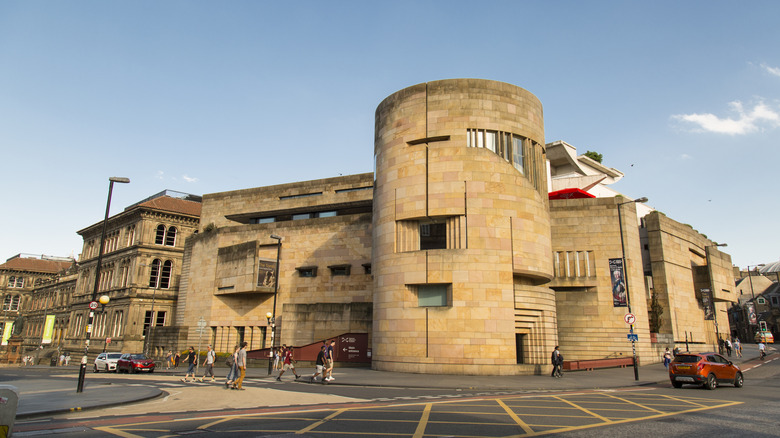
If you want to take a journey through Scotland in just one afternoon, it's absolutely worth visiting the National Museum of Scotland in Edinburgh. As cliché as it may sound, there really is something for everyone to see here. Rick Steves, who's done his fair share of sightseeing in the Scottish capital, wrote on his website, Rick Steves' Europe, "The huge National Museum of Scotland has amassed more historic artifacts than everything I've seen in Scotland combined." Brimming with fascinating and stunning collections, the museum just happens to be the U.K.'s most popular attraction outside London, and the best part is that it's completely free to visit.
Located on Chambers Street in the city center — just off the Royal Mile and a short walk from the imposing granite walls of Edinburgh Castle — it's easy to find, with a number of options for how to get there. Waverley train station is about a 10-minute walk away, or you can take a bus or a cab which will drop you off directly outside. Avoid driving into the city center and the nightmare of trying to find somewhere to park, and use the park-and-ride system instead. That way, you can hop on a tram or bus for a far easier and much less stressful experience. Open every day except Christmas, the museum has thousands of objects spread out over eight floors. Exhibits range from Scottish history and archaeology to rare and exotic pieces from around the world, all lovingly guarded by the museum's resident T. rex in one of the most entertaining cities in Europe.
Highlights of the National Museum of Scotland
When you arrive, it's worth buying a guidebook from the gift shop or downloading the map. The building itself is a work of art with its enormous glass-domed atrium flooding the space with light. This is where you'll find the Grand Gallery and the Window on the World display, the largest single museum installation in the U.K. It's a presentation of more than 800 objects arranged vertically over four stories and a taster of what the museum has to offer. Among the Scottish History and Archaeology galleries, the Mary, Queen of Scots collection is a must-see for anyone fascinated by the story of the tragic monarch. Highlights include a rare silver casket believed to have been brought back from France by Mary herself in the 16th century, and a beautiful collection of intricate gold jewelry known as the Penicuik Jewels.
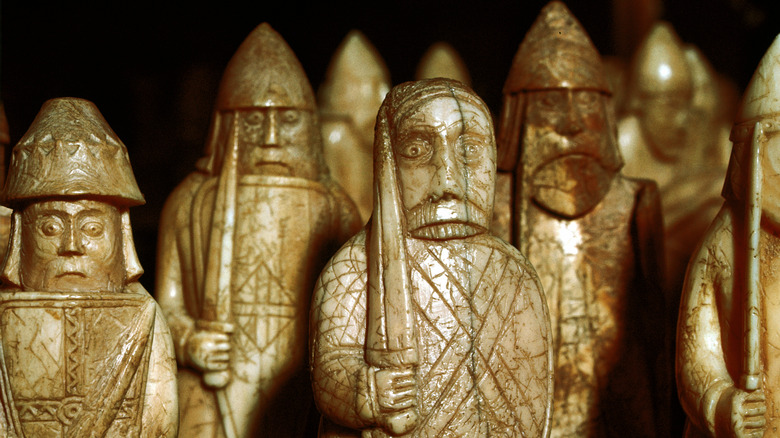
The museum is also home to 11 of the Lewis Chessmen, a rare archaeological discovery from the Isle of Lewis, off Scotland's west coast. The intricately carved chess pieces probably date from the 12th or 13th century and are on display in the Kingdom of the Scots gallery. As well as finding out more about Scottish history, you'll find exhibits on art, design, fashion, science, technology, and world cultures, with paid-admission temporary exhibitions throughout the year alongside the free permanent displays. If it all sounds a bit overwhelming, the museum has come up with a few online trails to follow depending on your interests. There's the Highlights Audio Tour that leads you to the more popular exhibits like the ancient Egyptian mummy mask and replica Dolly the Sheep. Or there's the Wellbeing Audio Trail, which aims to bring you some peaceful moments amongst the museum crowds.
Edinburgh beyond the museum walls

Once you've wrapped up the museum experience and taken a break at one of its three cafés, continue in the footsteps of Rick Steves and find some of the other best museums to visit in Scotland, such as the Scottish National Gallery, which is only a 10-minute walk away across the Royal Mile. You'll find masterpieces by Raphael, Peter Paul Rubens, and Rembrandt, as well as an outstanding collection of modern and contemporary art, all housed within an impressive neoclassical building overlooking Princes Street Gardens.
Just opposite the National Museum of Scotland is Greyfriars Kirkyard, the final resting place of Greyfriars Bobby. The beloved Skye terrier watched over the grave of his owner, John Gray, for 14 years. He soon became a local legend, and people came from all over to catch a glimpse of the faithful little dog. He was so popular that a statue was erected just outside the graveyard in 1873 to pay tribute to Scotland's most famous dog. You can see his collar and water bowl on display in the nearby Museum of Edinburgh, dedicated to the history of the city. The graveyard is well-known for the famous Mackenzie Poltergeist, a spirit said to haunt the Black Mausoleum inside the Covenanters' Prison. Hundreds of supposed sightings have been reported. The graveyard also hosts the headstone of Thomas Riddell, which inspired J.K. Rowling to use the name in the "Harry Potter" series. For more wizarding sights, you could take a "Harry Potter" walking tour of Edinburgh and learn about some of the city's other eerie sights and local legends.