

What Happens If Someone Dies On An Airplane?
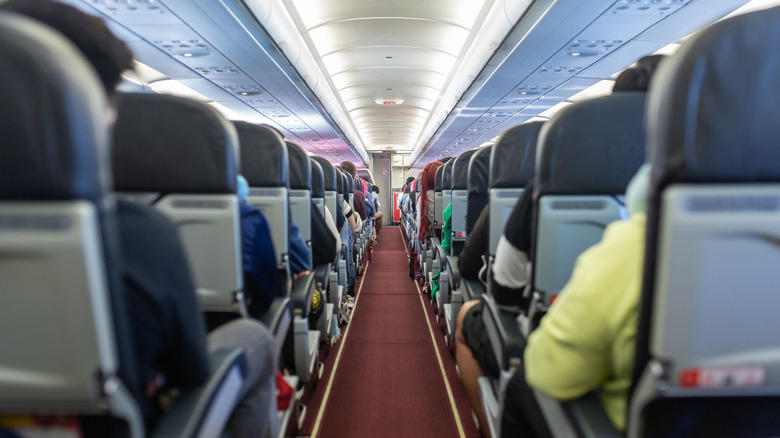
Flying should be a fun, relaxing experience, but sometimes, a tragedy strikes. In a 2025 study published in JAMA Network Open involving over 77,000 consultations for in-flight medical events, 312 individuals died (0.4%) mid-flight or were pronounced dead shortly after landing. While deaths aboard airplanes are uncommon, there's no denying that they happen. So what happens if a passenger dies on an airplane? In a nutshell, the flight crew will seek medical assistance, notify the captain, and if resuscitation efforts fail, follow procedures for handling the body until authorities take over on the ground.
In March 2026, passengers aboard a British Airways flight from Hong Kong to London reportedly noticed a foul odor after a fellow passenger died on the plane. According to The Independent, the woman, who was in her 60s, died shortly after takeoff, and the crew decided to store her body in a galley near the rear of the plane. Unfortunately, the galley floor was heated, and some passengers reportedly noticed an unpleasant smell toward the end of the 14-hour flight. It's a distressing situation for everyone involved, especially the woman's loved ones.
But the truth is, this isn't exactly a common occurrence. While airlines have their own protocols for dealing with a deceased passenger, there are some general guidelines intended to protect the individual's dignity while minimizing the distress to others on board. There's also something important to understand: Flight crew aren't authorized to formally pronounce a passenger dead. They can, however, provide medical assistance and, under certain circumstances, presume that a passenger has died if resuscitation efforts are unsuccessful.
Suggested protocols for dealing with a death on a flight

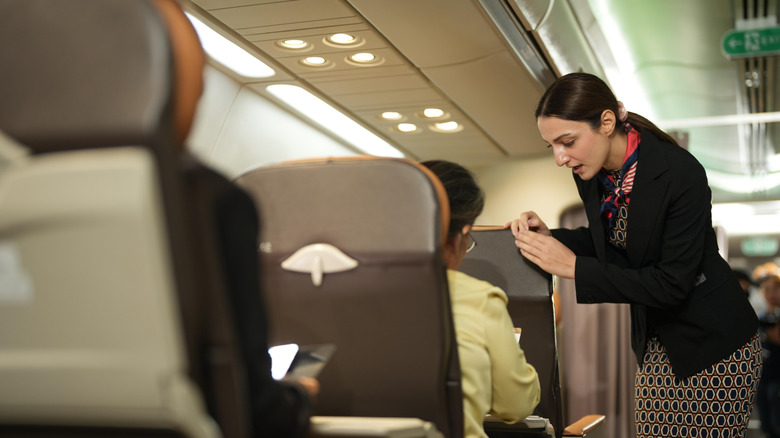
When a life-threatening medical emergency occurs, flight attendants communicate with fellow crew members, ask for assistance from medical professionals onboard, and may contact doctors on the ground. Crew members may also perform CPR and use an automated external defibrillator (AED). According to the International Air Transport Association's (IATA) guidelines, a passenger may be presumed dead if CPR has continued for at least 30 minutes without signs of life and the AED has not advised a shock. Resuscitation may also stop under other circumstances, such as when it becomes unsafe to continue, or emergency medical personnel take over.
If the passenger is presumed dead, the captain should be notified immediately so that the appropriate authorities can prepare for the flight's arrival. The guidelines recommend moving the deceased individual to a seat, preferably in an area with few or no other passengers, if available. Given how full most flights are these days, however, the crew may have to bring them back to their original seat. The deceased is then placed in a body bag, if available, which is zipped up to their neck. If there is no bag, a blanket is used.
Once the deceased is seated, a flight attendant should close their eyes and secure the body with a seat belt or other equipment. Next, they should try to find out contact information for any travel companions. Once the flight has landed, crew members should allow all other passengers to disembark while any loved ones stay with the body. The body should remain onboard until local authorities arrive to take charge and ground personnel are available to assist the family.
What actually happens when someone dies on an airplane
IATA's protocols are only recommendations, meaning experiences with deaths aboard airplanes can vary. For example, when a woman died on a Qatar Airways flight from Melbourne to Doha in February 2025, a passenger said he was asked to move to the empty seat beside him so the crew could place her body in the seat next to him. Despite there being additional empty seats on the plane, he said he wasn't given the option to move elsewhere and remained beside the deceased passenger for approximately four hours. Qatar Airways later defended its crew's handling of the incident, saying they acted appropriately and that passengers were accommodated in other seats.
On YouTube, one user said a woman passed away in her sleep on their flight from New York to Rome. In this case, the crew rearranged seating so the row where she died was reserved solely for the deceased and her husband, and she was laid across the seats and covered with blankets. They were also asked to remain in their seats while Italian EMTs verified her death first, and were only allowed to leave afterward.
Some airlines have also experimented with ways to handle these situations more discreetly. Back in 2004, the renowned Singapore Airlines introduced special compartments for storing bodies on its Airbus A340-500 aircraft. However, the airline retired these planes in 2013. You might also come across the term "Jim Wilson" among flight attendant code words, although it's primarily associated with transporting human remains rather than a standard procedure for passengers who die mid-flight. Also, keep in mind that how airlines handle a pilot's death while in the air is different, as another pilot can take control of the aircraft. Ultimately, though, witnessing a death on a flight is always going to be a sad and distressing event, but take some comfort in knowing the odds of actually experiencing this yourself are fairly slim.