

5 Things Customs Officers First Notice About You At The Airport
U.S. Customs and Border Protection (CBP) officers, much like police officers, have that canny ability to make you feel like you're doing something wrong, even when you're not. They may not be sizing you up quite the way movies suggest, but you can bet they're paying attention to more than your passport. In fact, thanks to the agency's Automated Targeting System (ATS), they may already know more about your travel plans than you realize, even before you reach passport control.
While you may sometimes be fortunate enough to breeze through the airport thanks to the Global Entry program, CBP officers are still reviewing travelers' information. In the U.S., CBP is responsible for both immigration and customs inspections, meaning officers check everything from whether travelers have the right to be in the country to what they're bringing in with them. That's not the case in every country. In France, for example, immigration checks are managed by the Police aux Frontières, whereas the Douanes handle customs. Five things officers may pay attention to are your travel history, your behavior, how you respond to questions, discrepancies in your travel documents, and what you're bringing into the country.
Your travel history
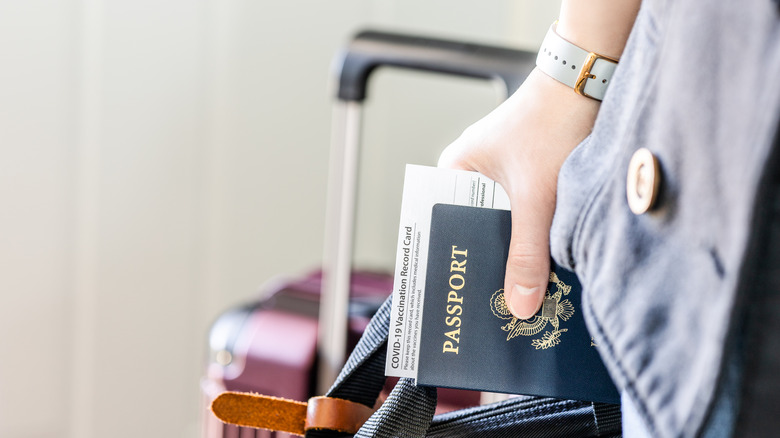
Your frequent-flyer habits could be more interesting to CBP than you think. Before you arrive in the U.S., your details have already been forwarded by the airlines, allowing officials to review your travel information. As CBP Public Affairs Chief Steve Sapp explained, via the Daily Guardian, "Most of our work is invisible and done before a traveler even boards their plane." This includes information from the Advance Passenger Information System (APIS), which provides identifying details taken from your passport, and passenger name records (PNR), which come from your booking information.
These records can include booking dates, itineraries, payment details, baggage information, and traveling companions. CBP then uses the ATS to analyze passenger information alongside government and law enforcement records, helping officials identify potential risks and determine whether further inspection is necessary. Past immigration violations or inconsistencies in travel details could prompt additional scrutiny. For non-U.S. citizens traveling with an approved Electronic System for Travel Authorization (ESTA), this doesn't automatically grant you entry into the country.
How you behave while waiting in line
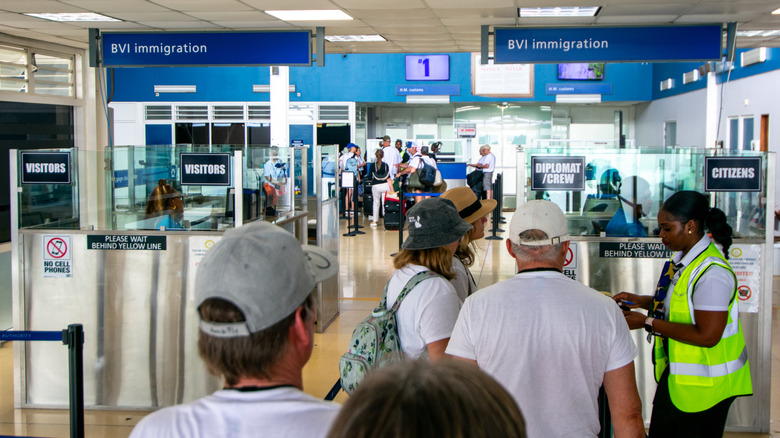
It's normal to arrive at passport control looking and feeling a little frazzled. You're tired, maybe a little grumpy, and all you want to do is get to your destination as soon as possible. CBP officers are used to dealing with agitated passengers, and like TSA officers who immediately notice things before you board, they too may pay attention to your behavior, including signs of nervousness. "The things you're wearing, how your mannerisms are, all of those things can still come into play," Nick Sunderhaus, branch chief at the CBP Field Operations Academy in Brunswick, Georgia, told Boston public radio station WBUR.
That said, sweating, trembling, or avoiding eye contact aren't reliable indicators of dishonesty on their own. Officers also look to make sure rules are being followed while you're waiting in line. There may be restrictions on phone use or photography, and you may have to remove items like hats and face coverings to verify your identity. Assessing body language and behavior can be subjective, but officers may take these observations into account alongside other information.
How you answer their questions

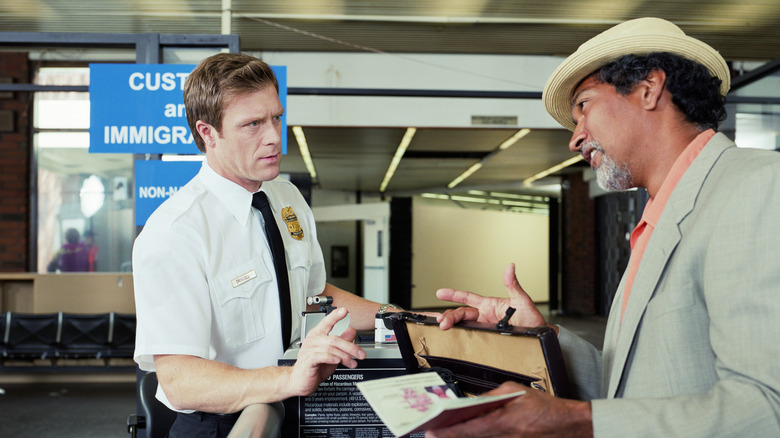
While most of the time, you'll likely breeze through passport control, officers are still observing your behavior and paying attention to the way you respond to their questions. No one particularly likes this part of the process, which can sometimes feel like an interrogation. But officers are looking for inconsistencies in your travel details and, for foreign visitors, whether you're eligible to enter the country. This is part of what's known as the primary inspection.
When asking questions about the purpose of your visit or where you've been, they're checking whether your answers are consistent with your travel plans, including whether you're traveling for a vacation, work, study, or to see family, and where you plan to stay. If officers are not satisfied with your answers, you could be taken aside for further questioning or secondary inspection. This doesn't necessarily mean you've done anything wrong, as travelers may also be selected for additional checks at random. To avoid unnecessary complications, make sure you have your travel details ready and that your explanations match your plans. "Know your travel details — where you're staying, who you're visiting, what you're doing," CBP supervisor at Washington Dulles Airport Matthew Armour advised, via the Daily Guardian. Answer simply, truthfully, and skip the nervous chitchat.
Discrepancies in your travel documents
You've answered the questions, but your documents need to add up, too. With CBP now offering passport-free screening in U.S. airports, passport control methods are changing. Enhanced Passenger Processing (EPP), available to eligible U.S. citizens at participating locations, uses facial recognition technology to speed up inspection without routinely requiring travelers to present their passports. But that doesn't mean you can travel without your passport. You still need a valid passport and should have it ready if requested.
Officers are also checking your identity and travel documents, including passport validity, any required visas, and signs of alteration or discrepancies. For example, if you have a new passport but your ESTA is linked to your old one, you'll need to apply for a new ESTA. Even if your documents are valid, possible mistaken identity could also get you flagged by CBP.
EPP also allows officers to spend more time speaking with travelers when needed. "With the capability of eliminating the administrative burden, it allows that officer to really engage with the passenger to determine the true intent of their arrival today and maybe where they've been throughout their travel," said Clay Thomas, CBP Atlanta Area Port Director, via GPB. If something doesn't add up, officers can still refer you for further questioning.
What you're bringing into the country
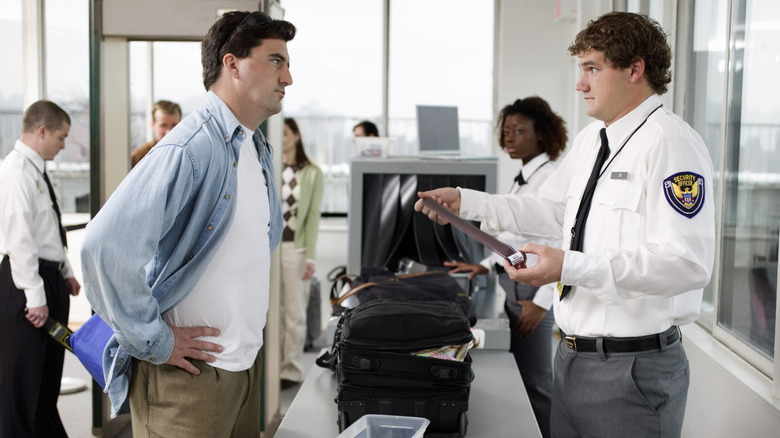
Looking a little nervous or forgetting the name of the hotel you're staying at is one thing. But one thing you don't want to make a mistake with is your customs declaration, or it could end up costing you. Inaccurate or incomplete declarations could result in a hefty fine or even seizure of your belongings. Take the case of a woman who arrived at Philadelphia International Airport from Amsterdam in October 2026 and had more than $250,000 worth of undeclared Cartier jewelry seized by CBP. According to National Jeweler, she had thrown away the boxes and receipts in an attempt to hide what she'd bought. "Incidents like this allow CBP to remind trusted travelers and all travelers that CBP conducts compliance exams even on trusted travelers, and that there are consequences for violating customs declaration laws," a CBP spokesperson told the outlet.
This is an extreme example, but even something as innocent as a piece of fruit could get you pulled aside for a baggage search and a potential fine if you haven't declared it. Officers are also looking for agricultural products that could introduce pests or diseases, including certain fruits, vegetables, plants, and seeds. These items must be declared, even if they're allowed into the country. Travelers must also report currency and certain monetary instruments totaling more than $10,000, although bringing in that amount isn't itself illegal. Other prohibited or restricted items include illegal drugs and certain weapons. Restrictions can differ depending on the product and its country of origin, so it's advisable to check CBP rules before flying.