

New York's Former Military Castle Is A 40-Foot-Tall National Monument With Unrestricted Exhibits
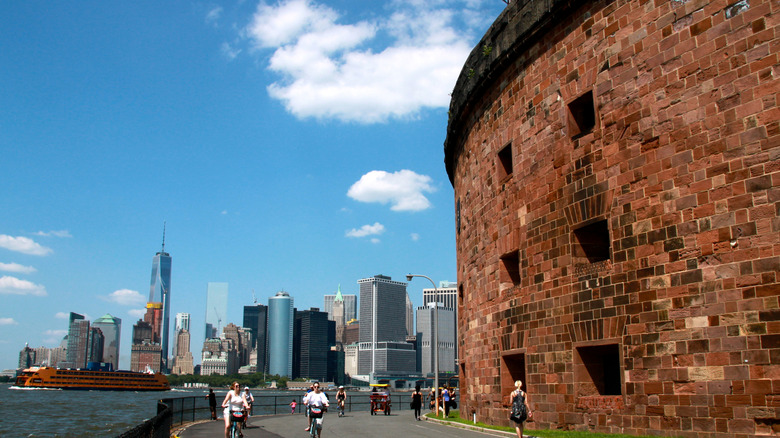
All over New York City, there are remnants of American history in the most unexpected pockets. Due to its strategic location on the Atlantic Ocean, New York Harbor has been protected by several coastal fortifications throughout history. In one of the most breathtaking state parks in New York, visitors can explore a historic, 40-foot-tall red sandstone military fortification that served the American army starting in 1811, just a quick ferry ride from both Manhattan and Brooklyn. Today, Castle Williams offers both self-guided and ranger-led tours, where visitors can learn about the fort's extensive history through interactive exhibits and get stunning views of the Manhattan skyline from the roof.
Castle Williams was built on Governors Island between 1807 and 1811 as part of a network of coastal defenses, alongside Fort Jay. By the 1830s, its effectiveness as a fort was dwindling due to technological advances, so it was quickly converted into quarters for various troops and remodeled by the U.S. Army to use as a Civil War prison. The castle underwent renovations in 1901 and later in 1947, before military operations concluded in the 1960s. Despite facing several demolition threats, it became a short-lived youth center and was restored by the National Park Service in the 1990s before officially becoming part of the Governors Island National Monument in 2001.
Exploring New York City history at Castle Williams
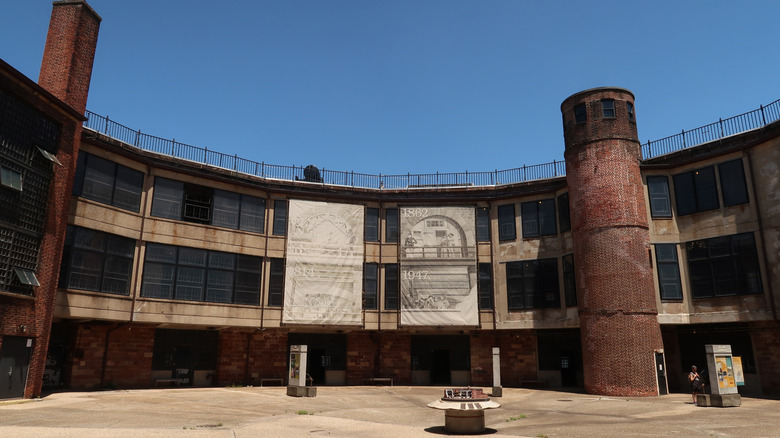
Like Fort Tilden, a former New York Army base that once housed missiles, Castle Williams can be explored on a self-guided tour. Once the largest and most complex installation of the U.S. Coast Guard, Atlantic Area Command, the fort offers visitors access to its open-air courtyard and ground floor. Here you'll see many of the former casemates (artillery-protection enclosures) now serving as historical exhibits about the fort's role in defending New York Harbor. One casemate, however, has been left unmodified so visitors can see its original design. While the tours are self-guided, rangers are always standing nearby to answer any questions.
To access the rest of the castle, rangers also lead occasional guided tours. They bring visitors to the second and third floors, where many of the casemates have been converted into either prison cells or army barracks. The tours usually last 30 to 45 minutes and include a trip to the roof, which offers a dreamy panoramic view of the city skyline, the harbor, and even the Statue of Liberty. On the roof, you'll also see huge Civil War cannons that were too heavy to move after the fort was closed. The fort is open for tours from late May to late October, when tours typically run a few times a day from Wednesday to Sunday; dates can be found on the National Monument's calendar page.
Other activities on Governors Island
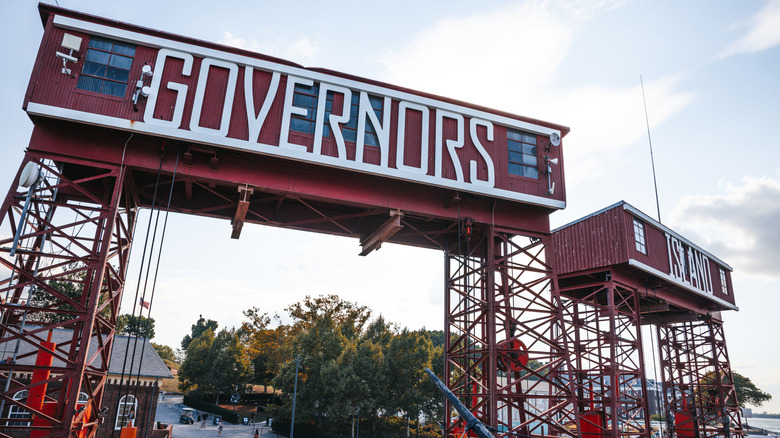
If you're already at Castle Williams, make sure to check out what else is happening on Governors Island. The 172-acre island comprises the Governors Island National Monument and the larger Trust for Governors Island, and offers a variety of unique experiences such as glamping on the island for a night. History buffs can combine the castle with a visit to nearby Fort Jay, built in 1797, also for defense against naval attack. Like Castle Williams, the star-shaped fort can also be explored on a self-guided tour.
As a car-free island, Governors Island also has several pedestrian-only trails, some winding past former military installations and over hills that offer perfect vantage points over the harbor and skyline. Bike rental companies like Blazing Saddles offer a fun ride along the island's 7 miles of paths, with surrey and pedal car rentals available. Kids can also ride down New York City's longest slide on Slide Hill and climb around the Hammock Grove Play Area. The island also has a wellness center at QC Spa, rotating public art initiatives, and also hosts events like Porch Stomp, a folk music and dance festival.
Many of Governors Island's attractions and services are seasonal, with summer Thursdays through Sundays being the busiest days of the year. Ferries run every 30 minutes from South Ferry subway station in downtown Manhattan to the island year-round, while Brooklyn service is limited to weekends and holidays between late May and early November. A round-trip ride is $5 as of this writing, and both take around 10 minutes.