

New York's Former Army Base That Once Housed Missiles Now Offers Hiking Trails And A Scenic Beach
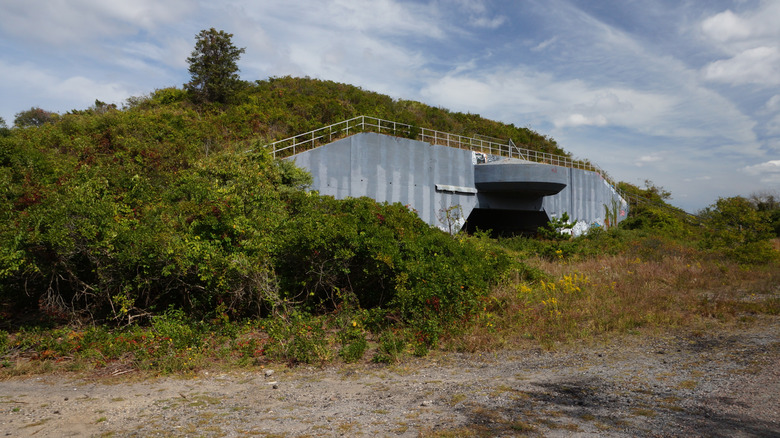
When America's biggest city heats up in the summer, New Yorkers flock to popular beaches like Coney Island in Brooklyn and Orchard Beach in the Bronx. But tucked away on Queens' Rockaway Peninsula is a quiet stretch of sandy coastline with a fascinating military past. At Fort Tilden in Breezy Point, nature and history intertwine at the site of a former Cold War missile installation. Now part of Gateway National Recreation Area's Jamaica Bay Unit, the former Army base offers a glimpse into U.S. military history amid hiking trails and coastal dunes.
Although the fort was decommissioned over 50 years ago, remnants of its military history are scattered throughout the area. Less than 2-miles away from the popular Jacob Riis Park, Fort Tilden's serene coastal seclusion stands in stark contrast to New York City's bustling atmosphere, offering a perfect break from city life. Visitors can meander around these historic structures on a mix of paved and unpaved walking trails, play team sports at the fort's athletic fields, explore the arts center, and even see performances at the onsite theater. Swimming isn't permitted, but many still frequent Fort Tilden's beach for seaside relaxation and sunbathing, just 90 minutes from lower Manhattan.
Military history at Fort Tilden
Even though the peninsula's first fortification was built during the War of 1812, construction of the modern Fort Tilden didn't start until over 100 years later. Named after former New York governor Samuel J. Tilden, the fort was built as emergency fortifications in 1917, when the United States entered World War I. Despite the war ending in 1918, construction of structures and batteries at Fort Tilden continued well into the 1930s. Between 1921 and 1923, Battery Harris was built to house two massive guns, designated as East Battery and West Battery, for the defense of New York Harbor against enemy warships.
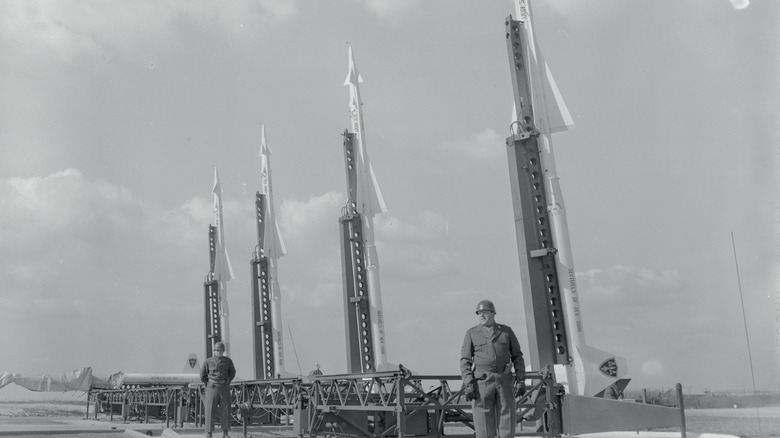
By June 1941, six months before the U.S. entered World War II, Fort Tilden transitioned from caretaker status to an operational military base with around 1,000 soldiers stationed there. Between 1946 and 1951, some barracks were converted to apartments for veterans returning from the war. However, the onset of the Cold War brought more troops and advanced weaponry to Fort Tilden. A Nike surface-to-air missile launch site was then established at the Fort in case of potential aerial attacks. Fort Tilden reached the end of its military chapter in 1974, when it was officially decommissioned and became part of the Gateway National Recreation Area.
Today, while most of the batteries sit in ruins covered in overgrown vegetation, visitors can still get a peek at some of the remnants today. The 1.5-mile Fort Tilden Loop is an easy and popular trail that takes visitors past the massive concrete ruins of Battery Harris. On AllTrails, one user notes that the walk is ideal for urban exploration, writing, "All the abandoned fort ruins have colorful graffiti." Although there is an observation deck above Battery Harris East that offers stunning views of Jamaica Bay, the wooden overlook was damaged by a fire in March 2026 and has remained closed to the public ever since.
Fort Tilden's beaches, trails, and cultural activities
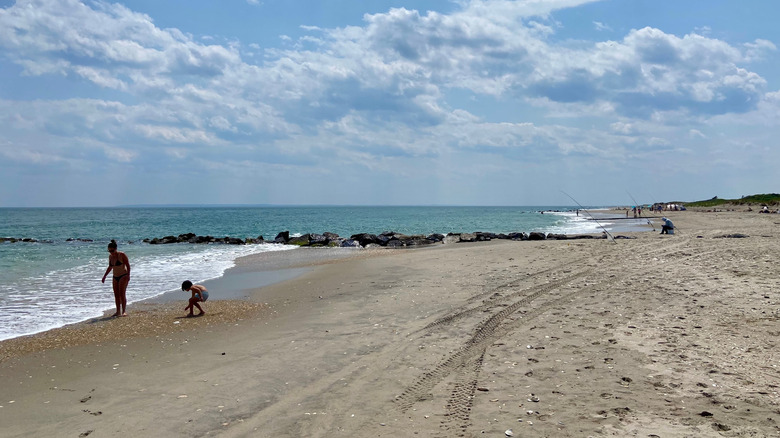
Like many former army bases repurposed as historic recreation areas, there is plenty for the community to do at Fort Tilden that doesn't relate to its military history. Its biking paths are popular among cyclists, though some sections require cyclists to walk their bikes over sand for a short distance. The National Park Service also occasionally hosts ranger-led nature walks along the shoreline and sand dunes. Birdwatchers can also spot seabirds along the coast and on the beach, and anglers can try their luck at saltwater fishing without needing a special fishing permit, but will need to register with the New York Recreational Marine Fishing Agency.
While many of the former military buildings are closed to the public, some have found a new life as cultural centers on the Rockaway Peninsula. The Rockaway Artists Alliance (RAA) is a nonprofit art organization whose mission is to engage local residents in the arts and cultural activities. They often host programs, such as visual exhibitions and art classes for adults. There is also the Rockaway Theater Company, which uses Fort Tilden's military buildings to host live musicals and plays multiple times a year, as well as acting workshops for Rockaway's youth.
If you're looking for a quiet refuge on a hot summer day in New York City, Fort Tilden's shoreline is often less crowded than other beaches on the Rockaway Peninsula. However, there are no lifeguards or concessions, and many of the parking lots require seasonal permits. From Wall Street in Lower Manhattan, you can take the 2 or 5 train to Flatbush Ave in Brooklyn, then switch to the Q35 bus to Rockaway Point Boulevard. From there, you can walk to Fort Tilden in about 20 minutes.
For more off-the-beaten-path Big Apple attractions, check out our list of underrated tourist attractions in New York City.