

Why You Should Never Ignore The SEQ Code On Your Boarding Pass
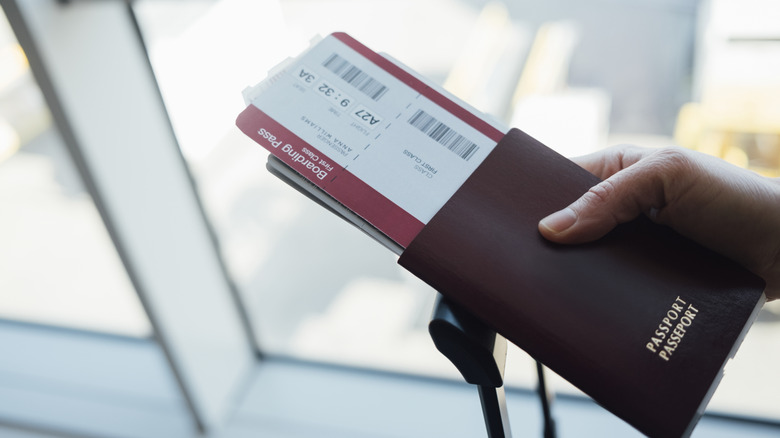
Have you ever really looked at your boarding pass and all those random numbers written across it? Besides the usual destination and departure time, it includes a lot of helpful information that you might otherwise overlook. From indicating your TSA PreCheck status to your boarding group, most are simple data points, but some are worth paying closer attention to the next time you fly. One of these is SEQ, followed by a number. SEQ, short for sequence number, is determined by the order in which you check in. The lower the number, the earlier you checked in. If you were the 15th person to check in, for instance, you'd have "SEQ 015" written on your boarding pass. While it may seem like an insignificant detail, your sequence number could matter if your flight is overbooked, since some airlines consider check-in order when deciding which passengers to bump.
Unlike GTE, a three-letter code you never want to see on your boarding pass, a sequence number isn't inherently bad news and is a standard practice for most carriers. "SEQ appears on every passenger's boarding passes [sic], regardless of travel timing or if the flight is full or oversold," Eric Napoli, the chief legal officer of AirHelp, shared with Reader's Digest. It doesn't indicate a passenger's boarding group or standby position on a flight, but simply records their check-in order. For the most part, it's only a metric, but it's worth taking a closer look in certain situations.
High sequence numbers and overbooked flights
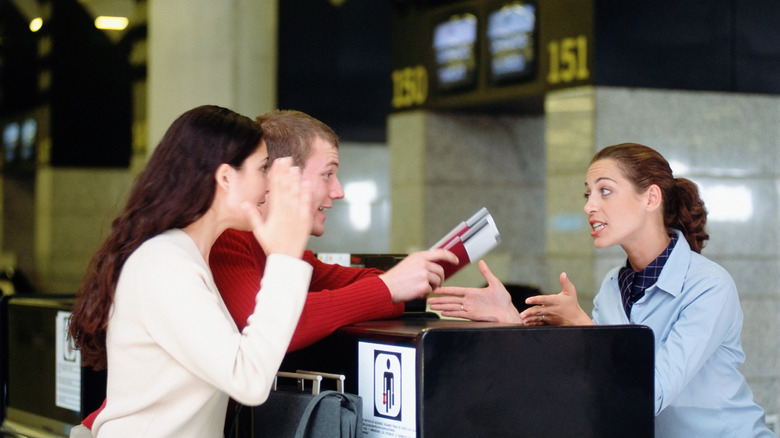
Believe it or not, airlines overbook flights all the time, and according to the U.S. Department of Transportation, it's completely legal. Carriers do this to account for passengers who don't show up for their flights. While their projections are usually accurate, problems arise when more passengers show up than there are seats available. Gate agents must then ask for volunteers to give up their seats, usually in exchange for compensation and a later flight. However, if there aren't enough volunteers, the airline may begin involuntarily bumping travelers. That's when check-in order can come into play.
Checking in late is a common mistake that could increase your chances of getting bumped from your flight if it's oversold, since you'll likely have a high sequence number. If you're one of the last people to check in, you could be at greater risk of losing your seat, depending on the airline's policies. However, a higher sequence number doesn't automatically mean you'll be denied boarding. "Other factors airlines may consider include elite status, fare class, full-fare passengers, airline crew, or priority passengers," Eric Napoli told Reader's Digest. If you do get involuntarily bumped, make sure you understand your rights and whether you're entitled to compensation, as this depends on your itinerary and circumstances.
How to get a low sequence number and why it matters
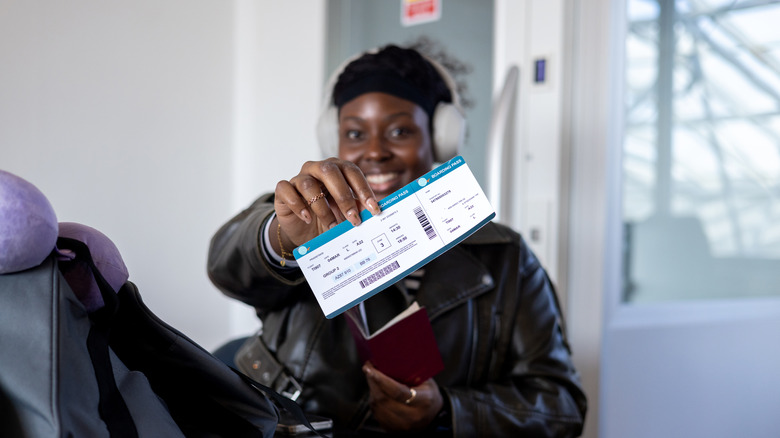
The best way to receive a low sequence number is to check in early. Nowadays, many carriers allow online check-in starting around 24 hours before a flight, giving travelers the opportunity to bypass airport desks and head straight to security if they don't need to check bags or verify travel documents. Many will even send an email or a push notification as a reminder when it's time to check in. If you have no choice but to check in at the airport, make sure to arrive early; travel experts, including TSA spokesperson Lisa Farbstein, recommend arriving two hours early for domestic flights and three hours early for international flights. "This is especially important if someone is traveling during a holiday period," she told Travel + Leisure. It's also important to confirm your airline's check-in and bag-drop cutoff times, as they can vary by carrier.
If you check in the moment online check-in opens, you might secure the special SEQ 001 code if you happen to be the first person to complete the process. Some travelers seek out this number for bragging rights or general satisfaction, while others do so for practical reasons. While it might not provide any financial gain or upgrade, checking in early could work in your favor if the airline considers check-in order when deciding whom to bump from an overbooked flight. A low sequence number doesn't guarantee you'll keep your seat, though. Checking in early may also give you more seat options, depending on the carrier and your fare. All in all, sequence numbers are generally harmless metrics, but knowing what they mean is one more reason not to leave check-in until the last minute.