

New York's Quiet Beach Escape Offers A Tranquil Reprieve From Brooklyn's Buzzing Streets
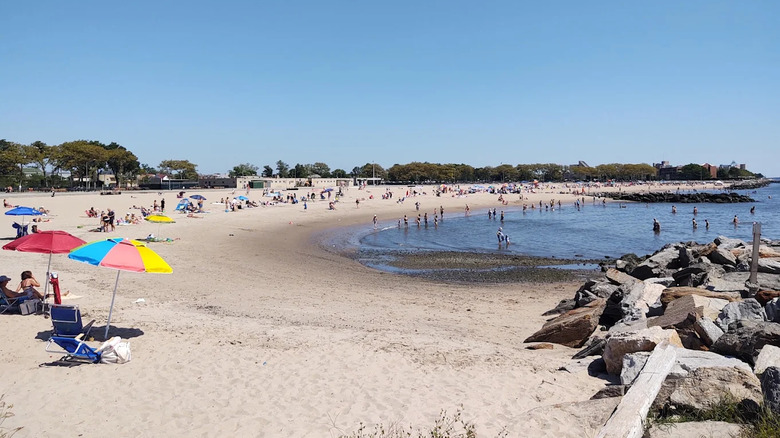
On a peninsula in southern Brooklyn, the quiet, peaceful vibe of a coastal neighborhood makes it hard to believe you're still in New York City. Manhattan Beach offers a relatively calm alternative to nearby Coney Island and Brighton Beach, with a 43-acre park home to sandy shores and plenty of recreational activities.
Just 45 minutes from Lower Manhattan by public transit, locals use Manhattan Beach like they do Rockaway Beach: a seaside getaway to take a break from city life by picnicking on the beach and wading through Atlantic waves.
Manhattan Beach started as an exclusive summer resort in 1877 after a real estate developer built the Manhattan Beach Hotel, followed by the Oriental Hotel in 1878. During the Gilded Age, New York City's elite would flock to these hotels and watch American composer John Philip Sousa perform. But as Coney Island began to develop its boardwalk and amusement park, opening its first enclosed park in 1895, the resorts in Manhattan Beach suffered financially and eventually closed down. The neighborhood was transformed into a desirable residential area starting in the 1920s. Manhattan Beach Park opened to the public in July 1955 after the land was transferred to the city four years earlier. Here's why it's still a local favorite today.
Enjoying the seaside at Manhattan Beach Park
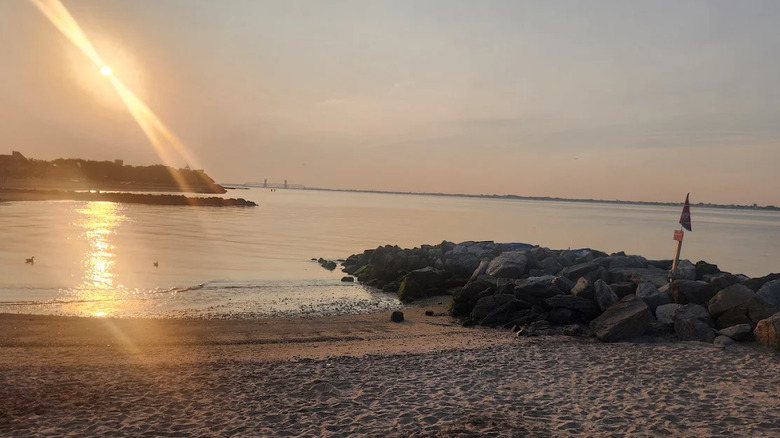
Because Manhattan Beach is a bit harder to reach by public transport than many places in the city, it's far less crowded than neighboring beaches and popular with locals who live in the community. Many come to the beach on hot summer days when swimming is allowed (lifeguards must be on duty) between late May and early September. While not as lively as Orchard Beach, often called the "The Bronx Riviera," weekends can get busy, with many families coming to barbecue, build sandcastles, and enjoy the Atlantic.
The beach is also accessible for wheelchair users, with beach mats and reservable beach wheelchairs. Manhattan Beach's website lists guidelines for visitors to follow to protect others and the environment.
While New York's beaches are busiest in July and August, many make their way over to Manhattan Beach in May and June to observe horseshoe crabs coming ashore during mating season. Aside from its small sandy strip, Manhattan Beach Park has a handful of sports courts and athletic fields, from tennis and basketball to baseball and volleyball. There are two playgrounds for children, including the Pat Parlato Playground, as well as an off-leash area for dogs and public restrooms with showers. Visitors can enjoy the Dora Borell Garden's blooms and stroll along the beachfront promenade, taking in ocean views.
Planning a visit to Manhattan Beach and surrounding neighborhoods
The easiest way to reach Manhattan Beach from Downtown Brooklyn is to take the B subway line to Brighton Beach and switch to the B49 bus. If you are traveling by car, there is a huge parking lot just near the beach area. From Monday to Friday, parking is $12 and increases to $25 on weekends and holidays during beach season, as of this writing.
Although the beach is only open for the summer, walking paths and recreational fields are open year-round for the community to utilize. The park is open from 6 a.m. to 9 p.m. every day.
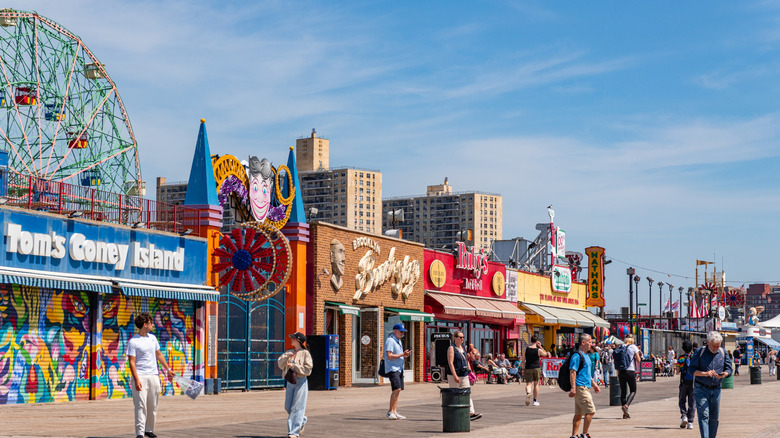
Due to its proximity to other popular attractions, a perfect summer day can start with sunbathing on Manhattan Beach's sandy shores, followed by an evening at Coney Island, one of the most popular old-school boardwalks in America. The two are within a 40-minute walking distance of each other, or you can hop on the B1 bus for a quick 20-minute ride. In Coney Island, you can ride roller coasters at Luna Park, see the New York City skyline from an early 20th-century Ferris Wheel, and discover marine life at the New York Aquarium. Between the two neighborhoods is Brighton Beach, which is famous for its cultural diversity and variety of restaurants. Here, visitors can try authentic Georgian and Central Asian cuisine at establishments like Kashkar Cafe, a traditional Uyghur restaurant loved by locals.