

Georgia's Former Army Base Is Now A National Monument With Civil War Relics And Historic Trails
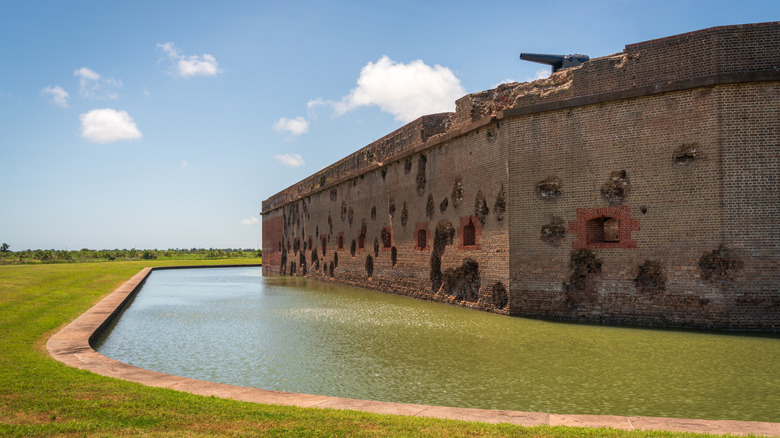
The U.S. state of Georgia may be best known for its bustling capital city, Atlanta, but the Peach State is also rich in history, being home to hundreds of Civil War battle sites. On Cockspur Island just outside Savannah, often called the friendliest U.S. city by tourists, sits a 19th-century fort known as Fort Pulaski. Once the site of a major siege during the Civil War, today the fort is a registered National Monument with historical relics and seaside trails open to the public. Visitors can explore the fort grounds inside and out via Ranger tours or self-guided discovery, learn something new at the Visitor Center, and walk and bike along scenic hiking paths.
Fort Pulaski, built at the mouth of the Savannah River 30 minutes from Savannah, was completed in 1847 as a brick-and-mortar fortification typical of the period. Three months before the Civil War began in 1861, local state militia seized the fort from the Union.
At the time, Fort Pulaski was believed to be impregnable, but just a year later, in April 1862, the Union quickly proved otherwise. The fort's outdated artillery was no match for the Union's new rifled cannons, and the Confederate army surrendered within 36 hours. As a result of the Battle for Fort Pulaski, it became obvious that traditional brick and stone fortifications were now obsolete in battle.
Exploring Civil War relics at Fort Pulaski
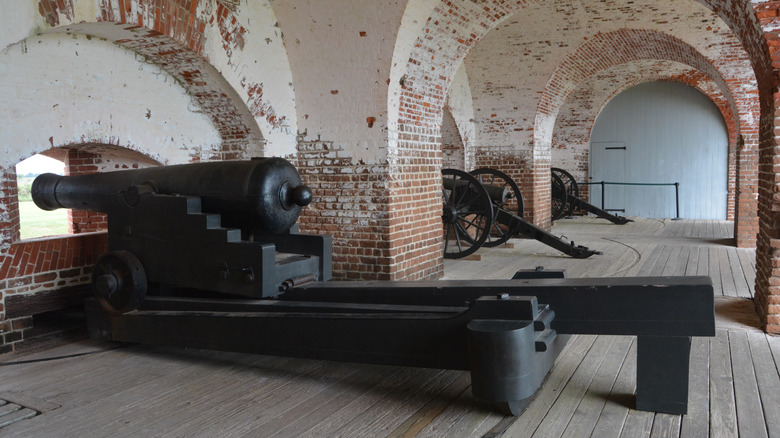
Since the Battle for Fort Pulaski was relatively short and the army abandoned the fort in the 1870s, most of the fort remains intact. The National Park Service hosts various events for visitors to learn more about the fort's history, such as guided tours and Ranger Talks. Guided tours cover the lower level of Fort Pulaski for about 30 minutes, while Ranger Talks focus on answering visitor questions about the fort and surrounding areas. These talks happen daily at 11 a.m. at the time of writing. However, you can still explore the fort on a self-guided tour by picking up a brochure at the Visitor Center.
Similar to a visit to the antique-filled, old-school city of Monroe, you'll find many Civil War relics along the tour route. Original structures from the 19th century still remain, since Fort Pulaski was never updated with modern installations. Even before entering the fort, you'll see gaping holes in the fort's walls from the Union's artillery fire from 1862.
Inside the fort, the parade grounds are scattered with authentic cannons, a few of which were actually there when the site was operational. You'll also see soldier quarters, offices, and casemates that were built to protect artillery. Combine the fort with a hiking route to also see Battery Hambright, a 1901 Endicott-era battery whose guns were never installed. Throughout the park, you'll find remnants of cisterns from the workers' village, a cemetery, and a 20th-century quarantine station.
Scenic trials, water attractions, and planning your visit
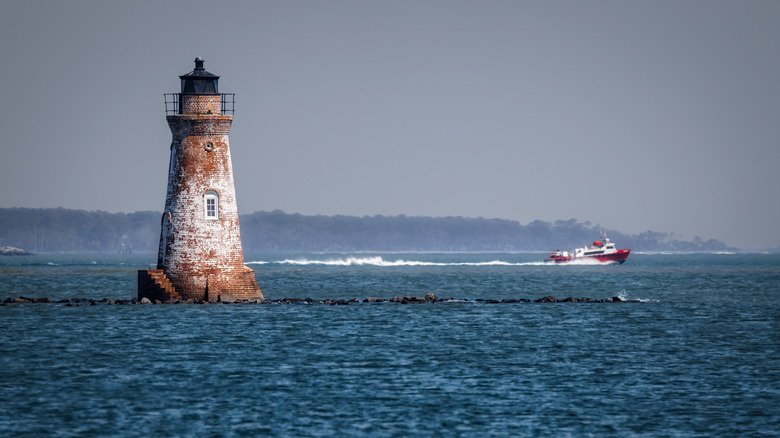
Sitting on 5,623 acres, Fort Pulaski National Monument encompasses the fort and the surrounding park. Throughout the property, multiple hiking trails wind past historic ruins and natural beauty. The 1.7-mile Lighthouse Overlook Trail has gorgeous views of the Cockspur Island Lighthouse, while the mile-long North Pier Trail lets visitors explore Battery Hambright. For the best views of the nearby Savannah River and Cockspur Island, the Historic Dike System is a 2-mile-long trail that winds through a tide-control system designed by Civil War Lt. Robert E. Lee. Birdwatching and wildlife observation are also popular at the park, with visitors spotting bald eagles and otters along different paths. A trail map is available on Fort Pulaski's website.
Fishing and paddling are popular activities at the national monument. With a valid Georgia fishing license, anglers can enjoy casting a line from the base of Cockspur Island Bridge (fishing from the bridge itself is prohibited during park hours), West End Fishing Area, and Lazaretto Creek Pier. The Savannah River offers opportunities to catch a variety of fish, such as herring, sea bass, and perch. Year-round, kayaks and other small boats can be launched from the boat ramp at Lazaretto Creek. Whether fishing, birdwatching, or simply enjoying nature, paddling provides a new perspective of the national monument from the water.
A standard pass to enter Fort Pulaski National Monument is $10 per person at the time of writing, while an annual pass for frequent visitors is $35. Parking at the monument and access to Fort Pulaski and its hiking trails are included in the standard pass price. The park is open every day from 9 a.m. to 5 p.m., while the fort closes thirty minutes prior. Since the fort is not accessible by public transport, it can be paired with a trip to the nearby underrated Tybee Island for a coastal Georgia road trip.