

Forget Mammoth Cave: This National Monument Has The Most Caves For A Different Adventure
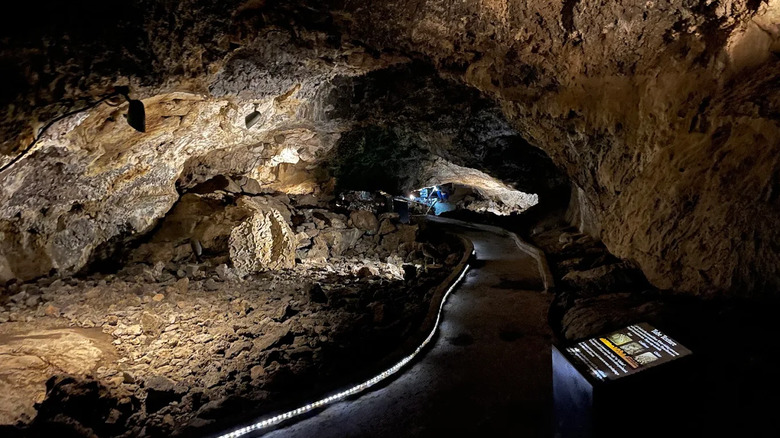
There is no doubt that Mammoth Cave is the one of the most visited cave systems in the United States with around 750,000 visitors per year. Located between Louisville, Kentucky, and Nashville, Tennessee, Mammoth Cave is the longest cave system in the world with over 426 miles of connected passages. However, 2,300 miles away in Northern California close to the Oregon border, Lava Beds National Monument is home to way more individual caves — over 800 – making it the one of the largest cave concentrations in North America.
Unlike Mammoth's limestone caves, which were carved by underground water systems over millions of years, the caves at Lava Beds National Monument in Tulelake, California, were formed over the past 500,000 years by eruptions of the local Medicine Lake volcano. During this series of eruptions, as the lava cooled and hardened above ground, molten lava continued to flow below the surface, leaving behind a fascinating network of lava tubes that sets Lava Beds apart from other cave systems throughout the United States. Today, visitors can explore 24 of these lava tubes, with varying levels of difficulty, from easy walks to challenging explorations that require ducking and squeezing through narrow passages.
Finding the right cave to explore at Lava Beds National Monument
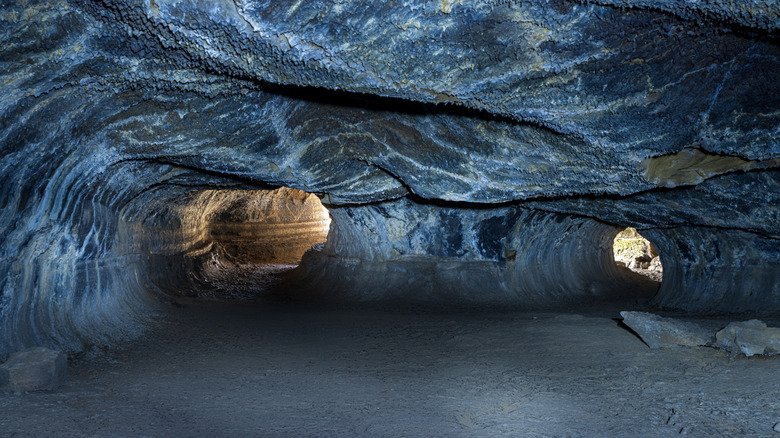
With two dozen explorable lava tubes, each cave at Lava Beds National Monument offers a unique experience. If you're a novice caver or just want to show your kids something cool, the National Park Service recommends the 770-foot-long Mushpot Cave as an introduction, with informational plaques throughout that explain the cave's formations and climate. Not only is it paved the entire way through, but it's also the only lit cave at Lava Beds.
Golden Dome is a good option for those looking for something more difficult but not extreme. The 2,229-foot-long cave can only be entered via ladder and gets its name from its golden ceiling, which is caused by light reflecting off bacteria-coated water droplets. The hardest caves, such as the 6,903-foot-long Catacombs Cave, should only be explored by experienced spelunkers. Catacombs Cave gets gradually more difficult – you can only walk 800 feet upright before having to duck-walk for most of the way. There are even some spots where the ceiling is no more than 1-foot tall!
With any cave exploration, there are strict rules that must be followed. At the visitor center, you must pick up a free cave permit and complete a white-nose syndrome screening to protect the local bat population from disease. Even beginners should know the basics of cave spelunking and bring safety gear, such as helmets, long pants, and sturdy footwear, as well as a headlamp and handheld flashlights, and you might also need gloves and knee pads for harder caves. The NPS also encourages visitors to follow its "Cave Safely, Cave Softly" guidelines, which help protect both cavers and the fragile cave system, including staying aware of your surroundings, avoiding contact with rock formations, and refraining from eating, smoking, and leaving trash behind.
Beyond caving at Lava Beds National Monument
Lava Beds National Monument has even more to do for those who might not be interested in intense caving. In fact, there are 13 hiking trails in the area, and while most are quite short, there are plenty of historical and geological sites to explore along the way. For the best views of the monument, the 0.7-mile Schonchin Butte Trail leads you 500 feet up to a fire lookout tower where you can observe the area's unique volcanic landscape. For a longer hike, you can admire nearby Mount Shasta from the 3.3-mile Whitney Butte Trail or observe collapsed lava tubes on the 8.7-mile Three Sisters Trail.
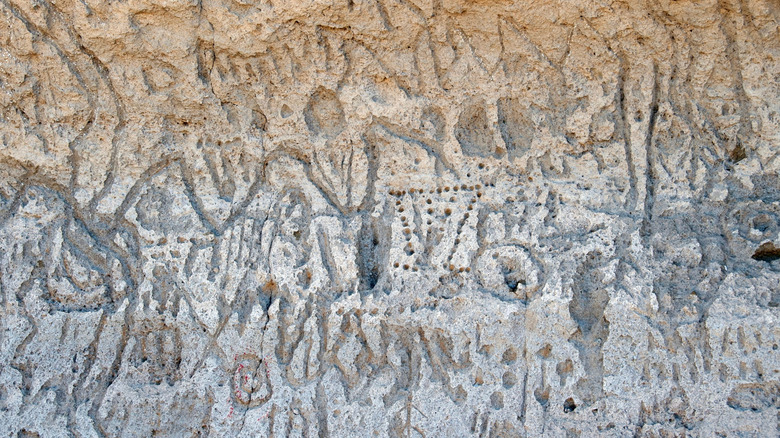
Located in the native lands of the Modoc people, the area also houses one of the largest displays of Native American rock art in California. With over 5,000 individual pictographs and petroglyphs, visitors can admire these ancient masterpieces around the area, including in the 266-foot Big Painted Cave. Rangers also lead tours in the form of guided hikes that cover the area's history, informational patio talks right outside the visitor center, and evening programs focusing on the night sky visible from the monument.
Since Lava Beds National Monument is a two hour drive from the nearest major airport in Medford, Oregon, a car is a necessity. Due to its remoteness, Lava Beds is a great stop on a nature-forward, historic West Coast road trip around the California-Oregon border. Standard visitor passes range from $15 to $25. For a break between stops, you can stay overnight at Indian Well Campground, only half a mile from the Visitor Center, in one of its 43 campsites for $20 a night.