

North Dakota's Former National Park Is Now A Lush Wildlife Preserve With Easy Hiking Trails
We're all familiar with iconic national parks, like Yellowstone and Yosemite. What's less known is that there are a number of sites that have lost that prestigious status. One of these is White Horse Hill National Game Preserve, formerly known as Sully's Hill National Park. Sitting on the southern shore of Devils Lake in North Dakota, deciduous forest shares the preserve's 994 acres with prairie and wetlands, providing a rich and varied habitat for wildlife and more than 200 species of birds.
The underrated Theodore Roosevelt National Park is currently the only designated national park in North Dakota. It was that president who established Sully's Hill National Park in 1904, named for General Alfred Sully, who was known for leading military campaigns against Native American populations in the area. It was named a big game reserve ten years later, with a 700-acre enclosure added for bison, elk, and deer. The park didn't attract many visitors, largely due to impassable roads, and its days as a national park were numbered. In 1931, it passed into the National Wildlife Refuge System. Despite being located within the Spirit Lake Reservation, it kept the Sully name until 2019, when, at the request of the Spirit Lake Tribe, it was changed to White Horse Hill. Ironically, the former national park is more popular than ever, attracting around 80,000 visitors annually.
Free to enter between 8 a.m. and sunset, several short trails traverse the preserve, with opportunities for wildlife and birdwatching all year round. Access to White Horse Hill National Game Preserve is via North Dakota State Highway 57. The nearest town is Devils Lake, around 12 miles away, where there's also a small regional airport. For road-trippers, it's roughly 100 miles from Grand Forks, although be extra alert when driving through North Dakota.
The trails in White Horse Hill National Game Preserve
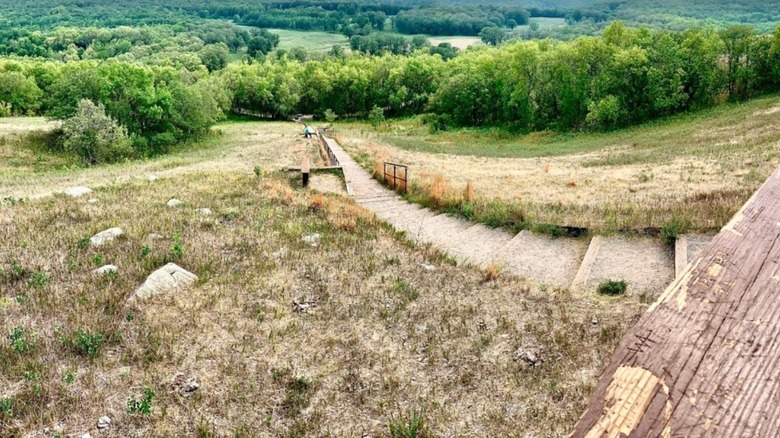
Your visit to White Horse Hill National Game Preserve starts with a scenic 4.5-mile auto tour to enjoy the views from the comfort of your own vehicle. This road passes through the large animal enclosure with its bison, elk, and deer, and gives access to the visitor center and the small trail network. Also along this route is the White Horse Hill Overlook Trail, which consists of a staircase that climbs around 300 feet to the top. The overlook gives superb views over the preserve as far as the historic Fort Totten, a former 19th-century military post.
Keen birders will want to take the quarter-mile Bird Watching Trail, which includes an observation deck and picnic area. The wetland habitat makes it particularly appealing to waterfowl including wood ducks, double-crested cormorants, and American white pelicans, and if you arrive in May, you'll hit peak warbler migration season. From World Migratory Bird Day in May until the end of National Wildlife Refuge Week in October, the Devil's Lake Vista Loop, an extension of the auto-tour, is also open for a chance to see other migratory birds.
The 1.4-mile Nature Trail, with an optional half-mile extended loop, takes you through woodland, prairie and wetland, allowing you to see the variety of habitats within the preserve. Woodland is rather sparse in North Dakota (only around 2% of the state is covered with trees), but here you can wander among oak, ash, basswood, and aspen, before enjoying the different grasses and wildflowers in the wide-open prairie.
The wildlife of White Horse Hill
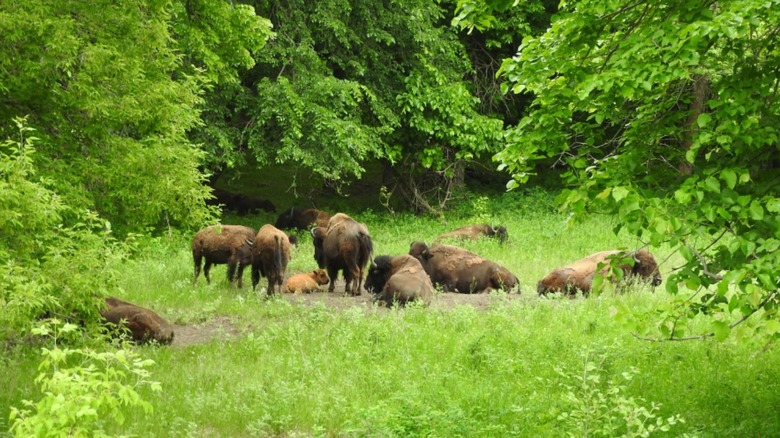
Chances are, while you're out walking on the trails, you'll see at least some of the wildlife that lives in the preserve. Theodore Roosevelt National Park isn't the only place in North Dakota where you can see bison — a small herd inhabit the prairies of White Horse Hill too. Herd numbers are kept to around 20 to avoid overgrazing, which is essential conservation work given that prairie land on the whole is decreasing throughout the country. The best chance of spotting bison, elk, and white-tailed deer is in the large animal enclosure as you enter the preserve on the auto-tour. For safety reasons, visitors must stay in their vehicle within the enclosure, and there are rules to follow when you encounter a bison.
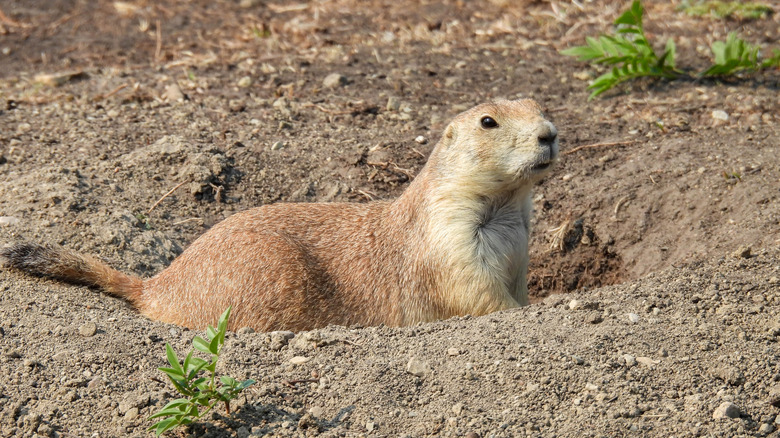
If you head along the trail beside the visitor center, you'll discover the black-tailed prairie dog town, where it's possible to watch the animals, which were introduced in 1975, at close range. The visitor center itself is full of useful information with wildlife displays and a gift shop, but it's only open seasonally from June until August.
You can stay overnight at the nearby historic Totten Trail Inn within the Fort Totten Historic Site, which will give you a chance to step back in time, with rooms decorated in late 19th-century style. Or, head to Devils Lake, which has a larger choice of accommodation and restaurants. There, you'll find The Ranch Steakhouse for meat eaters and the family-run Mexican-themed Anna's Cocina & Tequila which has some vegetarian options.