

Maryland's Former Army Base Was DC's Only Defense. Now It's A Riverside Park With Scenic Trails
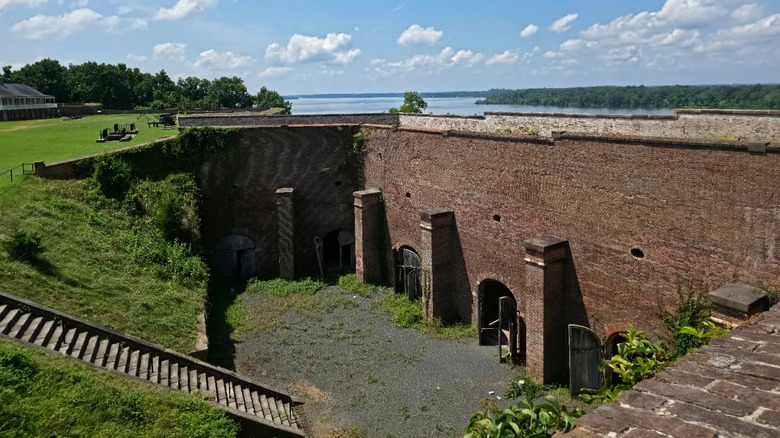
Washington, DC, is full of American history, but you can also find significant sites just outside the city. About a 40-minute drive south, Fort Washington is a former army base that once protected the nation's capital along the Potomac River. In fact, it was Washington's only major fortification until the Civil War. Like Fort Armistead, an abandoned military fort turned park, Fort Washington is now a public space with scenic hiking trails, historical demonstrations, and excellent fishing.
Before Fort Washington was built, Fort Warburton occupied the site. However, when the British invaded Washington, DC, in 1814 and burned both the Capitol and White House, the fort's commander ordered it destroyed to prevent its capture by British troops. The U.S. Army Corps of Engineers later rebuilt the defenses, completing the new Fort Washington in 1824. The fort was modernized throughout much of the 19th century, guarding the river approach to Washington during the Mexican-American War and Civil War, and later during the Spanish-American War.
During World War I, the fort served as a staging area for troops bound for Europe. It later housed an infantry unit before being deactivated in 1939. During World War II, the Army used the site as a school for training officers in administrative duties. In 1946, the grounds were transferred to the Department of the Interior and became part of the National Park Service. Today, visitors can still find the Fort Washington Lighthouse and the remnants of several military batteries, including Decatur and Smith, around the park.
Hiking and history at Fort Washington Park
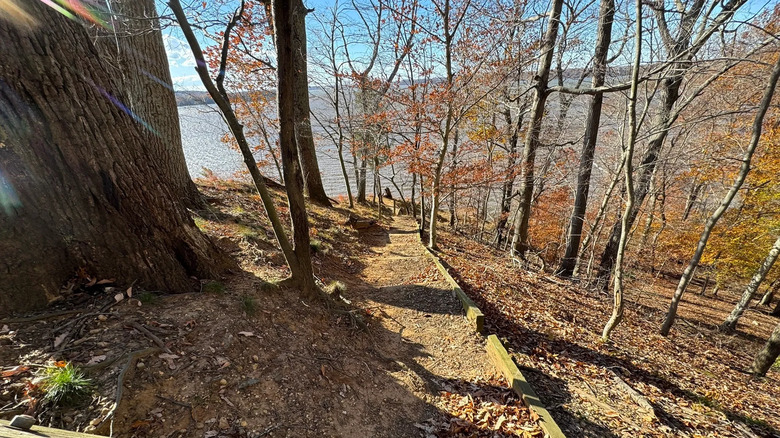
One of the biggest draws of Fort Washington Park is the 3-mile Perimeter Trail, which winds around the park's boundaries, including stretches near the Potomac River. The hike takes about three hours and is generally easy, aside from some steep hills. The path winds past historic buildings, through forested areas, and along the river, blending history with peaceful nature. It's also a great trail for dog walkers and trail runners. Elsewhere around the park, visitors can explore the remains of Battery Meigs and Battery Wilkin, and see the historic post exchange building. While it's not exactly comparable to the gorgeous Catoctin Mountain Park in Maryland's Blue Ridge Mountains, it's still hard to believe Washington, DC, is less than 20 miles away.
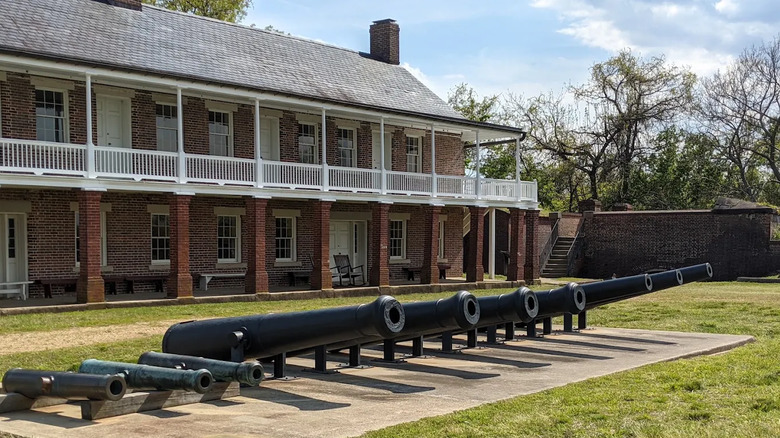
For history buffs, the fort offers ranger-led tours that take visitors across parade grounds and former barracks. The 45-minute tours typically run twice daily, at 11 a.m. and 2 p.m., Wednesday through Sunday. However, you can also take a self-guided tour using a brochure from the visitor center or the NPS app. There are over a dozen points of interest along the way, all explained in detail in the brochure. The visitor center also has historical exhibits for visitors to explore. Fort Washington hosts artillery demonstrations where rangers, historians, and fort volunteers show guests how Civil War-era cannons were loaded and fired. These take place on the first Sunday of each month from May through November, as listed on the fort's events page. The historic fort and visitor center are open from 9:30 a.m. to 4:30 p.m. Wednesday through Sunday.
Other activities and getting around Fort Washington Park
If you are planning to visit Fort Washington while on a trip to the nation's capital or Alexandria, a city filled with European charm, it's worth checking out some of the other activities available at the park. Not only can you connect with nature and escape the rush of nearby cities, but Fort Washington is also great for fishing. The most accessible spot for fishing is near the park's Light 80 lighthouse. Anglers can catch several species of fish in this stretch of the Potomac River, including catfish, largemouth bass, and striped bass. A Maryland tidal sport fishing license is generally required, though some exemptions apply. Birdwatchers also enjoy the area, where nearly 200 species of birds have been reported. Waterfowl frequent the Potomac's shores in the winter, while migrating songbirds can be heard whistling from the trees in the spring and fall.
Fort Washington Park is also a great stop on a road trip through the DC area, especially since driving is one of the most convenient ways to reach it. Visitors can learn a little American history, enjoy a hike along the shaded trails, and even have a picnic overlooking the Potomac before setting off for other destinations around Maryland or Virginia. The park is free to enter and open daily from 6 a.m. to 10 p.m., although vehicle access through the gates begins at 7 a.m.