

Near Duluth Is A Top-Rated Minnesota State Park With A 200-Foot Suspension Bridge And Scenic Camping
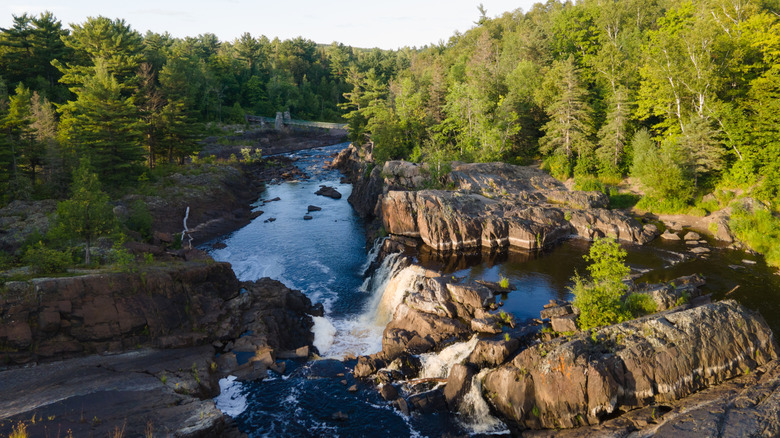
Minnesota may be called the Land of 10,000 Lakes, but its beauty comes just as much from its land as its famous waters. In Jay Cooke State Park, not far from the underrated city of Duluth, dense hardwood forests grow alongside the St. Louis River, Lake Superior's largest U.S. tributary. Depending on the time of year, the river flows gently or thunders through rocky gorges and steep valleys on its way up to Lake Superior, the world's largest freshwater lake by surface area.
As one of the more popular parks in Minnesota, the nearly 9,000-acre Jay Cooke State Park consistently draws visitors with its famous Swinging Bridge and miles of hiking and biking trails through beautiful countryside that can be enjoyed year-round. And for those who don't want to leave this picturesque place behind, there are several camping options, ranging from cozy cabins to backcountry campsites. Rated a solid 4.9 out of 5 on Google and 4.7 out of 5 on Tripadvisor, the park has left a lasting impression on its visitors. "I loved it so much!" said one Google reviewer. "The colors were beautiful, the weather was perfect, and the hiking trails were a great way to spend the afternoon."
The park was established in 1915, but its history goes back much further. Dakota and Ojibwe peoples, and later fur traders, used a route known as the Grand Portage to bypass the dangerous river rapids. The park itself is named after Jay Cooke, a Philadelphia banker who helped establish the Lake Superior and Mississippi Railroad. Rail travel eventually replaced the need for canoe-based transportation along the historic route. Located near Carlton, around 18 miles southwest of Duluth, the park makes a worthwhile detour from the Lake Superior city, with Minnesota Highway 210 running through it.
The Swinging Bridge and surrounding trails
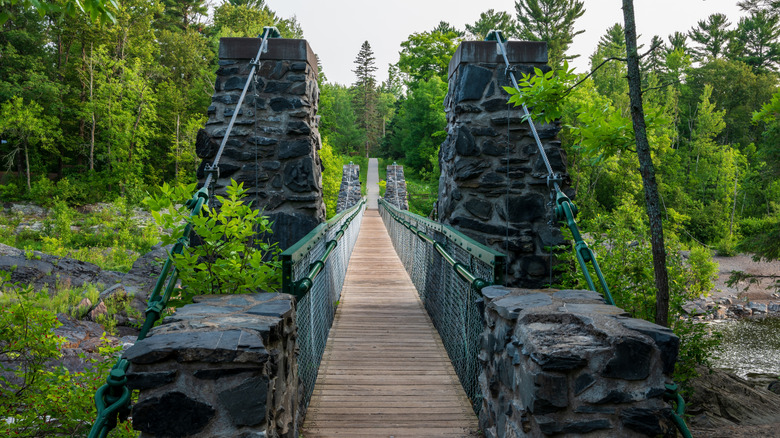
The Jay Cooke State Park Suspension Bridge is one of the main attractions, as much for the views from it as the views of it. Better known as the Swinging Bridge, the present 220-foot-long structure still has a nice bouncy sway as you cross the river. Due to considerable flooding, the bridge has been rebuilt and replaced several times over the years, with its height raised by a total of 7.5 feet since the original rope-and-wood bridge was built in 1924.
As you take a moment to admire the exposed slate and graywacke rock formations and rushing river below, you'll notice the water is distinctly brown due to tannins released from wetlands and bogs upstream. The river itself is a force to be reckoned with come early spring, as the snowmelt turns it into thundering rapids, attracting expert paddlers keen to tackle the challenging whitewater. For a less daunting experience, there's flat-water paddling on Fond du Lac Reservoir, accessible from the Grand Portage parking lot.
Around 50 miles of hiking trails pass through the park, as well as several mountain bike and cycling trails. The park also connects with the 70-mile paved Hinckley-Duluth section of the Willard Munger State Trail. To make the most of the river and gorge views, take the 3.5-mile Silver Creek Trail loop, which crosses the Swinging Bridge, or the more challenging 5-mile Carlton Trail loop. It's scenic at any time of year, but especially in fall, when the basswood and birch trees turn golden, or in spring, when trillium, trout lilies, and wild ginger brighten up the forest floor and the park's many warblers provide a natural soundtrack.
Camping for all seasons
There's no better way to enjoy the great outdoors than a spot of camping, and Jay Cooke State Park has plenty of options, including nearly 80 sites suitable for tents and RVs, 10 tent-only sites, and five camper cabins. Some sites have electric hookups, with accessible and group campsites also available. A selection of campsites is open in winter, as are all five cozy camper cabins, which have heat and electricity. Needless to say, camping is popular here, and reservations are required for all sites and cabins. Bookings can be made up to 120 days in advance through Minnesota DNR's reservation system.
Campers appreciate the spacious sites and accessible bathrooms, with surrounding trees providing plenty of privacy. Downsides include uneven ground and an abundance of bugs and ticks. The park is also home to black bears, timber wolves, and white-tailed deer, so remember to keep food secured in a locked vehicle or bear-resistant container rather than in your tent. "This is a favorite of mine," said one TheDyrt reviewer, who praised the campground's facilities and nearby Swinging Bridge.
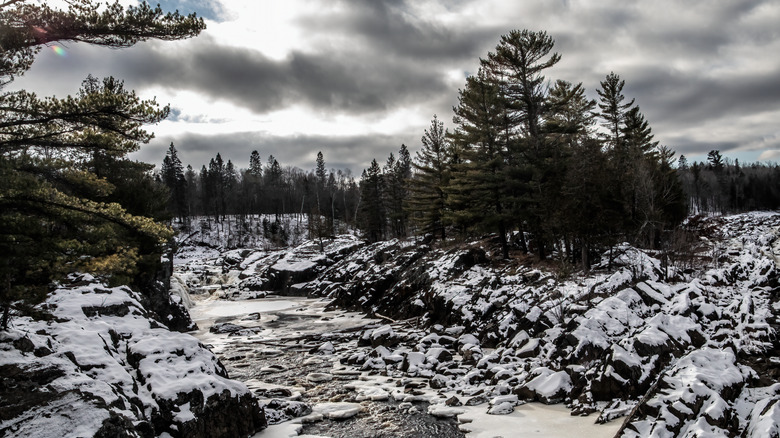
Winter opens up a whole new world to visitors, with around 32 miles of cross-country ski trails. Snowmobiles are allowed on sections of the Willard Munger State Trail, and snowshoeing is permitted throughout much of the park, with snowshoes available to rent for $6 per day. The St. Louis River doesn't completely freeze over, with the dark water contrasting with the ice and snow, making the landscape resemble a black-and-white photograph. The park is open from 8 a.m. until 10 p.m. year-round, and you'll need a Minnesota state park permit, costing $7 per day at the time of writing. Camping and cabin fees are separate. For more stunning Minnesota scenery, visit this Midwest state park for outdoor adventure, or this underrated state park you've likely never heard of.