

Minnesota's Former Army Base Has A Scenic State Park With Lake Islands, Trails, And A Fishing Pier
A U.S. Army base probably isn't the first place you'd think of when planning a day out in nature. But abandoned forts and decommissioned military bases are often repurposed as nature reserves, recreation areas, and even state and national parks. Some of the most interesting outdoor spaces in the U.S. were once Army bases, like Fort Ord National Monument in California or Dry Tortugas National Park in Florida.
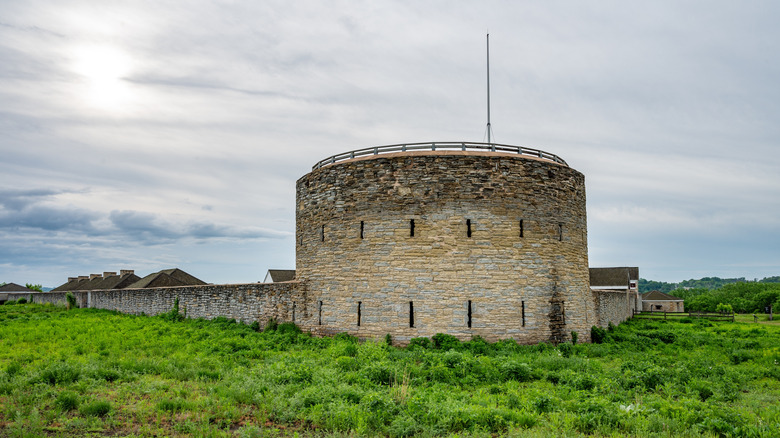
Minnesota's Fort Snelling is a great example of how decommissioned military sites can be transformed into amazing state parks. Designated in 1960 as Minnesota's first National Historic Landmark, the park boasts a lake with picturesque islands, miles of trails, and charming piers ideal for fishing. The fort remains a highlight of the park, with its iconic Round Tower overlooking the confluence of the Mississippi and Minnesota rivers. It's a popular place to explore, ranking as one of Minnesota's top tourist attractions, as well as being a great place to immerse yourself in a Midwest wilderness without straying too far off the beaten track.
Fort Snelling State Park is situated on the outskirts of Minneapolis, overlooking the Minnesota and Mississippi rivers. It's a short, 15-minute drive from the center of Minneapolis, and roughly the same distance from St. Paul. It is also right next to one of the oldest airports in America, Minneapolis-Saint Paul International Airport (MSP), making it an extremely accessible place to get to.
Minnesota's first National Historic Landmark
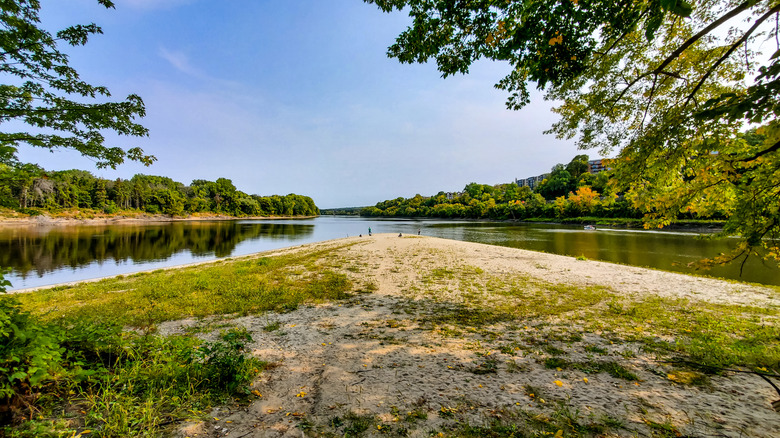
The land where Fort Snelling State Park sits has been inhabited for more than 10,000 years, and it holds a special place in the traditions of the Dakota people, who consider the meeting of the two rivers to be a sacred spot. The fort itself was built in 1819 to establish U.S. control over the area, drive out the British, and dominate the Native American population. Over its history, it was largely used as a training base, training soldiers for the Indian Campaigns, the Spanish-American War, and both World Wars. It was infamous in the run-up to the Civil War, as soldiers stationed there were permitted to bring slaves with them, despite slavery being illegal in the surrounding territories. The fort was in use until the end of World War II, when it was decommissioned and given to the Veterans Administration.
The fort was designated a National Historic Landmark in 1960, and the state park opened in 1962. The park shares a border with the Minnesota Valley National Wildlife Refuge and is a haven for wildlife and biodiversity. White-tailed deer, muskrats, mink, otters, and beavers are common sightings within the park, and it is also a wonderful place for birding, with bald eagles, great horned owls, red-bellied woodpeckers, chickadees, and sandpipers.
The rivers and lakes that sit within the state park are lovely spots to explore, and Picnic and Pike Islands are particularly good places to see bald eagles. Visitors can canoe and swim in Snelling Lake, and there's a boat ramp on the Minnesota River for kayaks.
Hiking, fishing, and cross-country skiing at Fort Snelling State Park
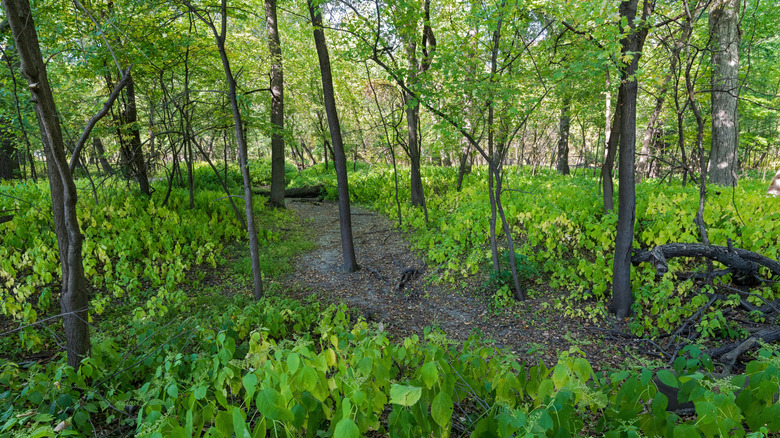
Fort Snelling State Park is a great destination for outdoor activities and is a remarkably large natural area to explore so close to the city. With 18 miles of hiking trails and 5 miles of biking trails, there's plenty to do for the more active visitors. The Pike Island Loop is one of the most popular hiking trails, an easy 4-mile loop that offers beautiful views of both the Minnesota and Mississippi rivers. For something a little more challenging, there's a 5.5-mile loop that goes around Picnic Island and Lake Snelling, which offers the chance to see the dramatic fort in all its glory.
In the winter, the park boasts around 12 miles of carefully prepared ski trails ideal for cross-country skiing, while most of the waymarked hiking trails can be undertaken in snowshoes. Dog sledding is permitted on 6 miles of trails, and skijoring (being pulled on skis by a horse, dogs, or a vehicle) is also allowed.
Fort Snelling State Park is also an excellent destination for anglers. Fishing is permitted on Snelling Lake, as well as on both the Minnesota and the Mississippi Rivers, and there's a lovely pier on Snelling Lake that is very popular. Minnesota residents don't need a license to fish, but out-of-state visitors will need to purchase one online.