

Spain's Former 'Most Dangerous Walkway' Is Now A Breathtaking Cliffside Adventure
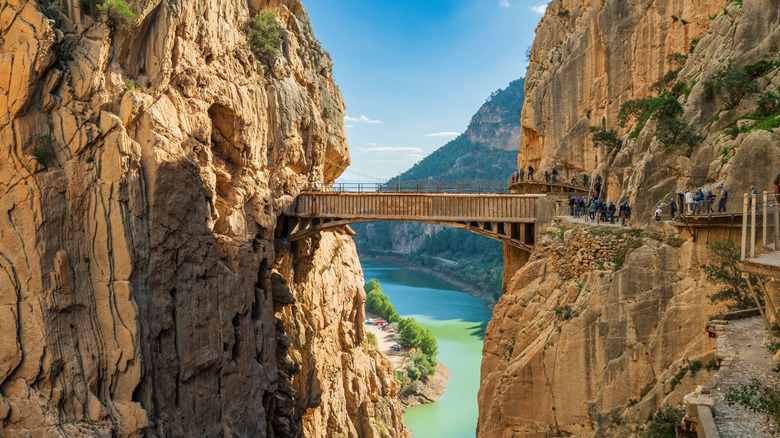
If you've never heard of the Caminito del Rey in the Málaga region in southern Spain, you may be in need of some reassurance before you head out on what was once known as Spain's "most dangerous" walkway. A far cry from the long sandy beaches for which the Costa del Sol is famous, the Caminito del Rey clings to the sheer limestone walls of the Desfiladero de los Gaitanes, a deep gorge carved out by the Guadalhorce River, some 328 feet below.
Originally constructed between 1901 and 1905, the walkway provided access for workers with the El Chorro Hydroelectric Company. Providing access from Ardales to El Chorro, the original walkway was much more basic than the present one and was built using fixed iron rods and thick boards. When King Alfonso XIII visited in 1921 to inaugurate the Conde del Guadalhorce Reservoir, it became known as the Caminito del Rey, meaning the King's Little Path.
As time went by, the path deteriorated through lack of use and exposure to the elements. However, the presence of danger isn't always a deterrent, and for some thrill-seeking climbers, it became a challenge they couldn't resist. Unfortunately, yet sadly predictably, a series of fatal accidents around the turn of the millennium meant access was effectively banned, with authorities going so far as to destroy the trail's entrance so that no one could enter the tunnels. The closure didn't last long, though, and after extensive reconstruction, the Caminito reopened to the public in 2015.
The Caminito del Rey makes an enjoyable day trip from Málaga, around 37 miles away and reachable by road via the A-357 or by train to nearby El Chorro. However, it's not recommended if you suffer from vertigo. In that case, stick to lower ground and head to the appealing yet underrated resort town of Nerja instead.
Walking the Caminito del Rey
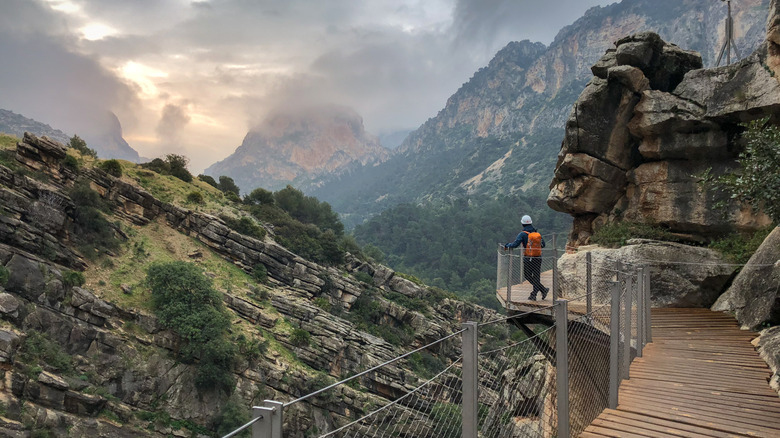
While the walkway itself is just under 2 miles long, you can add on roughly another 3 miles to reach the entrance and walk from the exit. The one-way route links Ardales in the north to El Chorro (Álora) in the south, but the adventure begins before then, and you should allow up to four hours for the complete experience. First of all, you'll need to book a ticket costing 10 euros (around $11) on the official Caminito del Rey website. Plan well in advance as time slots sell out quickly, especially in peak season. It's open Tuesday through Sunday, and if arriving by car, there's a paid parking lot at the visitor center, from where you can catch the paid shuttle to the entrance.
The route takes you through tunnels and along wooded paths and the famous wooden boardwalks fixed directly into the cliffside. In places, you can see the old concrete walkway below, making you extremely grateful that that's not the path you're following. Enjoy the surrounding views over the beautiful turquoise lakes and rocky terrain of the Desfiladero de los Gaitanes Nature Reserve.
As you move along the path, notice the Aleppo pines and Spanish juniper clinging to the rock face, probably just as tightly as you're holding onto the guardrail, and look out for golden eagles and griffon vultures who nest on the cliff tops. The walk isn't particularly difficult, but on a sunny day it can get very hot, especially with the helmets visitors are obliged to wear. Take plenty of water with you and make the most of the cool air as you pass through the tunnels.
Places of interest around Ardales
As the Caminito del Rey is likely to take only half a day, there are a few other local sites worth visiting that make the most of the region's history, culture, and natural beauty. Cueva de Ardales, roughly 6 miles away, has a history that goes back much further than the Caminito. Estimated to be around 2.5 million years old, the cave stayed hidden for thousands of years until an earthquake revealed its entrance in 1821. Visits to the cave with its underground lake, stalagmite formations, and prehistoric cave paintings are possible, but limited to small guided group tours. Book well in advance through the official website, especially if you want to combine it with the Caminito.
Also in the vicinity are the ruins of Bobastro, consisting of a Moorish fortress, a Muslim necropolis, and a ninth-century Mozarabic church. What makes these ruins remarkable is that the church was carved directly into the rocks in a place that seems so inaccessible. Along with Ardales Cave and five other historic landmarks, Bobastro is part of a campaign to try and secure UNESCO World Heritage status.
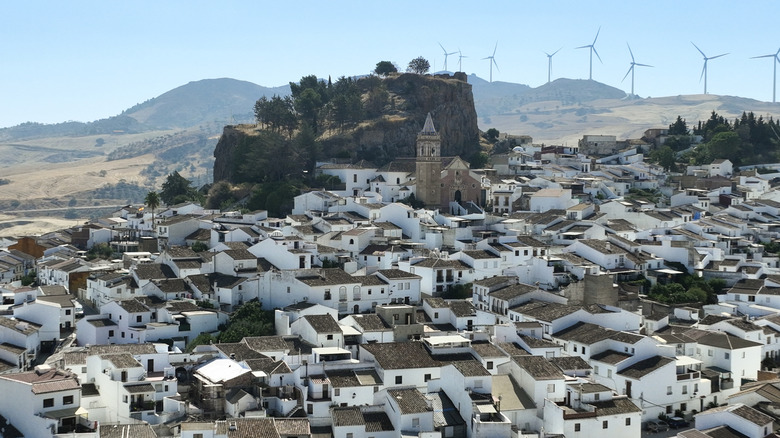
The small, quiet town of Ardales is typical of this region, with its whitewashed walls and steep, narrow streets that climb toward the remains of a medieval castle. However, heed this warning about tourist offices in small-town Andalusia. From the top, you'll have some incredible views over the town and the turquoise waters of Conde del Guadalhorce Reservoir in the distance. Before leaving, stop off for some traditional homemade Andalusian food at El Cruce, remembering to follow these five Spanish restaurant rules.