

4 Chinese Restaurant Rules American Tourists Break Within The First 10 Minutes

If you're lucky enough to travel to China, you're definitely in for one heck of an amazing experience. Not only is the culture, especially compared to Western societies, literally and metaphorically worlds away, it's also an important lesson in acting respectfully in someone else's home country. For example, when you go to a restaurant in China, the rules are completely different than your local Chinese joint in Anytown, USA.
To avoid the 12 things tourists should never do when visiting China, it's paramount to familiarize yourself with the ins and outs of what's acceptable long before you even get on the plane. In addition to essential words and phrases to know before you land in China, another good place to start is restaurant etiquette. You're likely to be famished after a long flight, so you should know what you're doing if you want to dive immediately into some proper Sichuan, dumplings, noodles, or whatever else you might have a hankering for.
Whether you're heading out to a jia chang cai (a family style restaurant), a Michelin-star dining experience, or something that falls somewhere in between, be prepared. What might be okay in the U.S. can be deemed not just inappropriate in China, but downright rude, which is the last impression you want to make.
Be on time and greet your fellow diners correctly
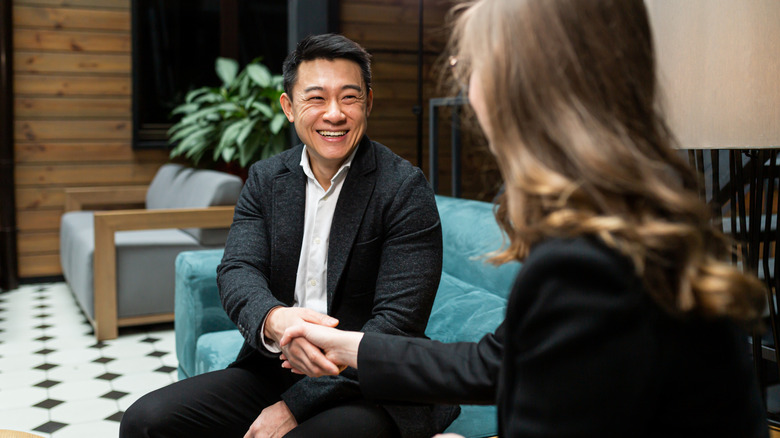
While some countries, such as Spain, have a 15- or even 30-minute waiting window when meeting at a restaurant, be punctual in China. To arrive on time is a sign of respect; it shows everyone with whom you'll be eating that you value their time and, more importantly, you know how not to be what Rick Steves calls an "ugly tourist."
Once you get to the restaurant, no one should take their place at the table until everyone else has arrived. There are two reasons for this: you need to appropriately greet each other, and elders should be seated first if there are any in the group. When greeting your fellow diners, it's about context. If you're business associates, you can shake hands in a friendly manner. If someone is your elder, it's respectful to bow slightly from the shoulders and neck. You should also refer to everyone by their formal titles, such as "Mr." and "Mrs.," unless you're given permission to call them by their first name or a nickname. Even in formal restaurants in the U.S., Americans tend to be a little lax when it comes to dining, so it's best to always act as if you're at your grandparents' home for dinner when you're in a foreign country.
Respect the rules of seating arrangements
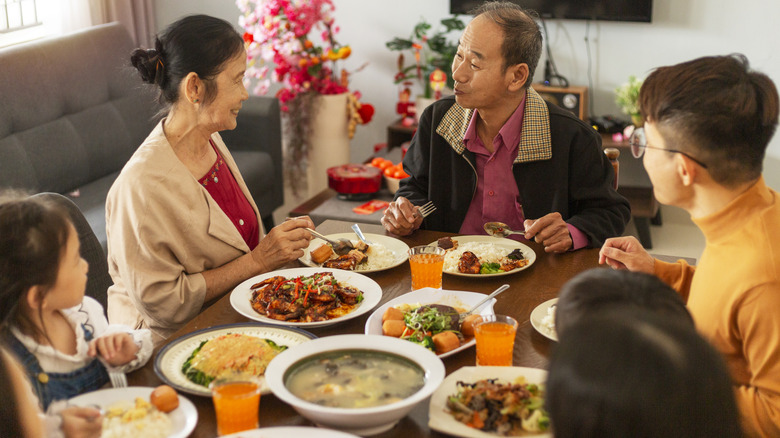
Elders being seated first is just the beginning of seating arrangements when dining in China. Once the elders are comfortable, everyone else can take their seat, but do so based on a system rooted in respect and hierarchy.
Whomever is hosting the dinner sits at the head of the table. If the table is round, the head of the table is the one that faces the entrance door of the restaurant. If the meal consists of a host and co-host, the latter sits furthest from the entrance door so they can interact with servers and chefs, if necessary, to ensure the meal goes as planned. If the meal is celebrating someone, that person sits next to the host. Should the host request you sit next to them, always say yes. Even if you're not being honored — or at least not to the best of your understanding of the situation — it's disrespectful to say no.
From the host and guest of honor, the remaining attendees should sit in the order of their importance within the group. If you're not sure what that means for you, wait until you're told where to sit. If all this seems a little overwhelming, once you're seated, you can relax a bit. The host is usually in charge of ordering for the table, so that's one less thing over which to fret.
Ordering food and eating
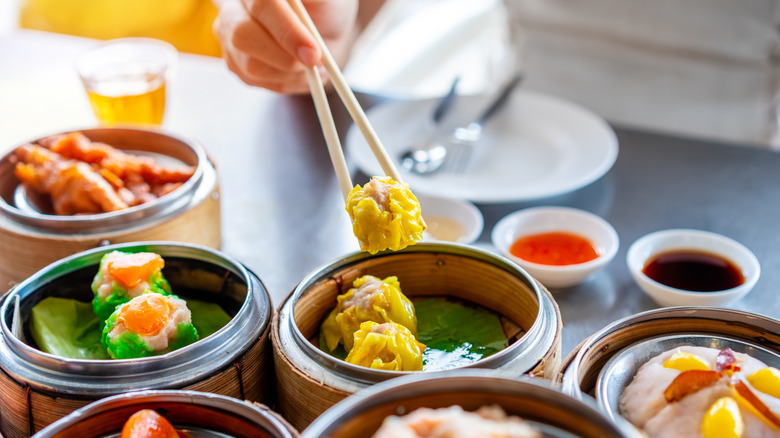
Just like seating, there are rules to follow when it comes to ordering food. While the host usually does that, if you're the host, there are some things to avoid. For example, when ordering dishes, it should always be an even amount. Chinese culture regards certain numbers as being lucky or unlucky, and ordering an even amount of food options means bestowing good luck on everyone at the table.
Also, order a little bit of everything and order it all at once; starters and mains aren't a concept in Chinese restaurants. So, order a few hot dishes, some cold dishes, and make sure there's a variety of meats and vegetables. When the food and drinks start arriving, no one should take a bite or a sip until an elder has started.
It's also worth noting, especially if you're someone who likes to fiddle with their chopsticks at a restaurant in the U.S., that this is a major no-no in China (and Japan). In fact, when it comes to Japanese restaurant rules Americans break within the first 10 minutes, playing around with chopsticks is on the list. If they're wooden, don't break them and rub them together; don't stick them upright in your food (especially in rice); don't gesticulate with chopsticks in your hand; and don't use them to pass food from plate to plate.
Be thoughtful about dinner conversation
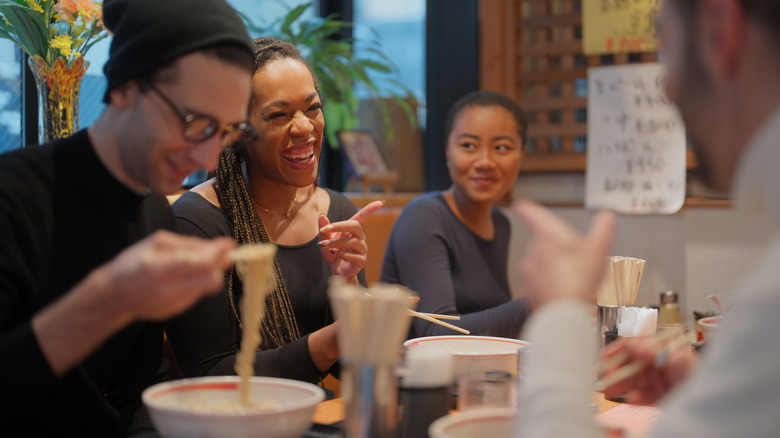
Whether it's during those initial 10 minutes you've been at the restaurant, or later on in the evening after people have had a couple drinks and are feeling at ease, there are strict rules when it comes to dinner topics. First of all, if you're at a business dinner, hold off on business talk until later in the night. You're better off making small talk on topics such as the weather during the beginning of the meal.
When you do start to have livelier, deeper conversation, remember where you are. For example, Tiananmen Square, China's former one-child policy, and similar dark things from China's past are extremely rude. Also, stay away from Chinese relations with Japan, Taiwan, Tibet, and similar conflicts. While there's certainly nothing wrong with being curious about these subjects, and the opinions your fellow diners may have, there's a time and place for everything. During dinner in a country that isn't your own and that might be hosted by someone else who's possibly picking up the check isn't it.