

5 Japanese Restaurant Rules American Tourists Break Within The First 10 Minutes
Japan has one of the most recognizable and famous cuisines in the world. Japanese food is so good it has been given cultural heritage status by UNESCO, and some of the best restaurants and chefs in the world are Japanese or influenced by Japanese cooking. Japanese food also lends itself to delicate plates and gorgeous, minimalist aesthetics, which is why some of the prettiest restaurants in the world for foodie travelers also have Japanese influence.
While there are fantastic Japanese restaurants around the world, eating in Japan is a different experience altogether. Even though tourists often struggle to find restaurants in Japan with high ratings on sites like Google and Tabelog, this is a cultural quirk rather than a comment on the food. Dining in Japan is unique – a cultural experience that combines tradition, etiquette, and mind-blowingly delicious food – and it is something that every foodie should try at least once. However, eating out in Japan comes with a bunch of rules and customs, many of which are unfamiliar to American tourists, and it can be easy to fall afoul of some of these if it is your first time in the country.
Whether it's a tiny hole-in-the-wall sushi joint, a communal izakaya, or a high-end nigiri spot, there are certain rules in Japanese restaurants that should always be obeyed. Failing to do so will mark you out as a newbie immediately. From greeting your server and ordering correctly to maintaining appropriate hygiene and sticking with proper chopstick etiquette, here are important rules to remember regarding five aspects of dining when eating in an authentic Japanese restaurant.
At the start of the meal
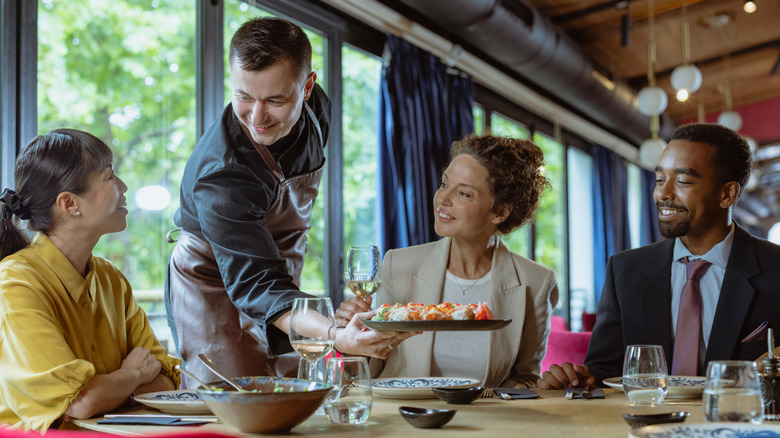
Japanese culture is built upon a foundation of etiquette and traditions, and while many of these have fallen out of day-to-day usage, there are certain places where customs are still observed. When customers enter a restaurant, staff will usually greet them with the word "irasshaimase," which can be loosely translated as "welcome" or "please come in." While it might feel weird or rude not to respond, there isn't really a correct reply to this greeting, and saying arigatou in response will sound awkward to most. A simple nod is all that's required.
In most Japanese restaurants, the server will show you to your table, and you shouldn't sit before being assigned a table. If you've chosen to eat at a "zashiki" restaurant, with low tables and cushions to sit on the floor, don't forget to take off your shoes at the entrance.
When food arrives at the table, however, there are a few key phrases it is worth knowing. If your companions' food arrives first, let them know they can start without you by saying "o-saki no dozo," which means "please go ahead." When its time to start eating, a simple "itadakimasu," meaning "I humbly receive," is a polite way to begin.
Cleanliness and hygiene
Japan is a remarkably clean country. Everywhere you go, you'll see litter-free streets and sparkling shopfronts, but with very little evidence of massive public cleaning efforts, or even litter bins! Keeping things clean is built into Japanese culture, and this is particularly important in a restaurant setting.
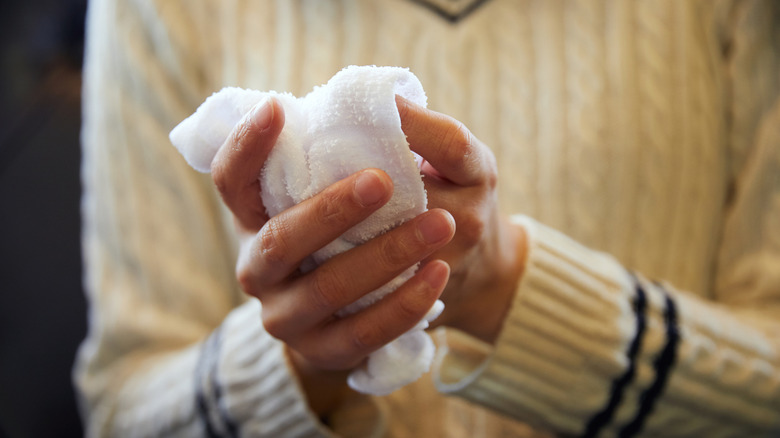
When you sit down at your table, you'll be offered an "oshibori" or wet towel. While most Japanese dishes are eaten with chopsticks or soup spoons, there are a few that can be eaten with your fingers, so it is polite to wash your hands with the oshibori, then replace it on the tray for the server to take away.
Very few Japanese restaurants have litter bins, and you'll rarely find trash cans in public spaces either. If you have garbage or litter, it is polite to take it away with you, rather than leaving it on the table. You can also ask the restaurant to dispose of your trash for you.
Ordering
Once upon a time, ordering in a Japanese restaurant in Japan was a minefield for American tourists. Most, if not all, menus were only in Japanese, and plenty of travelers would find themselves gambling on loose translations from their servers. These days however, many restaurants will have a menu in English, and waiters in major cities tend to be bilingual. It is still a valid, even recommendable option to ask for "osusume," or recommendations, or even to order "omakase" style. This is a chef's selection menu, where the chef will curate a menu for each diner, often depending on seasonal availability and personal preferences.
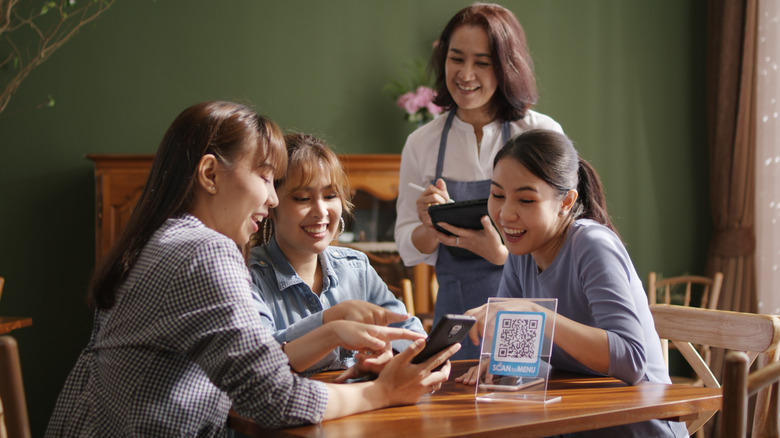
When you want to order, it is polite to say "sumimasen" (excuse me) to the waitstaff. Some restaurants will have a call button, and some will even handle orders through a tablet computer (particularly since the COVID-19 pandemic).
In most restaurants, the custom is to order your own food. However, if you are eating izakaya-style, then things are a little more casual. Izakaya restaurants work like a Spanish tapas bar, with drinks, snacks, and small dishes ordered for the table, for everyone to share.
Substitutions
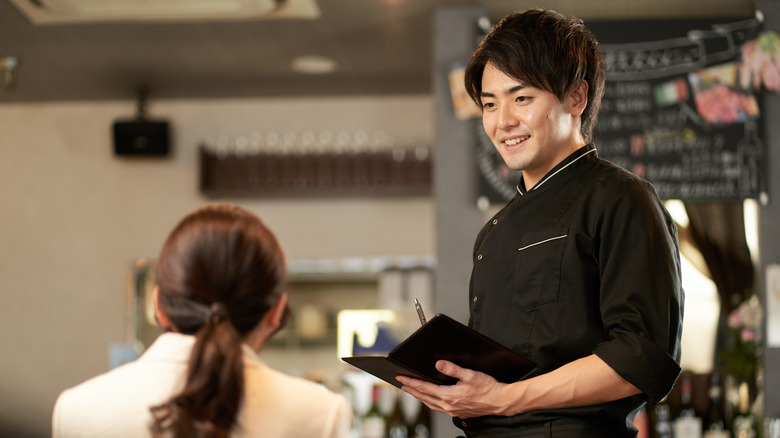
Asking for substitutions in a Japanese restaurant as a tourist can be a tricky business. For starters, many restaurants have a set menu, with specific menu items served together. Many travelers will be familiar with the conveyor belt sushi restaurants, where pre-prepared dishes whiz around the restaurant on a conveyor belt, and customers select the ones they want. Obviously, substitutions here are impossible. There's also often a language barrier issue, which can make simple requests for substitutions come across as rude.
If it is a genuine food allergy or intolerance, then a polite request will definitely be understood. But if the substitution request is more down to personal preference, then it may well be seen as fussy or impolite. Japanese culture is far less individualistic than American culture, and catering to specific whims of individual customers is sometimes frowned upon. After all, if you wanted something without a certain ingredient, the expectation is that you would order a dish that didn't contain it!
Chopstick etiquette
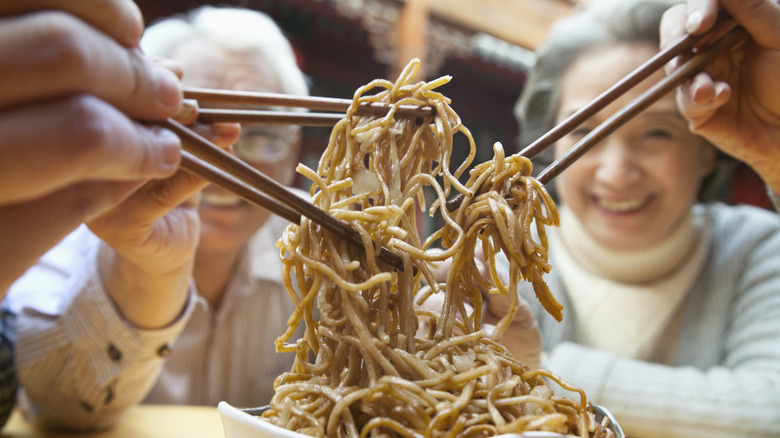
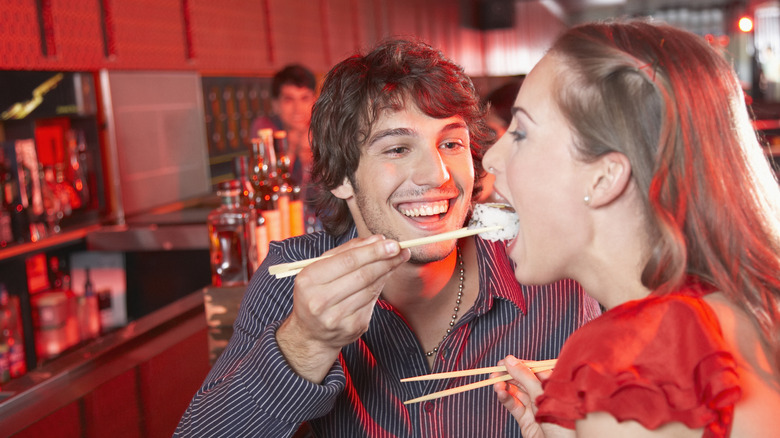
In Japan, most food is eaten with chopsticks rather than with a knife and fork, and this can be one of the most complicated aspects of Japanese dining for American tourists. Not only are they a challenge to master for first-timers, but they also come with a few taboos that it is worth knowing about.
Many restaurants provide disposable chopsticks, which need breaking apart before using. In Japanese restaurants back home, many diners rub them together to avoid splinters, but this is seen as bad manners in Japan. Similarly, if you want to gesture with your hands while speaking, it is polite to put your chopsticks down first, as waving them around is also considered poor etiquette. Most restaurants provide a chopstick rest to put them on, but if not, put them down next to your bowl. Do not stick them upright in your rice, as this is something done during Buddhist funerals, and could cause offense.
Finally, don't pass things to other diners from chopsticks to chopsticks. Luckily, this requires a level of chopstick mastery that most tourists won't possess, but it is also part of the Buddhist funerary rites and not appropriate at the dinner table.