
4 Disadvantages Of Visiting America's Most Popular National Parks
One of the best things to do when visiting the United States is explore the country's beautiful national parks. As the third largest country in the world, the U.S. has many different ecosystems and climate zones. The landscapes vary greatly between each of the 50 states. The national parks protect sections of the beautiful scenery for millions of travelers to enjoy each year. There are 63 options to choose from, and each national park has its own unique charms. Some feature beautiful coastal scenery or rugged mountain ranges. Some are blanketed with thick forests, and others are desert landscapes that appear barren until you look closely. They're all worth exploring, but there are some major disadvantages to visiting the most popular national parks.
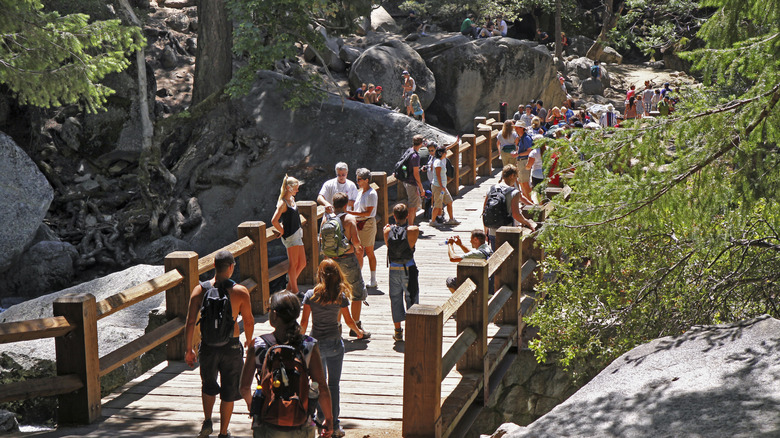
The most popular national parks in the United States are also the most overcrowded. In 2025, the parks that had the most visitors included Great Smoky Mountains National Park, Zion National Park, Grand Canyon National Park, Yellowstone National Park, and Rocky Mountain National Park. As you might imagine, those five national parks also have some of the most dramatic scenery. They're full of epic hiking trails, rock formations, and biodiversity. Tourists visit and quickly fall in love. Many of them return year after year. Even though they're wonderful destinations, there are plenty of reasons why you might choose to skip the most popular parks.
If you're looking for solitude in nature to decompress, you might want to avoid the tourists hotspots. Traffic can be a real nightmare, especially during peak tourist season. In some national parks, you might not even be able to get in unless you plan your trip well in advance. If you're a nature enthusiast or an environmentalist, you may want to avoid visiting simply to avoid becoming part of the overtourism problem that stresses the natural environment and the many species that call these parks home.
Finding solitude in nature is more challenging than you might think
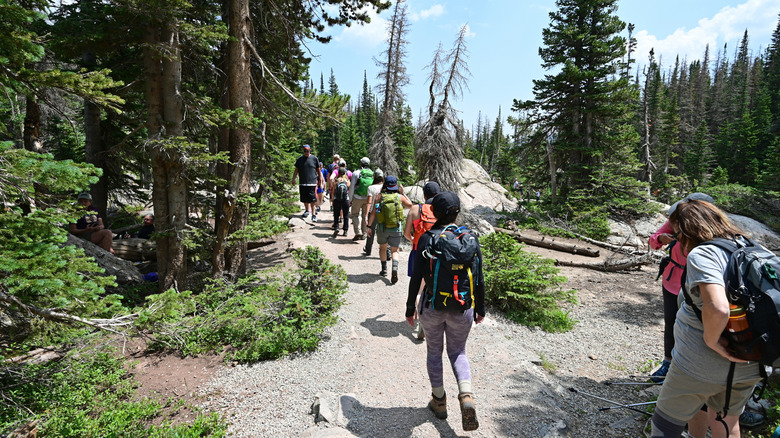
For years, Rocky Mountain National Park was at the top of my bucket list. I had spent days researching the most beautiful hikes and dreamed of exploring picturesque alpine lakes and summiting rugged peaks in the national park. The reality of the experience contradicted my initial vision of what exploring Rocky Mountain National Park would be like, and it left me feeling quite disappointed.
I visited in July, right in the middle of peak tourist season, but I planned my trip well in advance and was able to score a camping reservation within the park. I thought that if I woke up early I could have the trails to myself. I was very wrong.
Finding parking at trail heads was a nightmare. The visitor center was also crowded, but what really disappointed me was the experience on the trails. The popular Emerald Lake Trail was already packed with hundreds, if not thousands, of hikers by the time I arrived. There was not one moment during that hike in which I couldn't see at least a dozen other people, and for most of the hike it felt like I was waiting in a slow moving line at Disney World. Some hikers played music on speakers along the trail. The hum of conversation bouncing off the rocks and trees completely blocked out any sound that came from nature. The scenery was gorgeous, but to fully enjoy certain view points and vistas you had to wait in line for people to take 20 different selfies. The experience was more stressful than meditative and more anger-inducing than awe-inspiring. I quickly decided that I would wait until shoulder season to visit the most popular national parks, in the hopes that next time I'd be able to find a little solitude.
You might not be able to get in
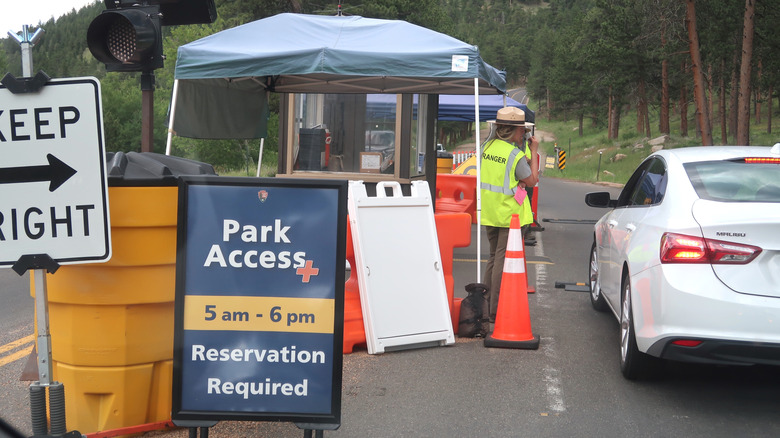
If you're a spontaneous traveler, you'll be at a major disadvantage when it comes to visiting the most popular national parks in the United States. Normally, traveling to outdoor destinations requires less money and planning than visiting urban destinations. When you travel to a city, you have to worry about booking tours, reserving hotel rooms, finding affordable flights or available rental cars, and making restaurant reservations. It requires a lot of forethought and energy. When visiting parks and nature preserves, you used to be able to just show up. Sure you might not be able to get a campsite at the most scenic campgrounds within the park, but you could always find one nearby. These days, you might not be able to get into the national park at all — let alone find a campsite.
You might not know it, but many parks require a reservation. In order to combat the massive crowds of tourists within national parks, the park service has had to get creative. Many of the most-visited spots now have a reservation system, and you may have to book a timed entry in advance online. Even if a park doesn't require a reservation to enter, you may need a permit to visit certain popular spots, hike specific trails, or drive along scenic roads. Some parks have no reservation system, but they might turn you away if they reach capacity.
You'll have to pre-plan your visit to some national parks well in advance if you hope to visit during peak tourist season. Spontaneously deciding to throw your tent in the car and take a weekend road trip during a slow summer weekend may be a thing of the past.
Traffic can be a nightmare at popular national parks
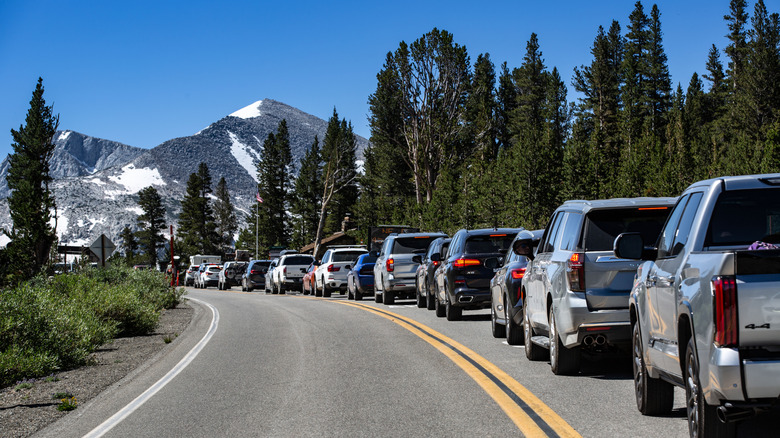
Automobile traffic has become a major issue at several national parks across the United States. Some national parks have tried to combat the problem by adding free shuttles that pick up and drop off at the most popular sites and trails, but many tourists still choose to get around to different trailheads and vistas in their own vehicle.
The most dangerous activity in Yellowstone National Park isn't hiking or admiring the wildlife, even though it's full of apex predators like wolves and grizzly bears. There are also boiling hot geysers that would quickly boil a person to death. Still, the most deadly thing to do is drive your car. In 2026, Zion National Park decided to ban RVs from its main roadway to cut down on vehicle traffic. In Yosemite, California's most popular national park, traffic is one of the most common visitor complaints. According to reviews, some travelers become so frustrated with the traffic that they end up leaving without ever stepping foot outside of their car.
Per the Yosemite National Park website, "If you arrive after 8 am on weekends—especially Saturdays and holiday weekends—be prepared for multiple delays followed by inability to find a place to park. It may also not be possible to travel beyond El Capitan to drive to eastern Yosemite Valley." If you don't want to deal with gridlocked entrances at the most popular national parks in the United States, you'll need to arrive super early in the morning or in the late afternoon or evening when most travelers have gone home. Opting for less popular times of year is also a good idea.
You'll be contributing to the strain that overtourism takes on the natural environment
It's safe to say that most travelers who plan to visit national parks appreciate nature in some form, but the level to which each tourist cares about the planet varies greatly. United States National Park Service employees do their best to mitigate harm to the natural environment, but they can't always keep up with the huge crowds that arrive during peak tourist season. Many of the most popular national parks welcome millions of travelers each year, and not everyone does their part to protect the delicate ecosystems and preserve the parks for future generations.
During a busy weekend in the summer, it's not uncommon to see litter lining popular hiking trails. Some tourists even choose to use the bathroom right next to the trail, and they don't know how (or refuse) to properly deal with their waste. If you've ever visited a park you may have seen piles of soggy toilet paper just off the trail. Sometimes you can even smell the evidence while you're hiking. Not only is this disgusting behavior, it's horrible for the environment. Even your outdoor gear could be harming the environment without you realizing it.
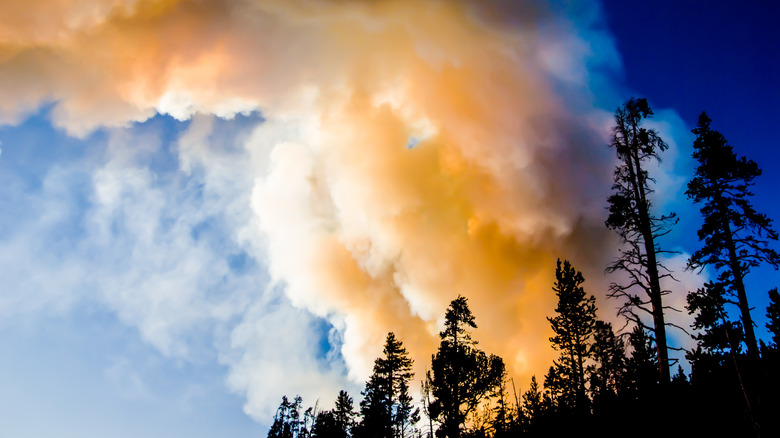
Hikers are expected to stay on designated trails to preserve the delicate ecosystems all around, but many visitors feel that they're above the rules. Others decide to start fires while camping in the backcountry, ignoring fire bans issued due to the risk of wildfire. An out-of-control campfire could completely destroy hundreds of acres. Overtourism is a major problem that is devastating to plant and animal life, and the National Park Service hasn't quite figured out how to deal with it.