
The Best Time To Visit National Parks If You Don't Want To Deal With Gridlocked Entrances
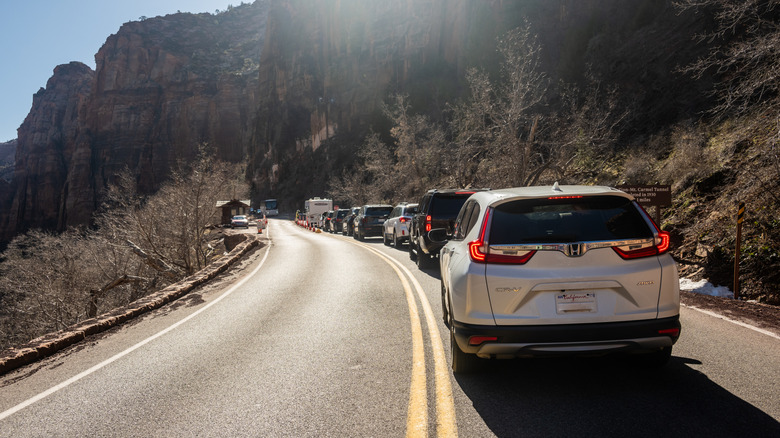
National parks are where you can experience some of the last remaining wild places that have been left unspoiled by human beings. They're home to forests full of ancient trees, pristine beaches, marshlands, deserts with towering cacti, and majestic mountain ranges. You might even be able to imagine what the world looked like before the massive footprint of globalization and industrialization left landscapes forever changed. That is, right up until the moment you run into a massive traffic jam at a national park's entrance.
Even though there are dozens of national parks to explore in the U.S., many of them become packed with tourists from all over the world. Unless you want to exclusively travel to America's least visited national parks, you're going to need to do a little planning in order to avoid the crowds. If you don't want to deal with the gridlocked entrances, the best time to visit national parks is during the off season. The second best time to visit is during the shoulder season, when the weather is still likely to be nice but there won't be as many tourists. If you absolutely have to visit during peak season, try to visit the parks early in the morning before crowds arrive, or late in the evening when most tourists have gone home for the day.
Consider opting for less popular times of year
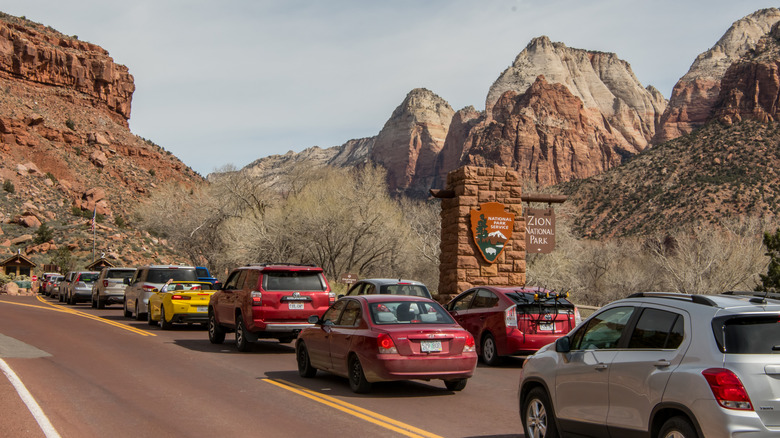
Peak tourist season will vary depending on which national park you are visiting. In the United States, many of the national parks are busiest during the summer months. June through September is when many families plan their national park vacations because kids are out of school on summer break. Summer also provides some of the best weather to visit national parks. It's ideal for camping, hiking, and swimming, so big crowds are common.
If you really want to avoid gridlocked entrances, you should travel in the off season. You might not be able to count on having the best weather, but you will certainly be able to avoid the crowds. Many national parks are quiet and magical even during the off season. However, keep in mind that some of them may close down in the off season due to inclement weather or for park maintenance, so make sure you always check ahead.
If visiting during the off season isn't an option, shoulder season will also be slightly less crowded. If you're looking for the best balance between nice weather and less crowds, shoulder season is your best bet. On beautiful days, the parks might still get crowded, but you probably won't have to deal with quite as many cars on the road or feet on the trails. Many nature lovers prefer to travel during shoulder season for exactly this reason. Shoulder season will fall on either end of the peak tourist season.
Don't visit during the busiest part of the day
If you do plan to visit a popular national park during peak tourist season, you're going to have a more difficult time avoiding the crowds. Some of the most visited national parks in the United States won't even let you enter unless you have a reservation and a timed entry permit. It does help cut down on the crowds during the peak hours of the day, but it makes it difficult to spontaneously visit national parks.
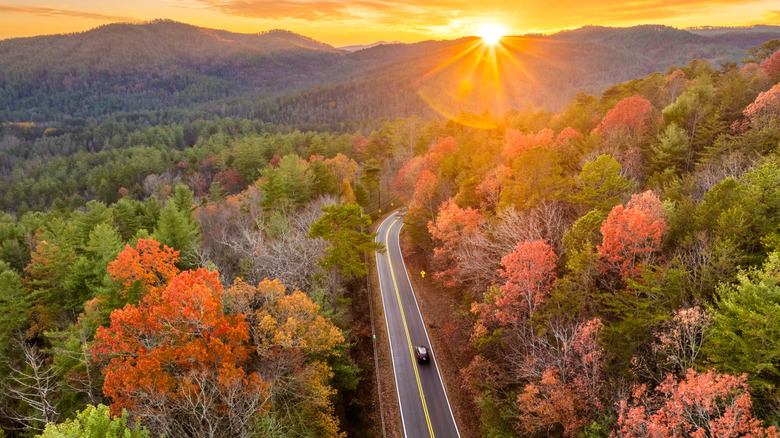
You can avoid the heaviest traffic and congestion by visiting the national park early in the morning or late in the afternoon. In my experience, late afternoon works better because lots of enthusiastic hikers wake up at the crack of dawn to hit the trails. In the late afternoon, many of the other visitors will have headed back to their accommodations for the day. I once entered Great Smoky Mountains National Park, which is one of the best for a road trip, at about 6:30 p.m. during peak tourist season and had the roads all to myself. There were still hours of daylight left, but I hardly passed another car. As an added bonus, all of the wildlife was active at twilight and I saw two black bears hanging out right by the road. Since there weren't any other cars, I was able to pull over and watch them for as long as I wanted.
Another way to avoid the gridlocked entrances is to book a campsite within the national park. You can arrive early in the morning or late in the evening and set up camp, and then enjoy the park on foot or via a free shuttle for the rest of your stay.