

America's Best Cross-Country Road Trip For Hikers Taking On National Park Trails

The United States is home to rugged mountain ranges, over 95,000 miles of coastlines, lush forests, and vast deserts. Some of the nation's most stunning landscapes have been preserved for residents and travelers from all over the world to enjoy through the extensive system of 63 national parks. They are all prime destinations for travelers who love being immersed in nature and are particularly wonderful places to visit if you love to go hiking.
In total, there are more than 21,000 miles of hiking trails within the United States National Park System. That's nearly the same number of miles one would have to walk in a straight line around the entire earth and wind up back where they started. Hiking all of the trails within the national parks would take many years. However, if you just want to enjoy a sampling of the very best national park trails, you can hit many of the country's highlights in as little as a few weeks on a cross-country road trip from Maine to California, hitting Acadia, Great Smoky Mountains, Rocky Mountain, Zion, and Yosemite National Parks.
For this winding road trip route, you're definitely going to need a solid set of wheels and to prepare yourself for lots of time on the road. In total, you'll spend around 68 hours behind the wheel, and you'll traverse over 4,200 miles from coast to coast if you choose not to make any detours. You can do the route in either direction, but the best time to go is during the spring or fall so that you can avoid extreme temperatures and conditions that could be dangerous on your hikes. Pack your car snacks, download a great playlist, and grab your road atlas for an epic road trip. Unforgettable hikes on national park trails await your discovery.
Acadia National Park
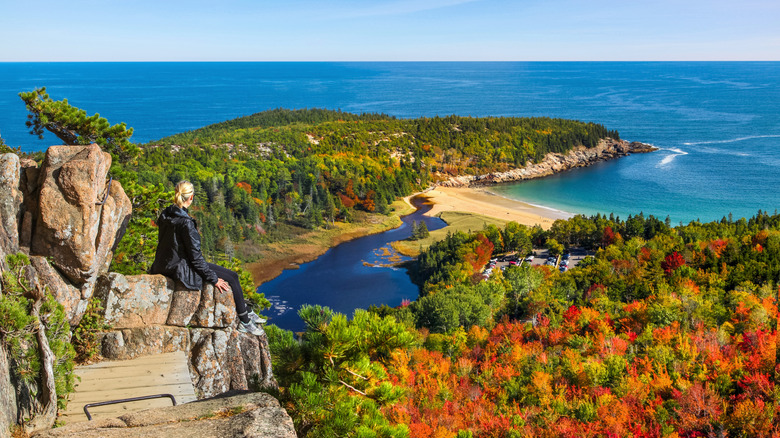
For travelers who choose to begin their road trip on the east coast of the United States, Acadia National Park will be the first stop. Known for its stunning rocky coastlines and Bar Harbor, one of America's best small towns, Acadia National Park deserves a spot on the bucket list of every traveler who enjoys hiking.
Acadia is one of the best U.S. national parks for beginner hikers, but there are also some challenging routes. The Precipice Trail, for example, is not for the faint of heart. Throughout the 35,332-acre park there are more than 150 miles of hiking trails to explore. The various paths will take you through forests, along craggy coastlines, and up mountain summits. One of the most popular hiking trails is called The Beehive Loop. It's only about 1.6 miles but takes most hikers two hours to complete. Along the way you'll climb up iron rungs and ladders, so it's somewhat challenging and best for hikers with a little experience. Once you complete the steep 450-foot climb, you'll be rewarded with beautiful views overlooking Sand Beach.
Boston Logan International Airport (BOS) is the largest international hub that's close to Acadia. You can reach the park in about 4.5 hours from the airport. Bangor International Airport (BGR) is smaller, but it's only about an hour from the park. After you've spent a few days hiking in Acadia and enjoying the vibrant town of Bar Harbor, get ready for the first big cross-country jaunt. You'll be traveling 1,188 miles during this portion of your road trip to the next national park stop.
Great Smoky Mountains National Park
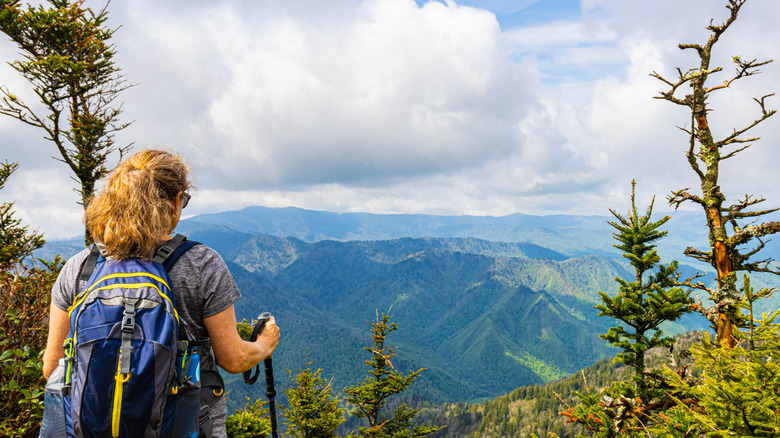
The drive from Acadia National Park to Great Smoky Mountains National Park will take just over 18 hours. You'll probably want to stop along the way for some rest, and if you have time in your itinerary for detours, you can loop in two more national parks. Visiting Shenandoah National Park in Virginia, followed by New River Gorge National Park in West Virginia, will only add about two hours to your total drive time. Overnight accommodations and campgrounds are available in both parks. The New River Gorge National Park is a wonderful place to try out whitewater rafting.
Great Smoky Mountains National Park is located on the border of Tennessee and North Carolina. It's part of the Blue Ridge range, which is part of the larger Appalachian Mountains range. Year after year it remains the most visited national park in the United States, and it's one of the best for a road trip.
Great Smoky Mountain National Park is beautiful throughout the year, but autumn is a particularly magical time to visit. It's an extremely popular destination for leaf peeping if you're looking for the ultimate fall foliage views. Plus, the crisp early-autumn weather is ideal for hiking. Spring wildflowers are also lovely. The Appalachian Trail, one of the most iconic hiking trails in the United States, runs right through Great Smoky Mountain National Park. The portion of the trail that runs through the park is 72 miles long, and it takes most travelers a full week to complete. Alternatively, you could start at Newfound Gap, which cuts the hike in half.
Rocky Mountain National Park
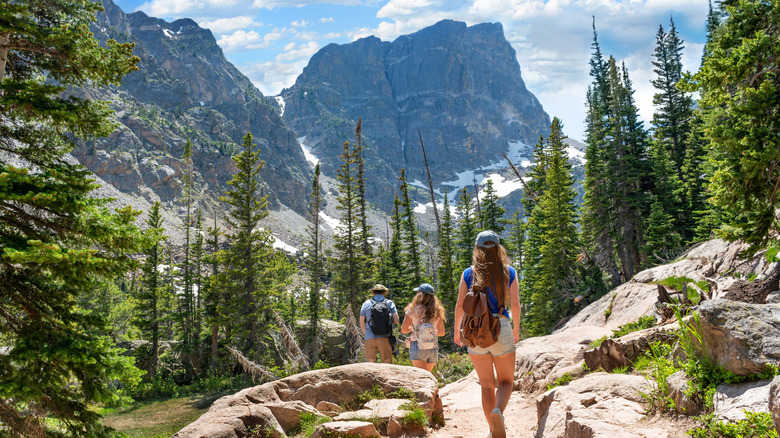
After enjoying a few days exploring Great Smoky Mountains National Park, it's time to hop back in the car and head west. You'll be journeying nearly 1,500 miles to Colorado, where you'll get to explore another epic mountain range — the Rockies. The drive from Great Smoky Mountain National Park to Rocky Mountain National Park takes just over 22 hours. Worthwhile places to stop along the way include Nashville, Tennessee; Saint Louis, Missouri; and Kansas City, Missouri.
The landscape quickly begins to change once you cross the border into Colorado, and before too long you'll be able to see the snow-capped Rocky Mountains towering in the distance. Estes Park is a great place to base yourself near the entrance to Rocky Mountain National Park, but you can also score camping reservations within the park borders. There are over 350 miles of hiking trails within the park, so it's tempting to hit the ground running, but before you embark on a challenging route, make sure you give yourself a few days to acclimate to the altitude. The lowest point of the park is 7,600 feet above sea level, and the highest peaks are nearly double that. Your body may struggle to take in oxygen at the higher elevation until you acclimate, which can be dangerous when you're hiking.
After you've adjusted, there are incredible hikes that allow you to explore the continental divide, admire sparkling alpine lakes, and enjoy sweeping panoramic views. Some hiking trails, like Longs Peak, are not for amateurs and can be dangerous for beginners. Always make sure to research the path ahead of time and know your own abilities before setting out on a trail.
Zion National Park
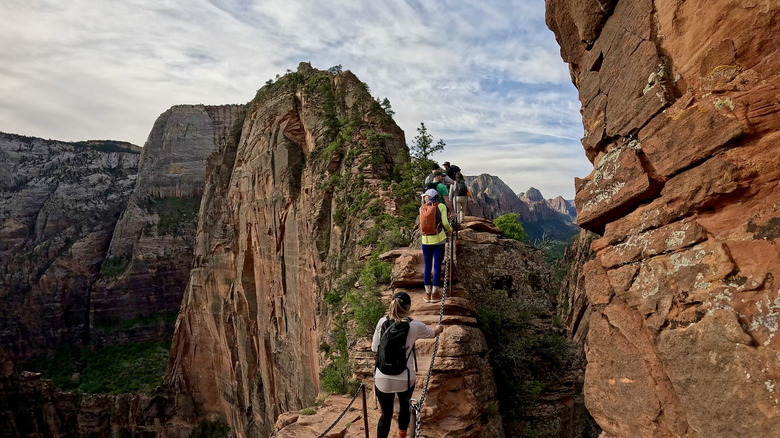
After you've thoroughly explored Rocky Mountain National Park, head further west towards Zion National Park in Utah. After the long stretches of road tripping between the last few national parks, the nine-hour trip from Rocky Mountain National Park to Zion will feel like a breeze. If you want to break up the drive, making a detour to visit Arches National Park along the way only adds an hour to your drive.
Zion National Park is known for its stunning red sandstone rock formations and deep slot canyons. The landscape is almost otherworldly, and it is home to some of the most famous hiking trails in the US national park system. The Angels Landing hike is one of the most dangerous trails in the world, but it's also one of the most beautiful. If you're not a fan of heights, you'll probably want to skip this one. It's a 5.4-mile round trip hike, and you'll gain 1,488 feet in elevation. After a strenuous series of switchbacks, the last portion of the hike involves walking along a narrow ridge line with drops of over a thousand feet on either side of you. There are no guardrails, so sure footing is a must. The Narrows is another popular route, but be sure to check if it's open since it constantly closes due to flooding.
In total there are over 90 miles of hiking trails within Zion National Park. Make sure to carve out some time to hike to the beautiful waterfalls and emerald pools throughout the park. If you have some extra time, consider visiting Bryce Canyon National Park, only about two hours away. Grand Canyon National Park is also close by.
Yosemite National Park
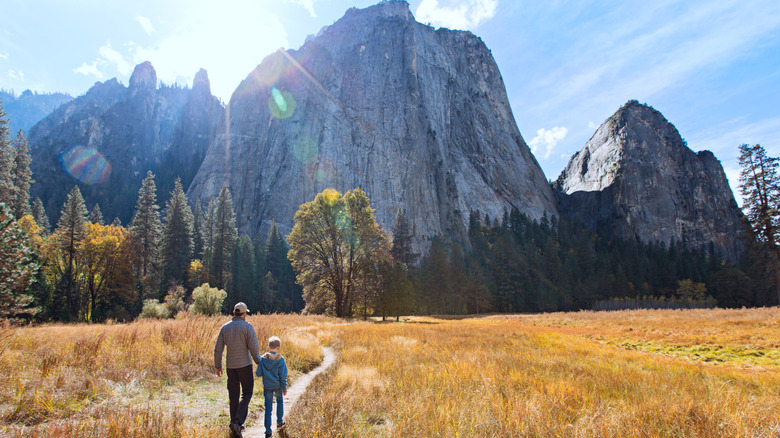
Once you're ready to bid farewell to Utah's stunning natural scenery, hop back in the car and head towards California. Yosemite National Park is one of the most famous destinations in the Golden State. After leaving Zion National Park, you'll be there in about 8.5 hours.
Yosemite is known for epic rock formations like El Capitan and Half Dome that rock climbers and hikers love. Yosemite Falls, one of the tallest waterfalls in the world, is also located within the park. The waterfall, which is actually made up of three separate cascades, towers 2,425 feet above your head, and it can be reached via a short paved hike from the parking lot. There are plenty of scenic hikes in Yosemite National Park for beginners. The Glacier Point Trail is one of the most popular routes because it takes less than a half hour to complete. At the end you'll be able to enjoy gorgeous views of some of the iconic rock formations. The loop around Mirror Lake is another wonderful easy option. Hiking Half Dome is a great challenge for experienced hikers. It's one of the steepest day hikes in America, and you'll gain 5,000 feet in elevation along the trail.
If you have more time after visiting Yosemite National Park, you can opt to visit one more beautiful destination in California. Redwood National Park is about 8.5 hours away and is home to some of the largest and oldest trees in the world. It's right on the coast of the Pacific Ocean, so you can also enjoy visiting the shoreline and exploring the dramatic beaches.