

3 UK Restaurant Rules American Tourists Break Within The First 10 Minutes
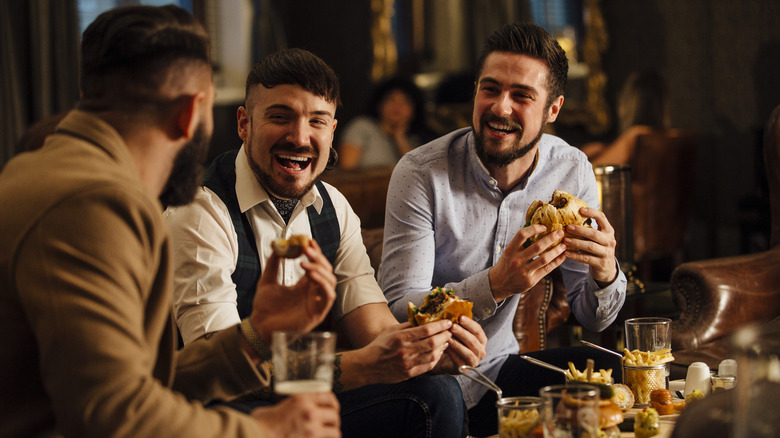
Good manners are something that people all over the world appreciate, so it's always a good idea to familiarize yourself with the local etiquette rules before a vacation. The only problem is that etiquette rules tend to vary significantly from place to place. Although Japan is often recognized for its strict social rules, it is the United Kingdom that probably comes to mind first when you think about traditional formal manners.
Unfortunately, there are some rules that American tourists tend to break within ten minutes of sitting down at a restaurant in England, Wales, Scotland, or Northern Ireland. The United Kingdom is a monarchy that is over 1,000 years old, and although the culture has relaxed over the last hundred years or so, social decorum is still important. Many locals in the U.K. have impeccable table manners, especially for formal dinners or afternoon teas.
Travelers from the United States may feel a false sense of security when visiting the U.K. because everyone speaks English, but there are subtle cultural differences that you need to be aware of. Before you head out for an elegant dinner out on the town, familiarize yourself with the U.K. restaurant rules. How you dress and present yourself for a nice meal is important, and you'll want to be aware of the differences in table settings and how you hold your silverware. Of course, the way in which you behave at the table is also crucial.
Dressing too casually
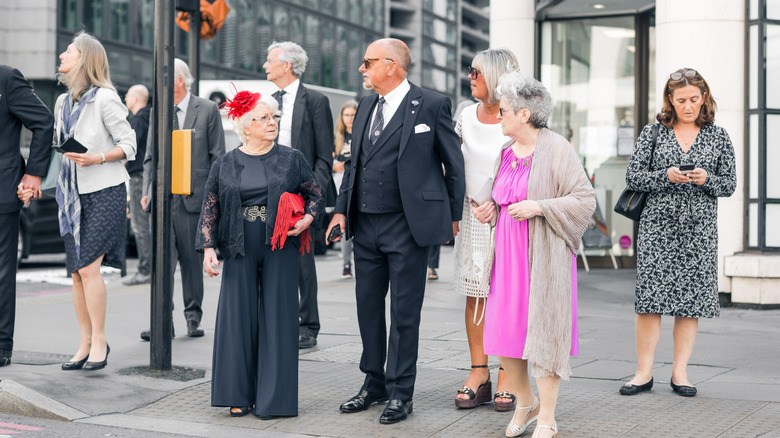
While there are some incredible fine dining options in America, casual restaurants are more common, and you're likely to see people eating in sweatshirts and other athleisure style clothing. While this is totally acceptable in America, it might make you stand out a bit when you go out to eat in the U.K. Make sure you do some research ahead of time so you know if there is a dress code at the restaurant you'll be visiting. If there is, observe it.
"Britain is now replete with high-quality, casual-dining joints where even the suits roll up their sleeves and remove their jackets," a food journalist and author named Claire Finney wrote in an article published by Vogue. That's certainly true: you might feel a little out of place if you don a sparkly evening dress to eat some fish and chips at the local pub. "But in a restaurant where solicitous staff, elegant furnishings, and cloth napkins create a more refined atmosphere, the polite thing is surely to dress up a little," Finney added.
According to Finney, dressing up for dinner isn't just about looking nice, it's about respect. Respect, like good manners, is something that many people from the U.K. value. Although you may feel more comfortable wearing leggings, tennis shoes, and a t-shirt at a restaurant in the U.S., showing up to a nice restaurant in the U.K. dressed that way can ruin the vibe. It's disrespectful to the staff and the other diners who may be dressed in their best to celebrate a special event.
Ignoring utensil etiquette
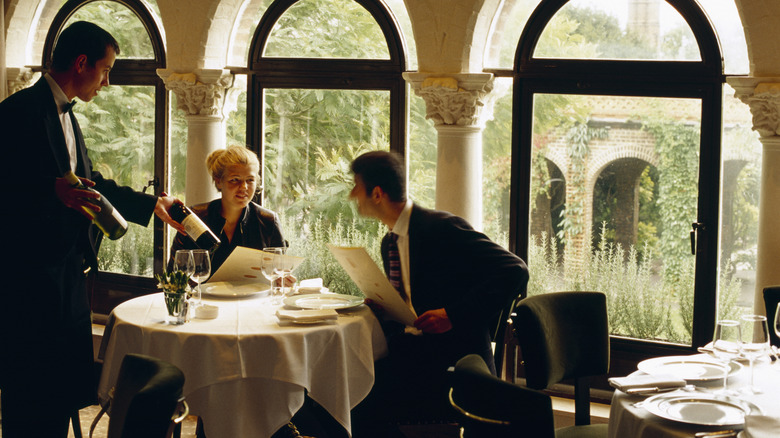
The art of traditional dining etiquette has been forgotten by many people living in the U.S. Many people don't feel the need to use formal place settings in their own homes, although some still do on special occasions and holidays. Even if you were taught the proper placement for spoons, forks, and knives in the U.S., you're going to be out of luck when you visit a restaurant in the U.K.
Utensils used for eating are called "cutlery" in the U.K., not "silverware" or "flatware." Where they are placed is also different. If you've grown up dining in the U.S., you'll be used to the napkin being on the left side of the plate. In the United Kingdom it will often be arranged at the center of the place setting. In the U.S., your desert cutlery will be placed above the plate. In the U.K., they will be on either side of the plate.
How you use your utensils at dinner also differs slightly. In the U.S., we often switch our silverware between our dominant hands. You'll usually start with the knife in the right hand and the fork in your left hand, and then switch your fork to your right hand after you cut your food. In the U.K., the fork remains in the left hand and the knife remains in the right hand. Diners will often use the knife to push the food towards their fork.
Not minding your manners
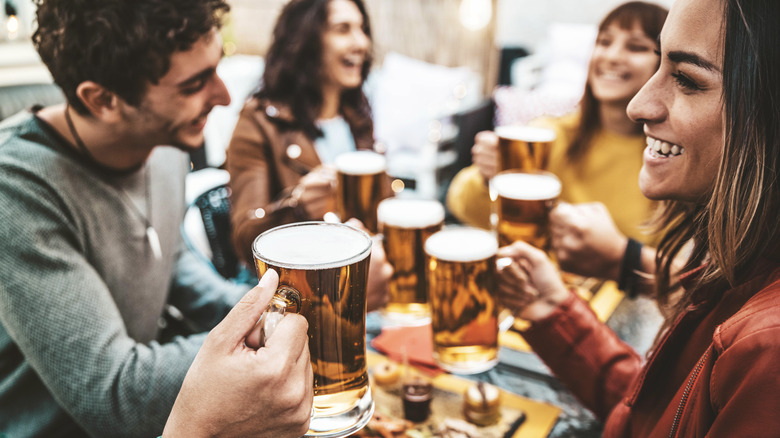
The people of the U.K. are notoriously polite. Maintaining social harmony is important, and people who were raised in the U.K. often do their best to avoid conflict, so causing a scene in public is simply out of the question. You'll almost never see a person in London yelling at the restaurant staff because their order was wrong or took too long to arrive. If you do, they are probably tourists.
Punctuality is also highly valued, so it's important that you arrive on time for your restaurant reservation. Arriving 5-10 minutes early is even better. Even if you don't have a set reservation time, it's a good idea to arrive a few minutes early if you're meeting friends so that no one has to wait on you.
It's courteous to wait until everyone is seated at the table before digging into your food. Once everyone is sitting down and the meal has begun, make sure that you never reach over the table. If you're enjoying some appetizers with a group, make sure you ask the person nearest to you to pass whatever it is that you need rather than reaching. It should go without saying, but always refrain from any personal grooming at the table. It is also considered impolite to chew loudly or talk with your mouth full. Finally, it's a good idea to do a little research on the specific destinations you'll be visiting. For example, you can practice good dining etiquette in Scotland by learning how to pronounce the traditional Gaelic phrase "Slàinte Mhath." It's often used as a celebratory toast, and you'll be showing your appreciation for the local culture if you join in and pronounce it properly.
For more tips on fitting in, read up on this one etiquette mistake that will immediately out you as a tourist in Europe.