

4 Mexican Restaurant Mistakes American Tourists Make Within The First 10 Minutes
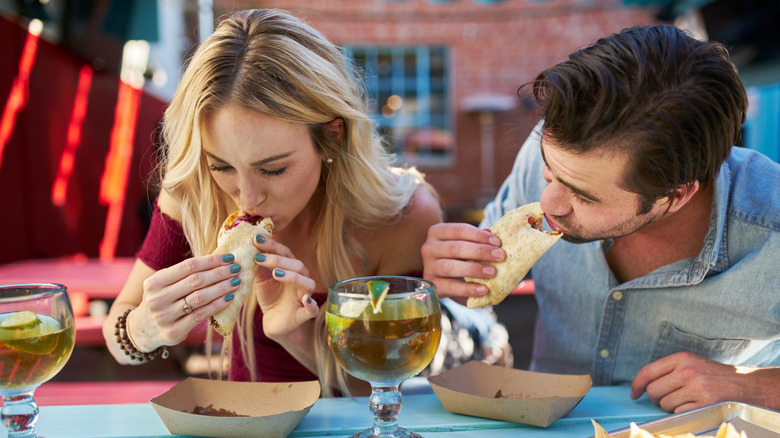
Mexico is one of those countries that has it all. Its rich history, beautiful historic architecture, ancient ruins, white-sand beaches, rugged mountains, and vibrant culture are just a few of the things that have cemented the North American country among the world's top tourist destinations. They're all wonderful reasons to visit, but what many tourists end up talking about long after their vacation comes to an end is the gastronomy. The country is a must-visit destination for foodies. Mexican food is so delicious that it has managed to make its way all over the globe. People in the United States love Americanized Mexican food, but nothing can quite prepare a person for the mouthwatering taste of authentic Mexican cuisine. Sampling the delicious local flavors is something you have to do on a trip to Mexico, but there are several mistakes that American tourists always make when visiting Mexican restaurants.
It's always a good idea to try to blend in when traveling. American tourists tend to have a bad reputation globally. We're known for being loud and somewhat disrespectful of other cultures. It's not a good look. Recently, a Mexican tourism official even noted that every Canadian tourist is worth two Americans.
When visiting Mexican restaurants, many Americans assume that the restaurant staff speaks English, which is a mistake. Some of us are used to the super speedy service in America, which isn't the norm in Mexico. Other tourists tend to go overboard on the salsa, and some people are just plain rude. Forgetting to greet restaurant staff or to offer kind words throughout the meal is a major mistake. Even if you aren't concerned about embarrassing your fellow compatriots, avoiding these common mistakes will help ensure you have a more enjoyable vacation.
Don't assume everyone speaks English

Some travelers from the United States make the very incorrect assumption that the entire world speaks English. Although English is the world's most widely spoken language, it is not appropriate to expect everyone to be able to speak it when you travel to a different country. Sure, you may be able to use English sometimes, because it is often used by people from different nationalities to communicate and find common ground, but some employees at restaurants in Mexico might not have had the opportunity to learn. Even if they do speak English, it's polite to at least attempt a few words and phrases in Spanish to show respect for their culture and language.
One of the reasons English has spread throughout the world is due to colonialism by English speaking nations, like Britain and the United States. Mexico was colonized by Spain, which is why Spanish is the majority language. Sources vary, but it is estimated that only about 10 to 12% of Mexican citizens speak some English. The number of people who are fluent is even smaller. In popular tourist areas, many people may be able to speak some basic English words and phrases, but you may have trouble communicating if you're eating at a restaurant in one of the magic small towns in Mexico.
Try to learn a few basic words and phrases in Spanish before your trip, so that you can greet employees at restaurants and potentially order your meal in Spanish. There are plenty of convenient language apps available to help you learn the basics quickly. You could also download translation apps to make communicating while abroad even easier. A little extra effort goes a long way.
Don't rush through your meal

Those of us who have spent most of our lives in the United States are probably used to super fast service whenever we dine out. Whether it has to do with the popularity of fast food, the pressing demands of living in a capitalist society, or that we've become accustomed to a culture of convenience, Americans are known to rush through meals. Servers in the United States are compensated in the form of tips, so they make sure to take orders and bring out each dish quickly. In other parts of the world, enjoying a meal at a restaurant is an experience that is intended to be savored slowly. Mexico is one of those places, so don't make the mistake of rushing or expecting servers to work at the pace you're used to.
When most locals head to a restaurant for a nice dinner out in Mexico, they're planning on spending at least a couple of hours at the establishment. Food is an important part of Mexican culture, and mealtime is meant to be enjoyed. A typical meal might start with a tasty cocktail, like a margarita or a mezcal, and then progress to appetizers. In Mexico, small plates that are enjoyed before the main course are known as "antojitos" which translates to "little cravings."
Even after the main course has been devoured and dessert has been passed around, people in Mexico might linger for much longer than American tourists may be used to. There is a lovely custom in Mexico and other Latin countries called "sobremesa," which doesn't even have an exact English translation. It refers to the quality time spent hanging out and connecting with loved ones around the table after a meal. Relax, savor your food, and enjoy immersing yourself in Mexico's foodie culture.
Don't be greedy with the salsa
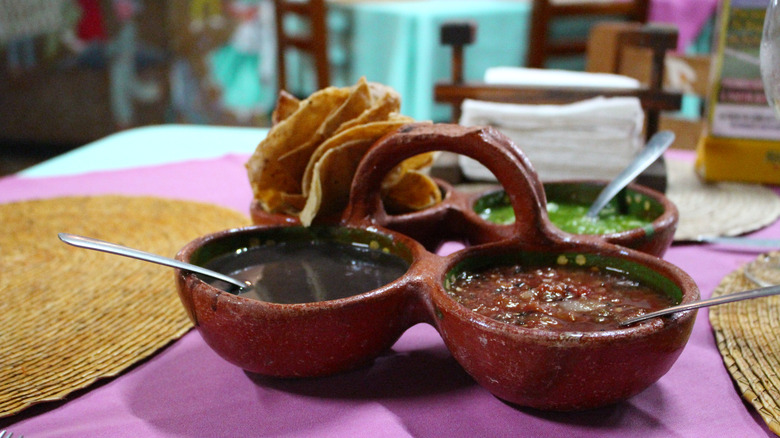
Salsa, which is the Spanish word for sauce, is an absolutely delicious addition to most meals you'll enjoy while traveling throughout Mexico. It's a specialty that is beloved by locals and tourists alike, and it's popular all over the world. Salsas can be made from all types of different ingredients, and they come in a variety of colors and consistencies. Some are mild and flavorful, while others pack some serious heat. The spiciest of salsas will almost certainly make you sweat. When you first begin dining out in Mexico, you'll likely be tempted to try as many salsas as possible and pile your plate with different options to try. Instead, try to enjoy salsa the way the locals do.
Try not to make the mistake of immediately loading up on salsa before you taste your food. Many of the meats used in tacos and other Mexican dishes are loaded with flavors, and you should at least sample them before adding condiments. You should also avoid cross-contamination. Use the designated spoon for each type of salsa so that the flavors don't get mixed around for other diners.
It's also important that you only take your fair share. "This goes without saying, but too many times, I've seen people fill entire plastic bags full of salsa containers to the brim with salsa; especially the coveted taquería guacamole," Javier Cabral wrote in an article published by L.A. Taco. "A taco stand's salsa bar is not a buffet." Feel free to sample different salsas, but avoid taking more than you can realistically eat during your meal.
Always make sure to be kind and use good manners
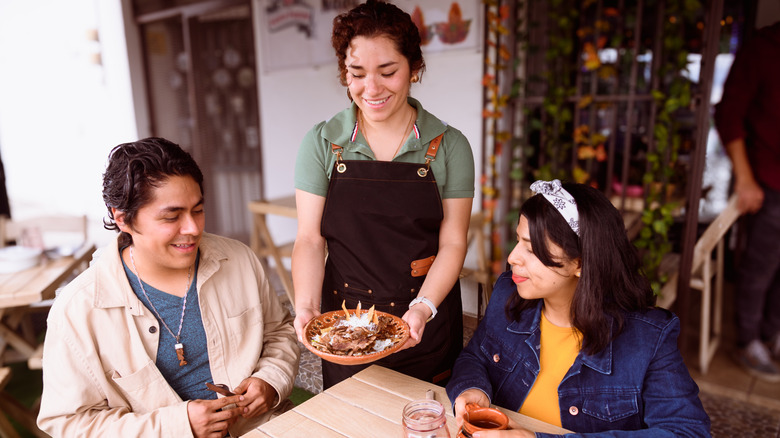
Good manners go a long way regardless of where you're traveling. Mexico is no exception. Before eating at a restaurant in Mexico, tourists should be aware that it's important to be friendly and polite to restaurant staff members.
"Mexicans are more polite to strangers than people in other countries, so even walking into a store, or small restaurant it is common to greet everyone with buenos dias, buenas tardes, etc. Before asking someone a question, always greet them. And smile. Compliment the food, compliment the store, always have something nice to say," Major-Cauliflower-76, a Reddit user, advised a fellow traveler in the r/MexicoCity subreddit. "It doesn't have to be anything elaborate, just que bonita tienda (what a pretty store), que rica huele la comida (your food smells so good). First impressions are important, and that will set the tone for your interaction," they added.
Learn a few friendly phrases, and if nothing comes to mind consider using non-verbal communication techniques to express your gratitude and appreciation. A thumbs-up will be understood by people in Mexico. A warm smile transcends language barriers and will be appreciated at any Mexican restaurant. If you sense that you've made a mistake during your dining experience, simply apologize and express thanks. Most locals will understand that you're a tourist, and a few cultural differences will likely be forgiven as long as you're polite and friendly.