

Not Sequoia, Not Yosemite: This National Park Has The Tallest Trees In The World
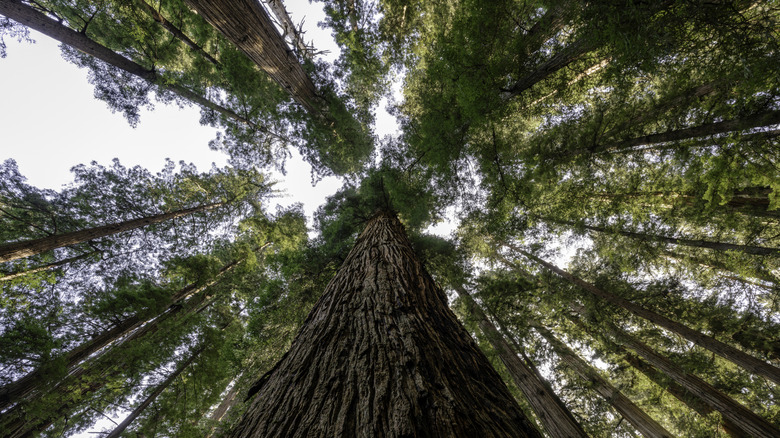
You'd be forgiven for assuming the world's tallest trees were in either Sequoia National Park or Yosemite National Park. General Sherman in Sequoia and the giant sequoias in Mariposa Grove are certainly impressive. But it's in Redwood National and State Parks, where you'll find the tallest trees in the world, the sky-skimming coast redwoods. It's easy to confuse redwoods with sequoias. However, giant sequoias are far larger than redwoods in terms of volume and circumference, but they only grow to heights of around 300 feet. Coast redwoods, in comparison, can reach heights of over 370 feet, with the world's tallest tree currently standing at a height of around 381 feet. The aptly named Hyperion is estimated to be between 600 and 800 years old and stays happily hidden from the public to protect it from damage.
Redwood National Park and the three state parks protect around 139,000 acres of redwood forest. To put that in perspective, that's after around 96% of the original old-growth forest was cut down for logging, and nearly half of what's left is protected within the park. There are several reasons coast redwoods grow so tall, including high rainfall, a mild climate, rich soil, and the summer fog that rolls in from the Pacific Ocean, providing the trees with up to 40% of their water needs.
The UNESCO World Heritage Site-listed park sits on California's far northwestern coast. It is conveniently situated on Route 101, or the Redwood Highway, if you're planning a scenic road trip along the Pacific Northwest coastline. The nearest major supply town is Eureka, around 40 miles south, and California Redwood Coast-Humboldt County has the most convenient airport.
Walking among the world's tallest trees
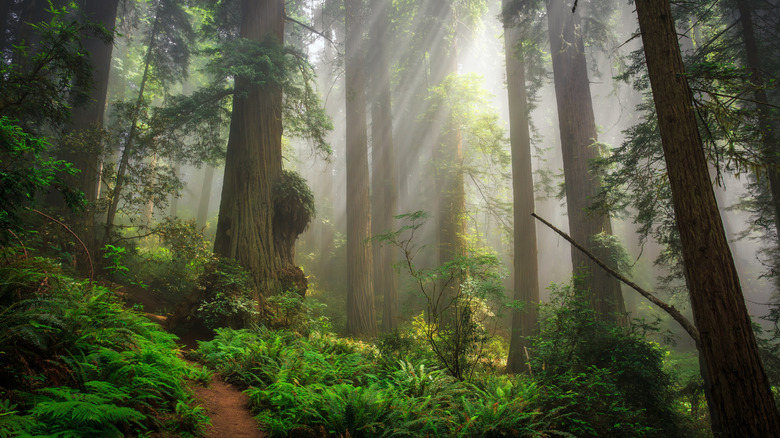
You may not be able to visit Hyperion, but there are thousands of other redwoods towering over the park, stretching out their feathery branches in a kind of group hug. So tall that on some days when the mist rolls in, their tops remain hidden from view. It almost feels like walking into another world entirely as you make your way along the atmospheric trails that wind between the colossal trunks.
For a quick stroll, take the 1.5-mile Lady Bird Johnson Grove Nature Trail. The fern-lined path leads to a clearing where you can sit and take a moment to reflect. For a longer walk, the 6.7-mile Berry Glen Trail climbs steadily through the forest. Watch the sunbeams as they shine through the canopy and light up the forest floor on a sunny day. June is one of the best times to visit Redwood National Park for the added bonus of catching rhododendron flowers in bloom.
The 3.6-mile Tall Trees Trail will lead you to Tall Trees Grove, where you'll find some of the tallest trees in the park. Discovered in 1963, it contained the tallest tree ever recorded, which drew national attention and led Congress to define Redwood National Park in 1968. It's not the most accessible trail, and you need to first obtain a free permit, which are limited and get scooped up quickly during summer. After a one-hour drive from the nearest visitor center, you'll come across a locked gate with a secret code, followed by a 6-mile forest drive and a steep hike up to the grove itself. It's worth the extra effort when you catch that first glimpse of the giant trees.
Sleeping under the giant coast redwood trees
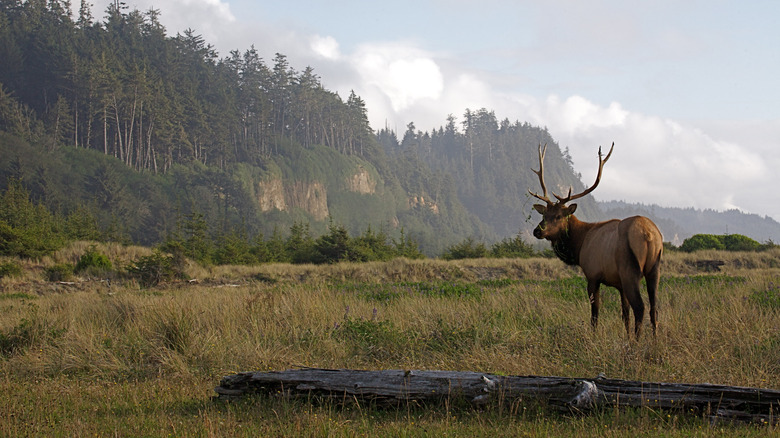
If you've made the effort to reach Tall Trees Grove and want to hold on to the magical moment for a little while longer, backcountry camping is permitted beside Redwood Creek just a short walk from the grove. It's the only place in Redwood National Park where dispersed camping is allowed. Sandy patches provide ideal campsites between the forest and the creek and are accessed from Redwood Creek Trail. It's also one of the best places to spot wildlife with black bears, river otters, and a variety of birdlife. Perhaps there's something in the water, as North America's tallest elk lives in these parts too. Roosevelt elk are frequently seen grazing happily in nearby meadows amongst the forest.
There are no amenities, so you'll need to bring in everything you need, including bear-proof storage. The required free backcountry permit is available from the National Park Service website. There are also two designated campsites along Redwood Creek — Elam Camp and 44 Camp, both of which require permits. The sites have a few picnic tables, firepits, and bear boxes, and Elam Camp is open to horseback riders.
For something a little more comfortable and not too far away, Elk Meadow Cabins are fully furnished, pet-friendly accommodation just 5 miles from the park. The budget-friendly Crescent Beach Motel is literally on the beach and just a two-minute drive from Crescent City. Or for something a little more glamorous, try the Pinc Lady Mansion in Eureka, a historic Victorian-style building with ocean views and an abundance of pink decor 40 miles away from the park.