
Wyoming's Underrated State Park Is Worth The Short Road Trip From Yellowstone
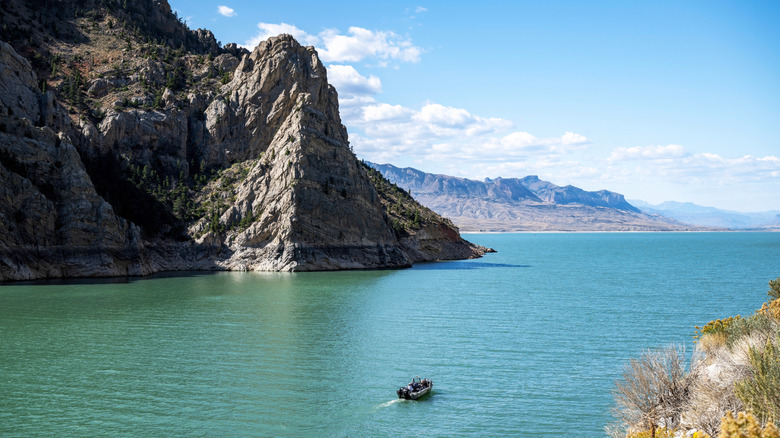
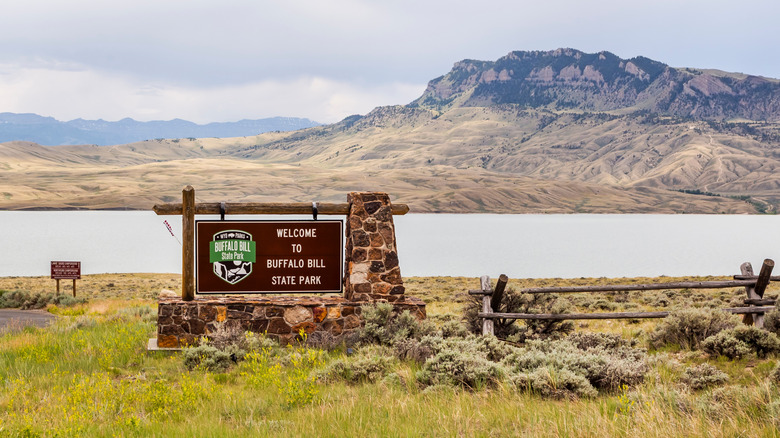
Buffalo Bill State Park must feel like the underappreciated younger sibling of an overachieving elder brother. Especially when that big brother is Yellowstone National Park. But while visitors flock to the gates of America's first national park, it's worth your while making a small detour to this overlooked corner of Wyoming. Located around 42 miles from Yellowstone's East Entrance along the Buffalo Bill Cody Scenic Byway, Buffalo Bill State Park sits in Shoshone Canyon at the foot of the Absaroka Range in the Rocky Mountains. Much like the breathtaking road trip from Denver to Yellowstone or the stunning Big Sky Country road trip, the Buffalo Bill Cody Scenic Byway is one of Wyoming's most picturesque mountain drives.
Besides the superb mountain backdrop, the main feature of the park is the Buffalo Bill Reservoir, formed by the damming of the Shoshone River, and the main attraction for windsurfers, anglers, and other water sports enthusiasts. The park's namesake William "Buffalo Bill" Cody arrived here in the 1870s as a guide for government survey expeditions after his fame as a frontiersman and showman. He played an important role in the irrigation and agricultural development of the area and founded the nearby town of Cody in 1896.
Much of the parkland surrounding the reservoir belonged to Cody, from whom the federal state government bought the land to construct the dam. The dam, which was completed in 1910, was quite a feat of engineering at the time and was the tallest dam in the world when it was completed. Today, it provides water and hydroelectric power throughout the Bighorn Basin. Open all year round, head to the park in spring if you want to see the abundance of colorful wildflowers across the canyon landscape. Go in summer to take full advantage of the water sports on the reservoir or in winter if you're more interested in cross-country skiing or snowshoeing.
Water activities in Buffalo Bill State Park
With the reservoir as the centrepiece of the park, where the North and South forks of the Shoshone River meet, much of the action takes place on the water. It's a popular destination for windsurfing thanks to the strong winds and large surface area, and there are multiple boat ramps for kayaks, paddleboards, or anglers who simply want to head out for a quiet spot of fishing for trout, carp, walleye, and perch.
The Buffalo Bill Dam and Visitor Center is also worth checking out if you're interested in finding out more on the history and construction of the dam, which is also listed on the National Register of Historic Places. Free to enter and open daily from May 1 through September 30, take a walk over the entire dam to view the impressive 280-foot drop down to the river canyon on one side and the reservoir from the other. Back at the visitor center, you can watch a short film and walk round the exhibits.
You could also take the Buffalo Bill Dam via the Hayden Arch Bridge Trail, better known as just the "Dam Trail". This easy 4.3-mile out-and-back route takes you from the visitor center, winding between canyon and river with some stunning views and amazing photo opportunities. The trail is mostly paved, making it accessible for wheelchairs. Otherwise, try the Eagle Point Trail, a short 1.5-mile stroll along the water's edge, where you can stop for a bite to eat at one of the scenic picnic sites located on the shoreline.
Camping and hiking in Buffalo Bill State Park
The quiet shoreline and mountain backdrop make Buffalo Bill State Park popular with campers and hikers. With two main campgrounds, choose from the North Fork Campground or the Lake Shore Campground. North Fork Campground lies on the west side of the reservoir, is open May through September, and has 60 RV and tent sites. Lake Shore Campground on the north side of the water isn't as well developed but is open all year round and has 37 RV and tent sites. Campsites are best reserved ahead of time and cost around $32 per night for non-residents and $18 for residents. Non-resident day visitors pay $12 per vehicle, while residents pay $7.
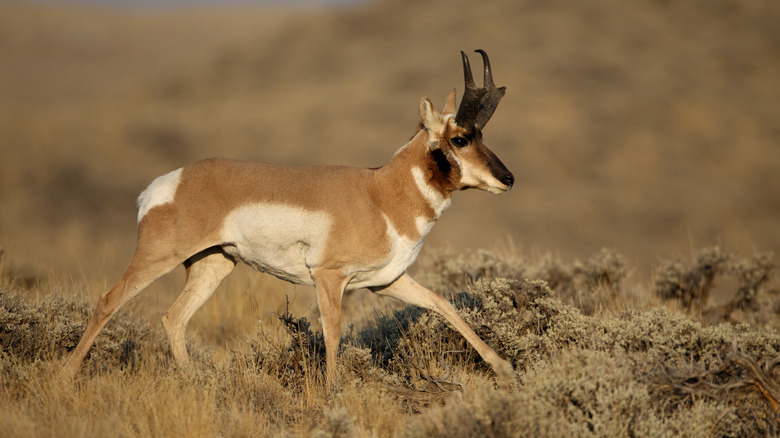
With mountains rising in every direction, hiking is the best way to make the most of the panoramic views over the reservoir and surrounding area. Just like Wyoming's underrated Bear River State Park, it's also a great place to spot some of the amazing wildlife that lives in the region. Unlike many larger parks, there isn't a real trail network, and hiking in these mountains can be pretty challenging. Cedar Mountain is perhaps one of the most well-known hikes in the area. The scrubby slopes take you up onto high plateaus for panoramic views and some unusual geological features such as sink holes and cave systems. Rattlesnake Mountain is much more demanding, but you'll be rewarded with outstanding views and a chance of spotting elk, mule deer, antelope, coyotes, and bears. So make sure you pack your bear spray, plenty of water, and sunscreen if you're heading up into the mountains.