

Why This Popular Island Destination Should Stay Off Your Travel List In 2026
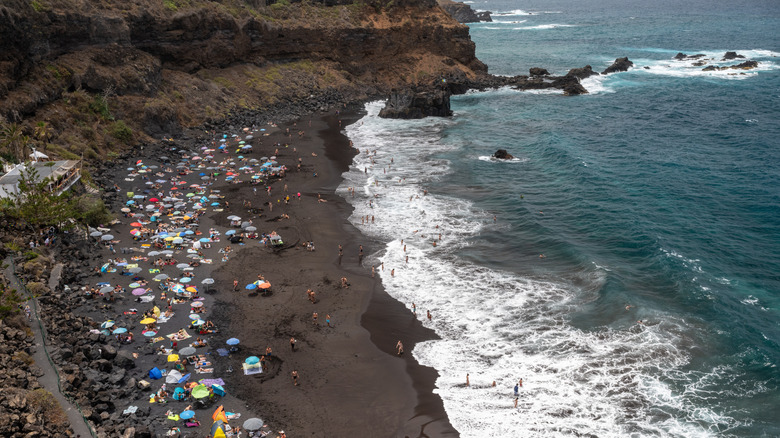
There are plenty of reasons travelers seeking sunnier climates head off to the Canary Islands. A popular destination among Europeans, especially the Brits, the Spanish archipelago sits just off the northwest coast of Africa. It has more hours of sunshine than anywhere else in Europe, and year-round flights from dozens of major European airports. Spread over seven main islands, from the moon-like lava fields and black sand beaches of Tenerife to the prehistoric cloud forests and terraced hillsides of La Gomera, you could almost believe yourself to be in another world entirely.
Unfortunately, this little piece of holiday heaven is struggling under the weight of its own popularity. Just like other areas of Europe being plagued by overtourism, the Canaries are seeing record visitor numbers that are becoming increasingly difficult to sustain. Pressure on the islands' infrastructure and protected landscapes has understandably worried residents, who have spilled out onto the streets, taking part in several large-scale demonstrations under the banner "Canarias tiene un límite" ("the Canaries have a limit").
Meanwhile, numbers continue to rise, with developers responding to demand by building new hotels and resorts, putting at risk the very reason we visit these island destinations in the first place. If we want to continue to enjoy these vastly different and naturally beautiful landscapes for years to come, then we need to give them a break from the relentless pitter patter of tourist feet. "We are losing our identity, culture, and, ultimately, our right to exist as a community," a representative from the Asociación Tinerfeña de Amigos de la Naturaleza (ATAN), one of Tenerife's oldest environmental groups, told Fodor's Travel. "Tourism has become unlimited, mass-oriented, and largely low-cost party tourism that doesn't come to truly discover the islands, but to consume a fake backdrop."
Overtourism in the Canary Islands
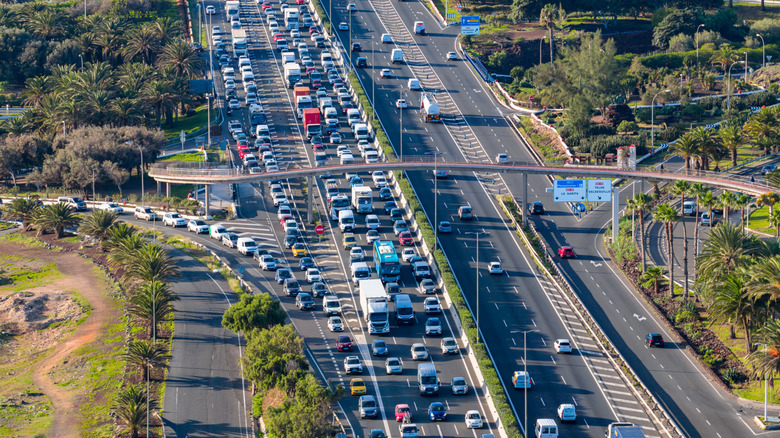
Over 18 million visitors arrived in the Canaries in 2025 (compared to roughly 2.2 million residents), a 3.48% increase on the previous year. As more and more tourists compete for somewhere to stay, holiday rental prices have skyrocketed, leaving many locals unable to rent or buy a home. Although tighter regulations have been introduced for short-term holiday lets on platforms like Airbnb and Booking.com, resorts continue to grow, especially on the larger islands of Tenerife, Gran Canaria, and Lanzarote.
The knock-on effect is being felt as roads become heavily congested, healthcare services are pushed to the limit, and water supplies diminish. So much so that Tenerife declared an official water emergency for nearly two years until it was lifted in February 2026. While the constant pressure on the islands' infrastructure is alarming, the effects on the environment are just as serious. Reports of untreated sewage water running into the sea are understandably raising concerns over pollution and safety.
While local communities are concerned about the threat to their identity, culture, and community, it's difficult to imagine the appeal for visitors if the deterioration of the Canaries continues. "Natural spaces are constantly degraded, with alarming losses in biodiversity. Overcrowding has erased peaceful places where we could once enjoy life there are no truly local spaces left," a spokesperson from ATAN said via Fodor's Travel.
Less crowded alternatives to the Canary Islands
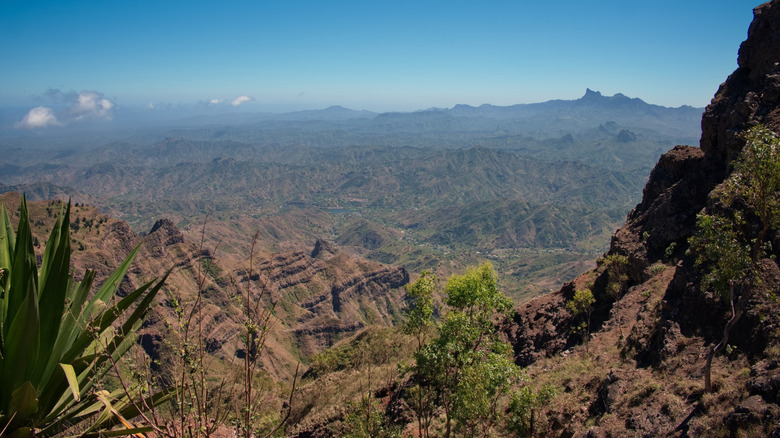
While we leave the Canary Islands to heal their wounds, you don't need to travel far to experience a similar scenic island escape. To the north, you should visit the Azores, and to the south, head to one of the hottest winter destinations: Cape Verde. Like many popular destinations, both face mounting tourism pressures of their own, but certainly not on the same scale as the Canaries.
The Azores are a group of islands that sit further out in the Atlantic Ocean, west of Portugal. You won't get quite the same temperatures as you would in Tenerife, but if you don't mind the cooler climate, you're unlikely to have to hustle for a place on the beach. In fact, you may not want to lie on the beach at all. The volcanic landscapes are just crying out to be explored, with each of the nine inhabited islands having walking trails that wind through dense forests and pass by lake-filled calderas, with the added bonus of considerably fewer crowds. Thanks to the international airport on São Miguel, the largest island in the archipelago, direct flights will take you from major European cities as well as parts of eastern North America, including Boston, New York City, and Toronto.
If guaranteed hot weather is an absolute must, Cape Verde may be more to your liking and more similar to the Canary Islands in both climate and scenery. Lying off the coast of Western Africa, you still get the long sandy beaches and rugged volcanic landscape, as well as year-round sun, but for now, the nine inhabited islands are less crowded and less developed in comparison. Most flights arrive at Amílcar Cabral International Airport on Sal, with direct flights from several European cities including Lisbon, London, and Paris. A year-round direct weekly flight connecting Providence in Rhode Island to Praia, one of the other Cape Verde islands, has also been announced thanks to long-standing connections between both of these communities.