

King Charles III's Visit To Shenandoah Revealed A New Partnership With A UK National Park
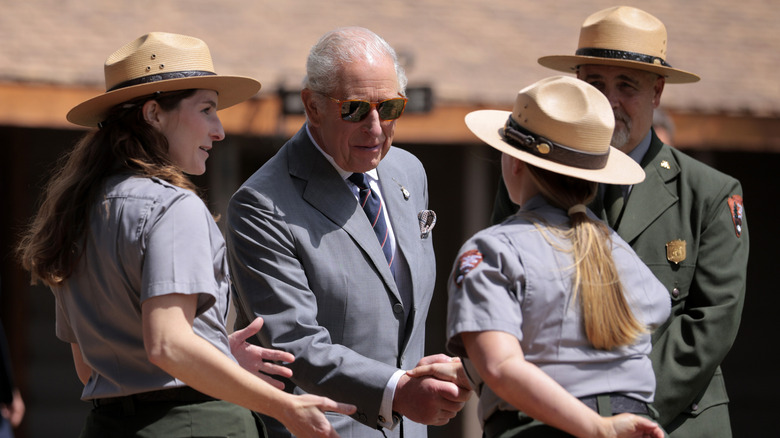
Shenandoah National Park opened its gates to welcome King Charles III on the final day of his April 2026 visit to the U.S. The visit took place ahead of the 250th anniversary celebrating U.S. independence from Great Britain. This was the first British state visit to the U.S. since Queen Elizabeth II came in 2007.
Located in the heart of the Blue Ridge Mountains and covering nearly 200,000 acres of protected Virginia wilderness, Shenandoah was established in 1935. It sits just 70 miles from Washington D.C., where the British sovereign had met with President Donald Trump just days earlier. Known for its Appalachian backdrop and the scenic 105-mile Skyline Drive that runs the length of the park, it also has many habitat and species protection projects and youth education programs, subjects the king feels passionately about.
As a long-standing conservationist and environmental advocate, the king has spent decades actively supporting initiatives linked to environmental education, nature restoration, biodiversity protection, sustainable farming, and climate awareness. During his time at Shenandoah, he spoke passionately about these subjects and met with park rangers to learn more about their work and the educational programs they lead within the park. He even became an honorary Junior Ranger at a swearing-in ceremony at the grand young age of 77.
After an encounter with Shenandoah's education ambassador, Buddy the bald eagle, and speaking with members of the Monacan Indian Nation, whose ancestral lands covered most of western Virginia, King Charles unveiled two commemorative stones: One from the Appalachian Mountains and one from Cairngorms National Park in Scotland, symbolizing a new partnership between the two parks.
From Virginia to the Scottish Highlands
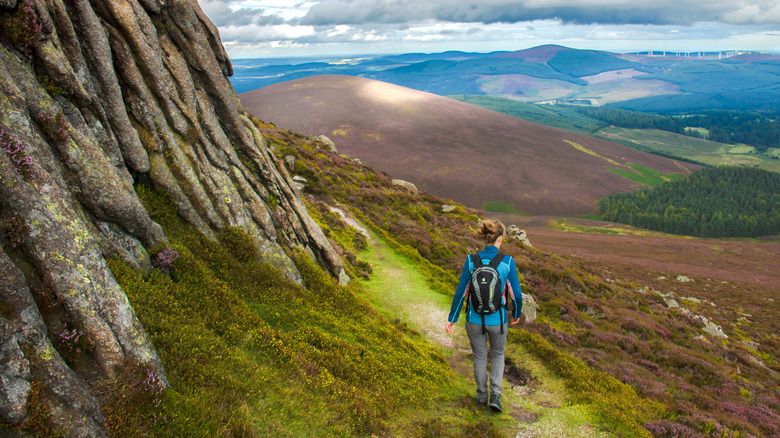
The link between Shenandoah National Park and Cairngorms National Park is more than just a symbolic unveiling of commemorative stones. The two have a shared geological history. The Appalachian Mountains, which run through Shenandoah, were once connected to the Cairngorms as part of the same ancient mountain range before continental drift separated them millions of years ago.
Although now divided by thousands of miles, both parks share important forest and mountain ecosystems, although the evolution of the wildlife and landscape has taken a different direction. While Shenandoah features forested ridges and lush green woodlands, the Cairngorms contain wide open moorland and Caledonian pine forests. And while you may spot black bears and white-tailed deer when out hiking the trails in Shenandoah, in the Cairngorms, you're more likely to encounter red deer and capercaillie.
The visitor experience has certain differences too. Unlike Shenandoah, which is accessed along Skyline Drive, the Cairngorms has multiple entries throughout the Scottish Highlands. Aviemore would be your best bet as it has rail and bus links from both Edinburgh and Glasgow. As the largest national park in the U.K., the Cairngorms just happens to contain Balmoral Castle, the Scottish residence of the Royal Family.
The new partnership between the two parks is an exciting development that has the potential to form better visitor experiences and shared educational programs and conservation projects. This could open up new opportunities for young people to help protect and preserve national parks in both countries for future generations to enjoy.