

5 US National Parks With Great Accessibility For Disabled Visitors
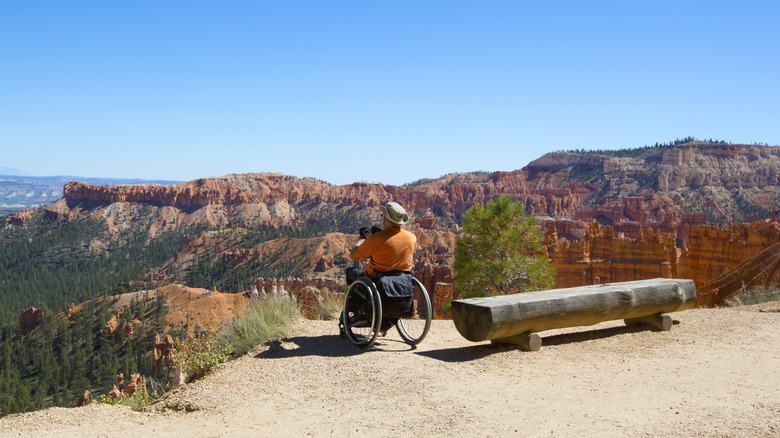
While some people may take access to the farthest regions of America's national parks for granted, for disabled visitors, access is considerably more limited. This is surprising given that more than one in four people in the U.S. lives with some type of disability. And it's not just physical disabilities that can make it difficult to experience the parks' outstanding natural beauty. As Jeremy Buzzell, who manages the National Park Service Accessibility Support Program, said, "When people think about accessibility in the park service, they think about people in wheelchairs who can go down trails. It's a lot bigger than that. It's how we're making it accessible to people who are blind, hearing impaired, with intellectual disabilities. What we want to do is remove as many barriers as we can." (via Reader's Digest).
The Accessibility Support Program was introduced after a special accessibility task force was created by the National Park Service in 2012 to improve access for those with mobility, hearing, or visual impairments or other special needs. As well as developing more wheelchair-friendly pathways and accessible viewpoints, there are now more interpretive trails and audio-based aids introduced in many parks. Although access is always going to be limited to the more remote and difficult-to-reach areas, many national parks continue to add paved paths, scenic drives with overlooks, and sensory trails.
United States citizens or residents with permanent disabilities are also eligible for the America the Beautiful pass, which grants the holder free lifetime access to participating national parks and federal recreation lands. According to our research, five of the most accessible national parks for travelers with disabilities are Yosemite, Grand Teton, Grand Canyon, Mammoth Cave, and Acadia.
Yosemite National Park, California
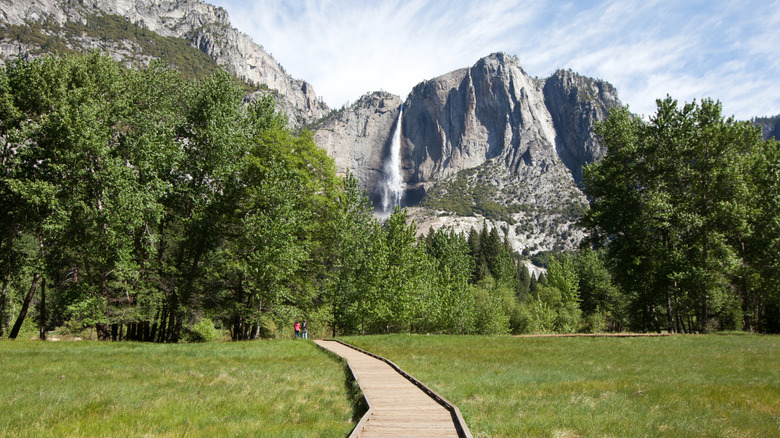
Around 4 million visitors head to Yosemite National Park every year, drawn by its iconic landmarks and natural beauty. Hikers come for the challenge of summiting Half Dome, while climbers dream of scaling the heights of El Capitan. And down in Yosemite Valley, there's the spectacular sight and sound of Yosemite Falls — the highest in the park. Disabled visitors can get up close to the falls on the Lower Yosemite Falls Trail. This 1.2-mile paved loop trail is open all year round, and a free shuttle bus will drop you at a stop with a bicycle path you can follow to the trailhead. For the best views of the falls, follow the trail going clockwise. There are also benches along the trail and tactile exhibits depicting the geology of the falls.
One of the other major sights to see in Yosemite is the giant sequoia trees, and Mariposa Grove has more than 500 of them. Situated near the south entrance to the park and also accessible by the free shuttle bus, the recently restored trail system makes it easier to see these giants of the tree world. One of these is the 0.3-mile Big Trees Loop Trail, which is suitable for wheelchairs and features interpretive panels on the life and ecology of these remarkable trees.
The free shuttle buses running in Yosemite Valley are equipped with wheelchair lifts. Wheelchairs and mobility scooters are available to rent, although you'll need to call ahead to reserve. For the hard of hearing, the Yosemite Deaf Services Program provides trip planning and interpretive services for all park events. For more information, the Yosemite Accessibility Guide is available online, at park entrances, and in visitor centers.
Grand Teton National Park, Wyoming
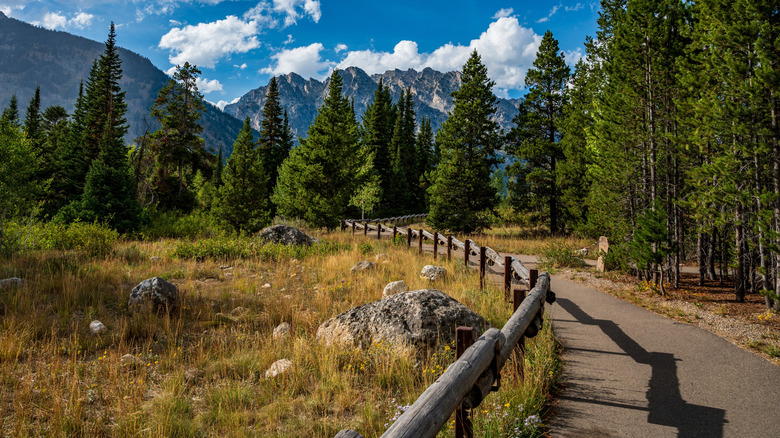
With a diverse landscape of sagebrush-filled valleys and conifer forests set against the jagged peaks of the Teton mountain range, access in Grand Teton National Park can be challenging. But thanks to its ongoing Accessibility Self-Evaluation and Transition Plan, the park is becoming increasingly more inclusive for everyone. The plan aims to identify and remove barriers that limit movement around the park, such as steep walkways, missing grab bars, or lack of facilities — 17 areas have been highlighted for immediate to long-term improvements.
Currently, each of the four visitor centers has a range of interpretive media, including sensory exhibits and audio descriptive devices for films, catering to different learning needs. Plans include upgrades to surfaces and seating areas as well as improvements to restrooms. "There's been a specific focus to encompass various types of disabilities. And when you make things more accessible, it's better for everyone." says Jessica Brown, branch manager of project management at Grand Teton National Park, (via Condé Nast Traveler).
Despite most trails generally being on uneven ground, there are still around 15 miles of shared pathways throughout the park accessible for wheelchair users. At Jenny Lake, a network of paved trails connects the visitor center to the shore, with one of the trails allowing wheelchairs to roll into the water. For a different view, the wheelchair-accessible ramp on the East Boat Dock connects travelers with the Jenny Lake Shuttle boat for a scenic round trip that passes by the base of Mount Teewinot for around $20. There are also plans to develop accessible horse mounting stations in the future. Nearby at Jackson Hole, the nonprofit organization Teton Adaptive schedules activities for visitors with disabilities, including Nordic skiing, paragliding, and mountain biking.
Grand Canyon National Park, Arizona
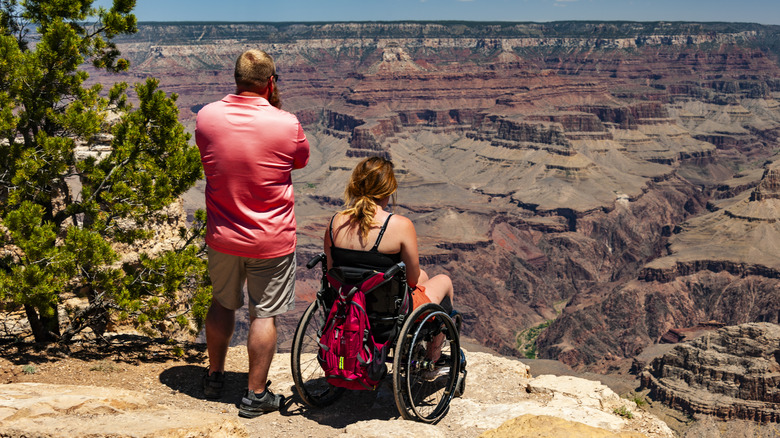
Running 278 miles along the Colorado River, the Grand Canyon is one of the most popular tourist destinations in the world and a must-visit national park to add to your bucket list. For disabled visitors, the South Rim is the most accessible area in the park. Free shuttle buses run every 15 to 30 minutes through Grand Canyon Village and out to the trailheads along the South Rim. While the shuttle buses are wheelchair accessible, the size limit is 30 inches wide by 48 inches long. If needed, you can hire wheelchairs from Canyon Adventures for $13 per day. There are no shuttle buses on the North Rim.
If you're driving, a free Scenic Drive Accessibility Permit is available from the entrance stations and visitor centers, which gives you entry to Hermit Road and Yaki Point Road, which are normally closed to the public. Much of the 13-mile Rim Trail can be accessed by the orange shuttle route. There are shuttle stops along the way, allowing you to do as much or as little as you like while you take in the views. The trail is also lined with markers that talk about the history and geology of this vast and unique landscape.
There are a number of park ranger programs at no extra cost, with ASL interpreters available by request, but you will need to give around three weeks' notice. In the visitor centers, tactile maps and exhibits with audio descriptions and assistive listening aids are available. For more information on access to Grand Canyon National Park, download the Accessibility Guide.
Mammoth Cave National Park, Kentucky
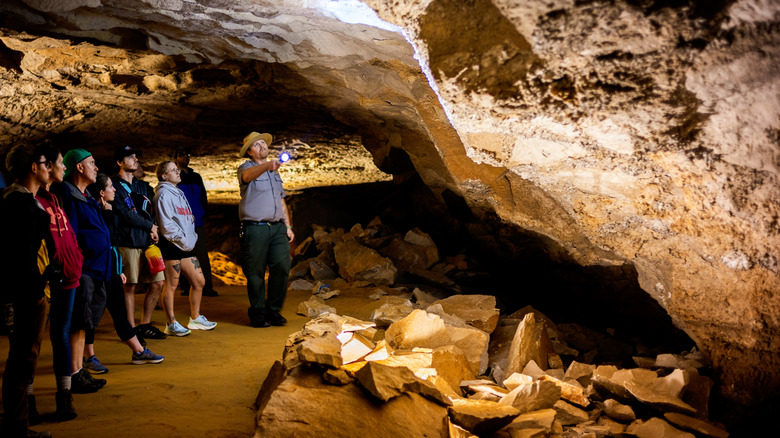
Home to the world's longest known cave system, Mammoth Cave National Park has more than 420 miles of pathways, with new ones still being discovered. The caves contain several wheelchair-accessible trails that can be explored on ranger-led tours or self-guided walks. These tours allow scooters and other assistive devices and follow different schedules depending on the time of year. The two-hour Accessible Tour follows a half-mile smooth paved trail in the heart of the echoey chambers of the caves. You'll pass by sparkling geological formations before finishing the tour in the famous snowball room, where the white gypsum rock formations give the impression of being surrounded by snowballs. Access is by the elevator in the visitor center. Tickets for this tour cost $27 and should be reserved in advance, as places fill up quickly.
One of the guided walks outside the cave is the Echo River Spring Walk, a 0.6-mile boardwalk trail that usually takes around 45 minutes. Here you can see where the underground Echo River emerges at the surface of the Mammoth Cave while a park ranger talks about the surrounding geological features. Many of the accessible tours and trails also feature tactile exhibits and audio descriptions along the way, with more information on the cave's history and wildlife. There are also other ranger-led talks and activities available to take part in.
The visitor center itself contains a small museum with tactile exhibits and films with closed captions and audio descriptions. If you're planning on staying overnight, there are also a couple of accessible campgrounds and picnic areas within the park. The visitor center and main entrance to the cave are located near Park City, just off I-65.
Acadia National Park, Maine
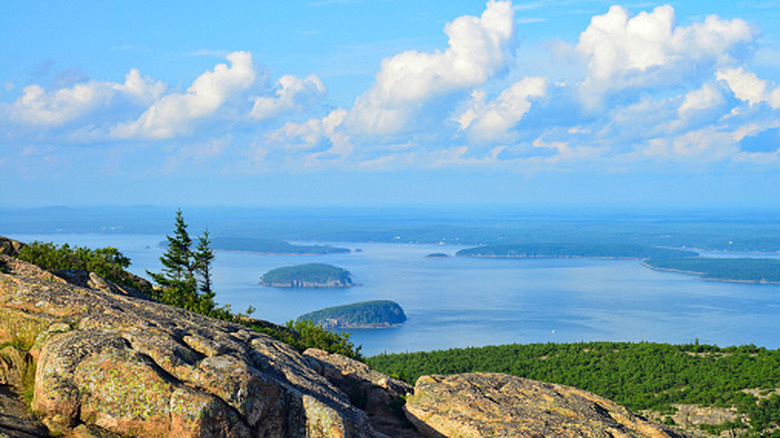
The rocky coastal shores that line Acadia National Park may not seem like the most accessible parts of the landscape to explore, but thanks to a large network of gravel carriage roads and paved paths, much of the park can be enjoyed by visitors with reduced mobility. This is in part thanks to a comprehensive accessibility assessment funded by Friends of Acadia in 2021, which has led to several improvements around the park.
For some of the best ocean views and a chance to spot the local wildlife, head up to the Cadillac Summit Loop Trail, a short 0.4-mile paved path. The trailhead is at the Cadillac Summit parking lot, where there are designated spaces, but you will need to reserve these in peak season. There is also the free Island Explorer bus, equipped with wheelchair lifts, that stops at the campgrounds and trailheads around the island. The 45 miles of gravel carriage roads, dating from the early 20th century, make access through the forests and around the lakes much easier. There are even wheelchair-accessible horse-drawn carriage tours available through Friends of Acadia with a custom-built carriage with a ramp that has access for one wheelchair. Due to limited availability, reservations are needed well in advance.
Special permits are also available from park headquarters for other mobility devices such as e-bikes, golf carts, and scooters. The park also provides accessible site descriptions, audio descriptive tours, interpretive waysides, and orientation panels. Additionally, the park brochure is available in braille. The excellent facilities continue at Echo Lake Beach, where a beach wheelchair with large inflatable tires gives access to the shore. Sign language, live audio description, and assistive listening are available for all park events, and service animals are allowed on all park trails, making Acadia one of the most accessible national parks for disabled visitors.
Methodology
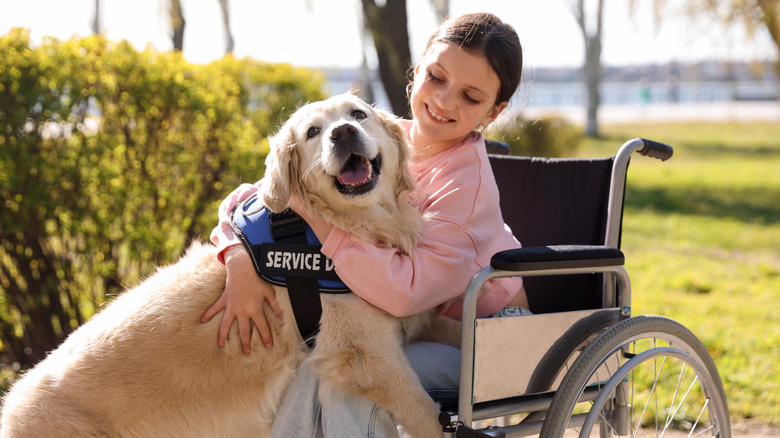
Thanks to the five-year accessibility strategy laid out by the National Park Service, designed to make access more inclusive to U.S. national parks, there have been and continue to be significant improvements for visitors with reduced mobility and other disabilities. This list of five national parks was selected using information from official national park websites, third-party resources, and first-hand accounts from disabled visitors. Other national parks have also shown improvements in their facilities and services, but we felt that these five in particular stood out for their increased accessibility and ongoing improvements.