

The Most Beautiful Castles To Visit In The US, According To Architectural Digest
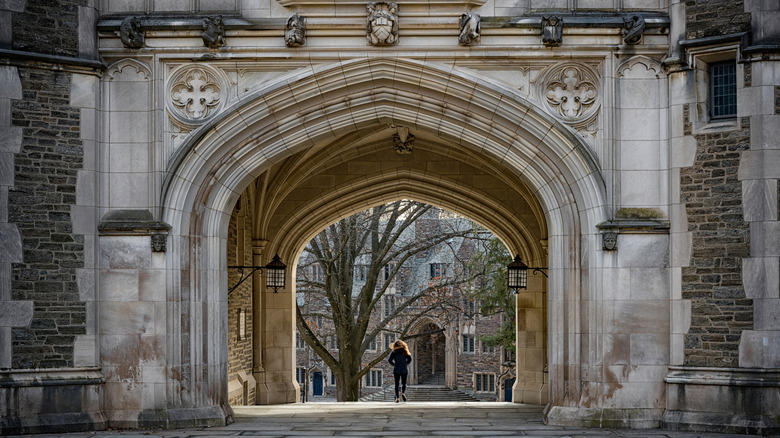
Castles are most often associated with Europe, where more than tens of thousands of these grand structures have stood as symbols of power, defense, and royalty for centuries and still dominate historic landscapes. Iconic castles you can't miss on a trip to Europe include Germany's Neuschwanstein Castle, Romania's Bran Castle, France's Chambord Castle, and Portugal's magnificently colorful Pena Palace. These structures stir up images of medieval knights, mythical dragons, romance, and a desire for adventure. Fortunately, for those unable to fly over the Atlantic, the United States offers its own array of captivating castles with a similar magic, built not for warfare and protection but to display affluence and artistic vision during the Gilded Age and beyond.
Scattered across a diverse range of settings from urban parks to remote islands and mountain estates, these American castles provide accessible opportunities to wander ornate halls, admire intricate craftsmanship, and soak in the beautiful scenic vistas. They stand as testaments to innovation and excess, blending European influences with New World ambition. To curate this list of the most beautiful castles to visit across the U.S., we drew from Architectural Digest's professional opinion and cross-referenced visitors' experiences on popular review platforms. With impressive architecture and standout features beloved by travelers, here's why Grey Towers Castle, Biltmore Estate, Smithsonian Castle, Boldt Castle, and Hearst Castle are the top five castles in the United States.
Grey Towers Castle, Pennsylvania
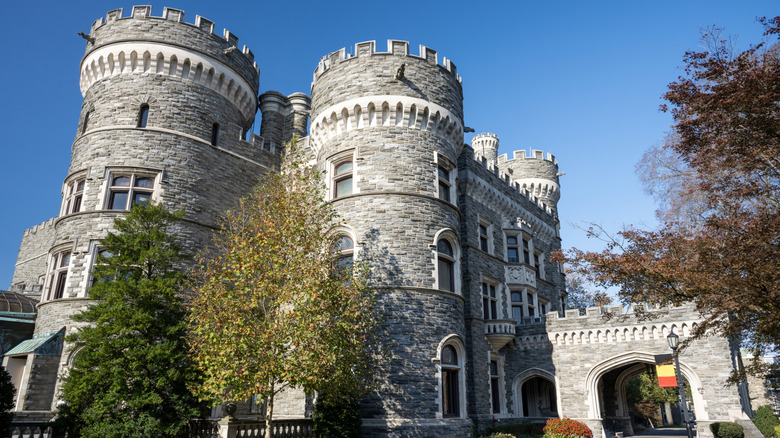
Found in Glenside, Pennsylvania, on the sprawling campus of Arcadia University, Grey Towers Castle serves as a wonderful example of Gothic Revival architecture with eclectic touches. Construction of the castle began in 1893 following a fire that destroyed the previous estate, and it wrapped up five years later. The 24-year-old architect Horace Trumbauer piloted the project, drawing inspiration from England's Alnwick Castle, the medieval stronghold famously used in the filming of Harry Potter. It was originally commissioned by William Welsh Harrison, serving as a lavish family residence on a 138-acre property until Harrison's death in 1927. His widow then sold it to the university.
Grey Towers Castle offers a seamless fusion of medieval exterior grandeur with luxurious French-inspired interiors spanning from the Renaissance to Louis XV. It was crafted from local gray stone, the exterior features more than 50 gargoyles, and it has a robust fortress-like presence. Inside the Great Hall is a beautiful barrel-vaulted gilded ceiling, twin mantels, and a grand staircase leading to various decorated rooms like the Music Room and Mirror Room with painted ceilings and lovely tapestries. The 40-room mansion was once ranked among the nation's largest homes, incorporating gorgeous handcrafted woodwork, ornamental paintings, and modern amenities for its time. It is now a designated National Historic Landmark.
Visitors are drawn to its historical depth and preserved elegance, which offer a glimpse into Gilded Age luxury. Architectural Digest notes its French stylistic interiors and university integration as key charms. Traveler feedback echoes this, with users calling its stonework and archways magical and praising its well-maintained architecture as a must-see. It serves as an event space for weddings too.
Biltmore Estate, North Carolina
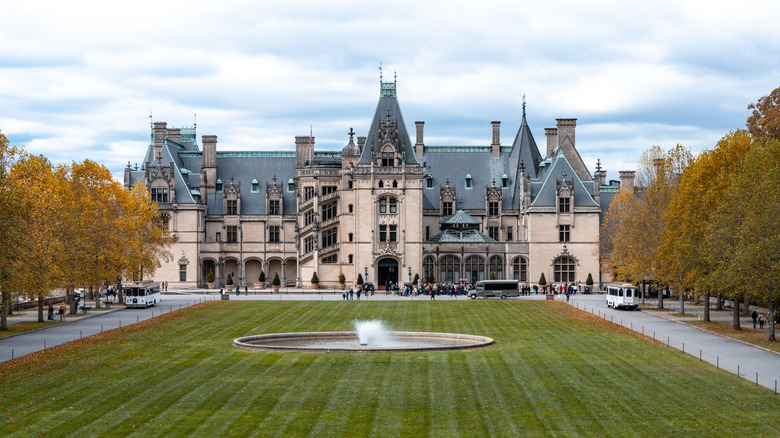
Biltmore Estate is situated in Asheville, North Carolina, tucked up against the Blue Ridge Mountains. The estate stands as America's largest private residence. It was built between 1889 and 1895, designed by architect Richard Morris Hunt for the main house, with landscape architect Frederick Law Olmsted shaping the lush grounds. George Washington Vanderbilt II, an heir of the wealthy Vanderbilt family, commissioned it as a summer retreat, naming it after his Dutch ancestral town and the rolling terrain. It originally spanned 125,000 acres, employed hundreds of workers, and sourced global furnishings, finally opening to guests on Christmas Eve 1895. Much of the estate was sold to help form the Pisgah National Forest, and the estate was opened to the public in 1930. It has operated and served as a museum and vacation space since.
The estate has a Chateau-esque style inspired by the French Renaissance, featuring steep roofs, turrets, and ornate details. Around 175,000 square feet, it includes 250 rooms, 35 bedrooms, 43 bathrooms, and 65 fireplaces with highlights like the marbled Entrance Hall and an art collection that contains more than 92,000 items from famous artists like Monet and Renoir. The grounds contain an award-winning winery, and guests can explore the private 75 acres of gardens and 22 miles of trails that round out the estate. It has been a National Historic Landmark since 1963, exemplifying extravagance and self-sustaining innovation.
Travelers visit Biltmore for its immersive activities, from biking to winery visits on the now 8,000-acre property. Architectural Digest hails it as a premier Gilded Age remnant with chateau vibes. Traveler reviews appreciate its breathtaking architecture, offering a larger-than-life experience, especially during the holidays.
The Smithsonian Castle, Washington, D.C.
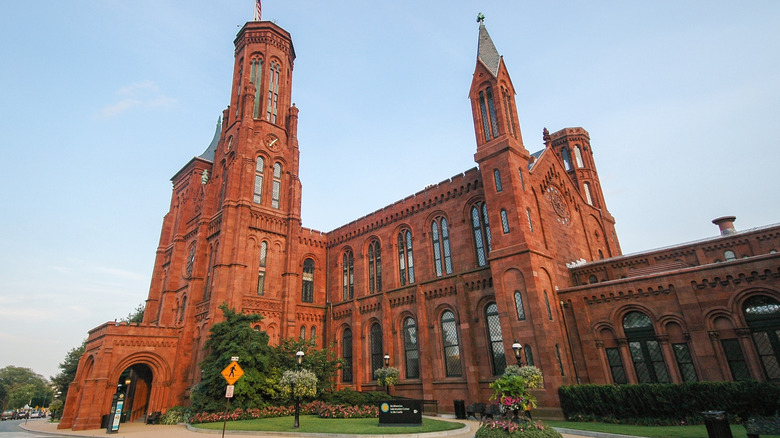
Found on the south side of the National Mall in downtown Washington, D.C., the Smithsonian Castle anchors the world's largest museum complex. Also known as the Smithsonian Institute Building, construction on this castle spanned 1846 to 1855, with work starting under architect James Renwick Jr., who won a national design competition and collaborated with Robert Mills on the interior design. Renwick, who was renowned for Gothic Revival churches like St. Patrick's Cathedral in New York, created the castle as the Smithsonian's first structure. It has been a National Historic Landmark since 1965 and once housed labs, libraries, and living quarters. It survived a fire in 1865 that prompted renovations and expansions that continue today.
Its Norman Revival architecture mixes Romanesque and Gothic motifs. It is built from distinctive red Seneca sandstone, which contrasts sharply with D.C.'s typical white marble. It features distinct asymmetrical towers, intricate carvings, and a fairy-tale-like silhouette. The castle features a Great Hall that has now been turned into the visitor center, a crypt with Smithson's tomb, surrounding gardens with seasonal geometric plantings, and numerous roses.
The castle draws visitors for its symbolic role and serene beauty. It offers a jumping-off point for Smithsonian exploration. Architectural Digest ranks it highly for Renwick's design and mid-19th-century grandeur. Visitor reviews highlight its historical charm and architectural splendor, considering it a castle in a fairytale with beautiful gardens. It is currently undergoing renovations, and access is limited, but the views from the exterior, with the stark red stone contrast against a bluebird day, are marvelous.
The Boldt Castle, New York
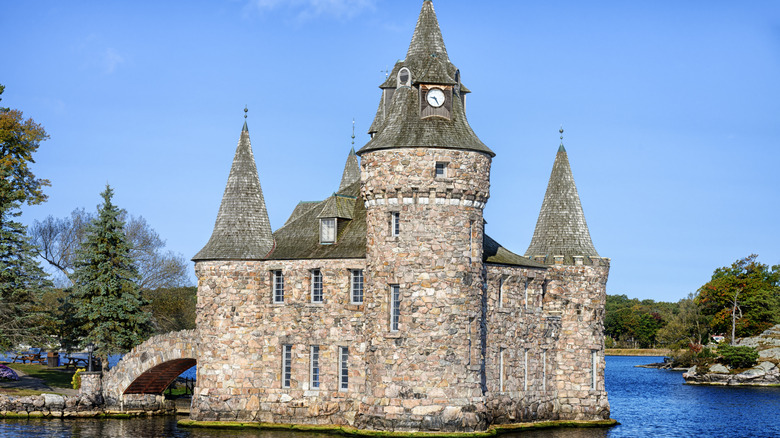
Perched on Heart Island near Alexandria Bay, New York, Boldt Castle is a poignant landmark only accessible by boat. Construction began in 1900 by George C. Boldt but was halted in 1904 after the sudden death of his wife. The millionaire had intended the castle to be a grand Rhineland-inspired gift for her. It was abandoned for 73 years until it was acquired by the Thousand Islands Bridge Authority, which invested several million into the castle's restoration.
Chateau-like in style, with the Alster Tower looking much like German defense structures, the six-story mansion spans 5 acres with six structures: the main tower with its indoor pool, the Power House, the Hennery (a 90-foot children's playhouse), and a stone gazebo, complete with the quintessential arch and drawbridge. The interior of Boldt Castle features European paintings, sculptures, mosaics, and tapestries, plus a ballroom, sauna, and bowling alley. The Italian gardens include fountains, swan ponds, terraces, and imported statues that create a rather romantic fairy-tale ambiance, a nod to Boldt's wife.
The tragic love story and ongoing revival capture the attention of visitors who can explore through a self-guided tour from mid-May to mid-October. Architectural Digest spotlights its St. Lawrence Seaway seclusion and role as a romantic getaway. Visitors rave about its beautiful restoration, impressive structures, and breathtaking ambiance. Ferries or water taxis provide access during the visitation season.
The Hearst Castle, California
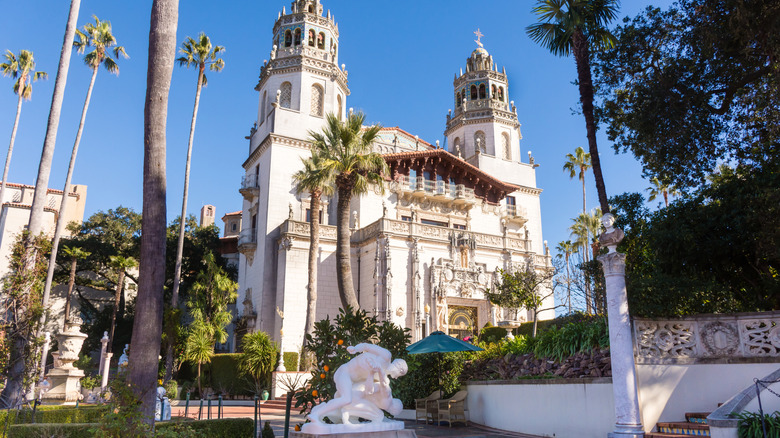
Overlooking the Pacific Ocean in San Simeon, California, sitting atop the Santa Lucia Range, is the Hearst Castle that embodies Mediterranean Revival in all its splendor. Construction began in 1919 and continued until 1947, directed by Julia Morgan, who oversaw nearly every detail of the project for nearly 28 years. Media tycoon William Randolph Hearst inherited the 250,000-acre ranch from his parents and transformed it into "La Cuesta Encantada" (the Enchanted Hill). Hearst resided there until health issues forced his departure, and it became a California State Park in 1954, earning it a National Historic Landmark title in 1976.
The Hearst Castle blends Spanish Colonial, Mission, and Moorish Revival styles, and the estate once covered more than 250,000 acres. Highlights include the Casa Granda with 38 bedrooms, 42 bathrooms, and opulent sitting rooms complete with fireplaces. The interior of the castle hosts rooms like the Gothic Study with beautiful archways. The main library boasts 150 Greek vases, but to see them you have to be willing to walk 322 steps to get up there! The pools steal the show, with the outdoor Neptune Pool adorned with marble sculptures and the indoor Roman Pool that is tiled like many ancient Roman baths, complete with Roman god statues.
The castle enthralls with its decadence and functions as a state museum. Architectural Digest emphasizes its valuable collections and magnificent indoor pool. Visitor reviews laud its unparalleled glimpse into opulence, beautiful architecture, and incredible views. It is a must-see California landmark.
Methodology
To craft this list, we reference Architectural Digest's article on the 18 most beautiful U.S. castles, focusing on those that blend historical significance with aesthetic appeal. We selected a top five based on their representation in the article in correlation with strong positive sentiments from firsthand visitor reviews on Tripadvisor and Google. For more impressive buildings across the country, don't miss these 20 historic mansions to visit in America.