

Tokyo Has Been Dethroned As The World's Largest City By Population In 2025

The Japanese capital of Tokyo has for decades reigned as the world's most populated city. But in 2025, it lost its crown to not one but two other Asian megacities. Taking the top spot is Jakarta, Indonesia's capital, with a whopping 42 million people. In second place is Dhaka, Bangladesh's capital, with a population around 37 million. Meanwhile, Tokyo has slipped to third with roughly 33 million residents.
In fact, Tokyo may not have held the top position for a decade or two. That's according to new methods of population counting introduced by the UN Department of Economic and Social Affairs, outlined in their World Urbanisation Prospects 2025 report. Using updated definitions of urban extent, the report predicts Tokyo will fall further down the rankings in coming decades, as population decline accelerates. Dhaka is likely to top the charts by around 2050.
Are travelers poised to abandon Tokyo for Jakarta or Dhaka for the boast that they've visited the world's most populous city? Perhaps the most adventurous ones. Of the urban giants that comprise the top ten, Tokyo, Shanghai, and Seoul stand out as some of the easiest and most pleasant to visit. In contrast, Jakarta and Dhaka pose challenges for travelers, like a lack of reliable public transit and piecemeal urban development, resulting in hard-to-navigate, less-than-beautiful cityscapes. Still, both offer rewards for visitors willing to look beyond the surface.
Exploring Jakarta and Dhaka, the world's most populous cities
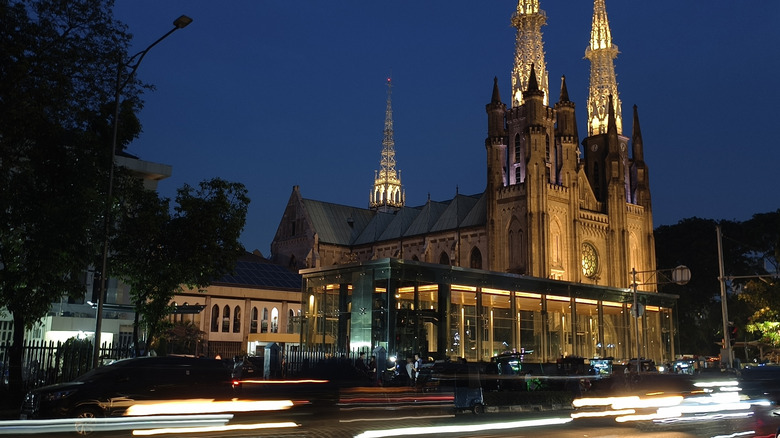
Jakarta and Dhaka appeal to travelers who want to dive headfirst into urban intensity. Most travelers to Indonesia have the stunning and serene island of Bali at the top of their bucket lists, with little thought for Jakarta. The capital is more chaos than calm. Traffic jams are notorious, there's just one subway line, and Jakarta's not particularly walkable.
That said, there are places worth exploring. The Old Town is one place that can be explored on-foot, and you'll find colonial buildings lining canals reminiscent of those in Amsterdam (parts of Indonesia were a Dutch colony). The Jakarta History Museum is also there, as is Café Batavia, housed in an elegant early-19th-century building, perfect places to escape the crowds. Outside of this area, Glodok, Jakarta's Chinatown, is a winding maze of alleyways and traditional stores. But the most famous shopping to be had is in one of the capital's many malls, which range from glossy to gritty.
Dhaka offers a similarly intense urban experience. Traffic is challenging, to put it mildly, and driving in Dhaka is not a good choice for travelers. Instead, take an autorickshaw and throw yourself into the action at Sadarghat, a teeming, wonderfully photographic river port where you can watch teetering ferries wash against tiny wooden boats, and see daily life going on along the banks. For more striking photo opportunities, head to colorful Shankharia Bazar, where traditional buildings hide artisan workshops, perfect for picking up a souvenir. While the megacities of Jakarta and Dhaka may not be as easy to explore as Tokyo, they offer different, rewarding experiences and the bragging rights of having visited the world's most populous cities.