

Between Santa Rosa And The Pacific Ocean Is California's Former Russian Settlement That's Now A Coastal Park
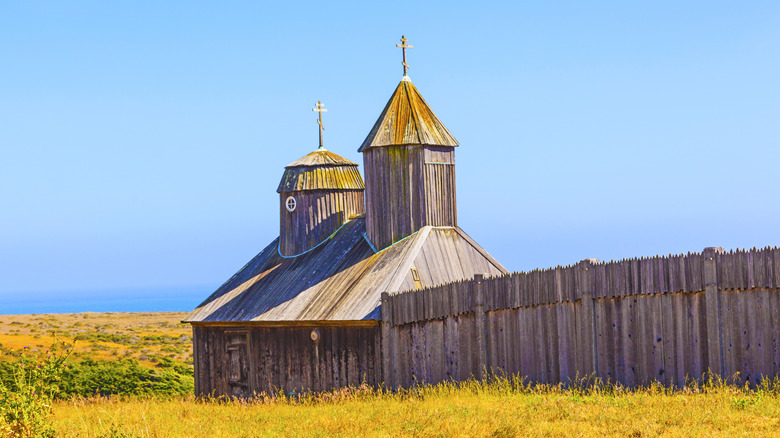
California's Pacific Coast Highway has some amazing places to stop with wonderful stories to tell, and is widely considered one of America's most scenic drives. It's a truly stunning stretch of road, with incredible coastal views, gorgeous beaches, and beautiful landscapes, as well as some fascinating and unusual attractions. Big Sur offers laid-back surf vibes and never-ending coastal views; elephant seals fill the sand on San Piedras Beach near San Simeon; and Solvang, "the Danish Capital of America," is brimming with European charm.
But you probably didn't know that a small coastal park just off the Pacific Coast Highway in Sonoma County was once a Russian colony. Fort Ross, between Santa Rosa and the sea, was the southernmost outpost of the Russian Empire in the 19th century, and home to an excellently eclectic, multicultural mix of Russians, European settlers, Native Kashaya Pomo people, Alaskan Alutiiqs, and Hawaiians.
Fort Ross State Historic Park is situated right on the coast, overlooking Fort Ross Cove. It is about an hour and a half by car from Santa Rosa and nearly two and a half hours from San Francisco, America's coziest city. The nearest airport is the Charles M. Schulz–Sonoma County Airport (STS), just over an hour's drive away, which serves a number of domestic routes. The nearest international airport is Oakland San Francisco Bay Airport (OAK), with San Francisco International Airport (SFO) a very close second, both just under two and a half hours away by car.
Fort Ross State Historic Park is a corner of Russia in the heart of California
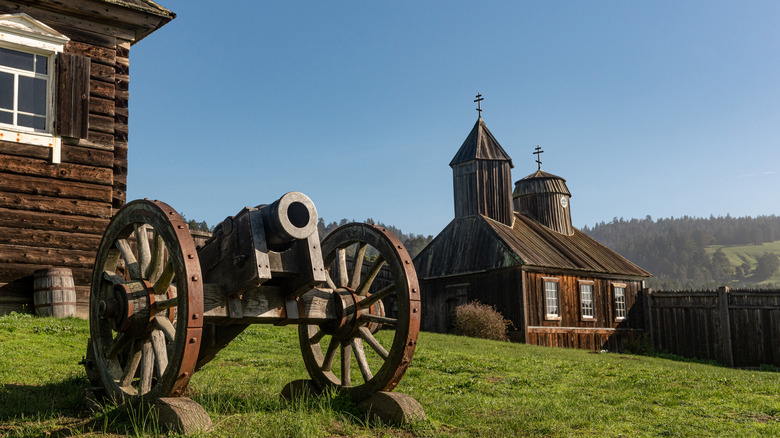
For much of the 18th and 19th centuries, Alaska was part of the Russian Empire. Colonized in 1741, most of the territory was controlled by the Russian tsars until 1867, when Tsar Alexander II sold it to the U.S. for $7.2 million (equivalent to around $166 million today). In 1812, in an attempt to bolster their trading position, a combined expedition of Russians and Indigenous Alaskan Aleuts sailed south from Alaska to what is now California and founded a trading post and base camp called Fort Ross. This was designed to give them access to the rich, fertile lands and forests of California and foster better trading relationships with the Spanish, who had previously colonized most of the state. The trading post never really took off, and following Mexican independence and the increased influx of American settlers, the Russians abandoned Fort Ross in 1841, selling the land to a Mexican mill owner.
Fort Ross became a state historic monument in 1906 and is now part of the California State Parks Commission. But this intriguing historical site has held on to its Russian roots, and visitors can explore the history of Russian settlement in California with exhibitions at the visitor center, as well as in the reconstructed Russian Orthodox church that still exists on the site. Visitors can also see how the original Russian administrators lived at Rotchev House, built by the last Russian commander of Fort Ross and reopened as a museum in 2010. History buffs will also enjoy exploring the replica of the first windmill built in California, a European addition to the state's collection of water- and animal-powered mills.
What else to do at Fort Ross
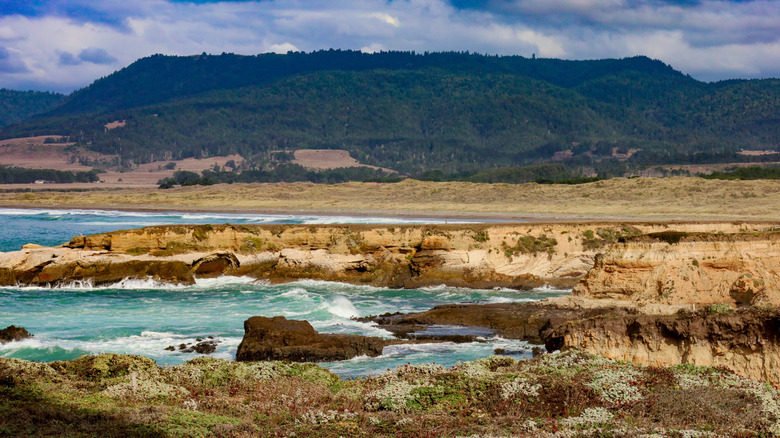
Although the fort looks martial, with its stockades and towers, it never saw military action. However, it did occupy a strategic position overlooking Sandy Beach Cove, the Russian port, which is now a great spot to explore as an addition to a visit to the fort itself. The rocky coastline offers great rock fishing, while the tide pools that collect along the shore are filled with shellfish, sea stars, anemones, and crabs, and are perfect for little ones to explore. If you want to swim, Clam Beach (named for its abundance of razor clams) offers a long stretch of classic Californian sand.
Another delightful spot to see just outside of the fort itself is the historic Fort Ross orchard. This was planted in 1814, just after the Russians first arrived, to provide fresh fruit for the colonists. It is a lovely, peaceful place to explore, and the Capulin cherry tree, which dates back to 1820, offers an awe-inspiring direct link to the fascinating past of this unusual destination.
One of the best ways to experience Fort Ross is to camp overnight at the Reef Campground just south of the fort. It has a gorgeous location overlooking the beach, allowing easy access for surfing, diving, and fishing. It's also near a bunch of great hiking trails, ideal for exploring the coastline and doing a little wildlife-watching — particularly whales. There are 20 pitches available on a first-come, first-served basis, but other than that, the site is pretty basic, with several chemical toilets but no running water or RV hookups.