

Massachusetts' Former Rock Quarry Between Boston And Albany Is Now A Scenic Hiking Paradise
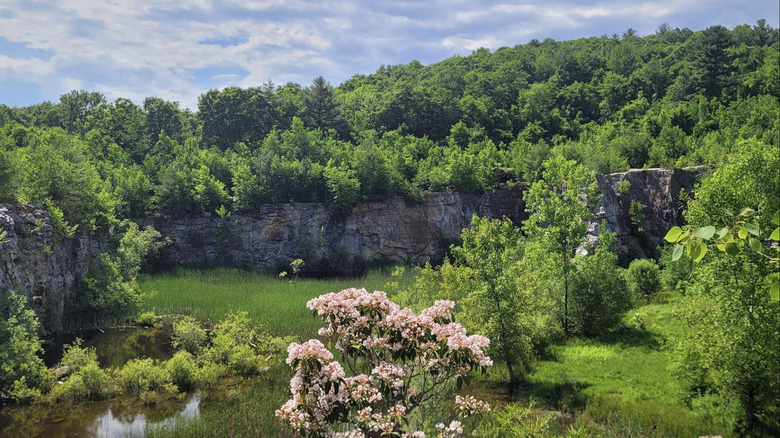
Massachusetts' Northampton is a uniquely charming and creative college town considered one of the best in America. Northampton and its surrounding area are among the most beautiful budget-friendly destinations for a perfect New England vacation, thanks in part to the Mineral Hills Conservation Area. Not only is Mineral Hills an ideal spot for outdoor recreation, it's also a testament to the power of nature. Once a rock quarry, Mineral Hills has been preserved by the Kestrel Land Trust, and the scars from the past are fading from the landscape.
Abandoned in the early 2000s, Mineral Hills has since had a chance to regrow. Nowadays, it's home to beaver ponds, trails for every skill level, dramatic views, and delicate wetlands. The area is open daily from dawn to dusk and is free to enter. Mineral Hills Conservation Area lies just 15 minutes outside of Northampton in central Massachusetts.
The area is part of the larger Mineral Hills Greenway, formed by the hills along the western edge of Northampton. To reach this beautiful little corner of the world, it's best to fly into Bradley International Airport outside of Hartford, Connecticut. From there, it's approximately 45 minutes (depending on traffic) to the lovely town of Northampton. Mineral Hills is also conveniently located between the major metropolitan areas of Albany in New York and Boston, both of which are roughly two hours away.
History of Mineral Hills Conservation Area
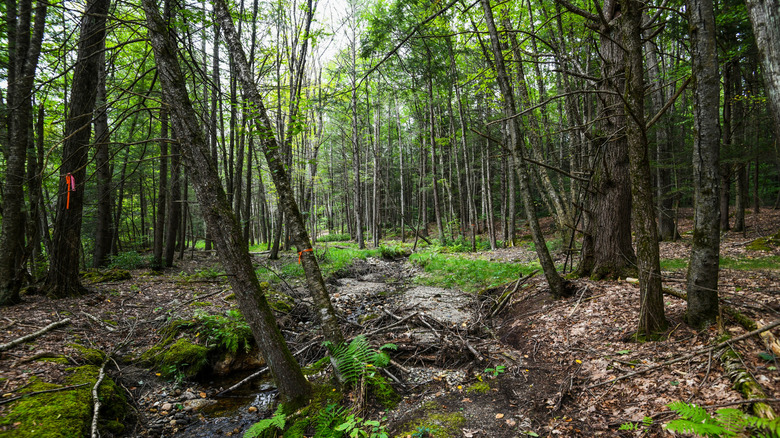
Humans have left an undeniable mark on the planet, for better or worse. Often it's worse when it comes to nature, but again and again, with a little time and effort, Mother Earth has proved her ability to regenerate, like at Kickapoo Recreation Area, Illinois' former surface mine that's now a park with ponds. This is certainly evident at Mineral Hills in rural Massachusetts, home to a now-defunct rock quarry. Rock was harvested from the quarry for approximately 50 years before it was abandoned in the early 2000s.
Since then, the recovery has been astounding, and if you didn't know the history, you might think the area's high rock walls have always been part of the landscape. In fact, they're some of the last remaining relics of the quarry. The surrounding forest and wetland have rebounded as well, and dozens of species of flora and fauna now thrive once again in Mineral Hills.
Mineral Hills also gained its name from a series of failed lead mines that were opened (and eventually closed) throughout the 17th, 18th, and 19th centuries. But Mineral Hills remained an appropriate name with the establishment of the rock quarry, which was successful for half a century. The quarry closed after allegedly violating zoning laws and was sold to the City of Northampton's Conservation Commission in 2007. Even before then, the area was known to be "botanically very rich," according to a report by the Northampton Conservation Commission, meaning there are plenty of flowers, trees, and lichens to see. It's also quite a diverse tract of land, with various types of forest, wetlands, streams, and tall, rocky slopes. Mineral Hills supports a variety of wildlife, including turkeys, deer, porcupines that nest in the rocks, and many bird species.
Hiking and outdoor recreation in Mineral Hills Conservation Area
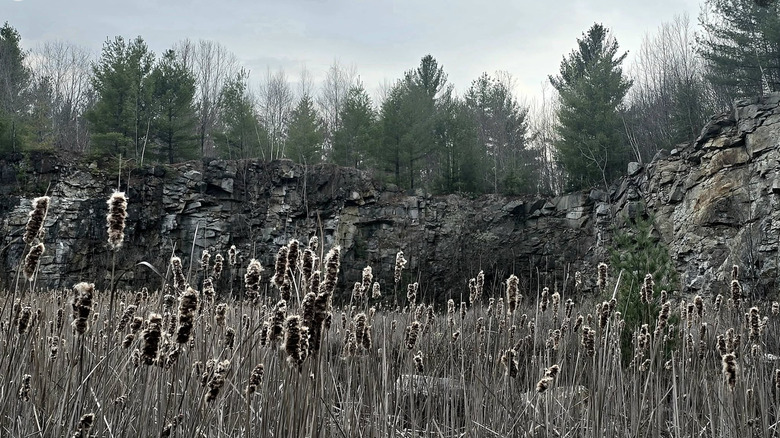
Northampton is located within Massachusetts' Pioneer Valley, one of the country's most underrated vacation spots that's full of beautiful, trendy college towns. Part of its draw is the beauty of rural Massachusetts, and Mineral Hills Conservation Area is an excellent place to immerse yourself in this gorgeous nature. Hiking is the best way to experience Mineral Hills — all 400 acres of the area are crisscrossed with various paths and trails. If you visit in the snowier seasons, strap on snowshoes or cross-country skis for an even more enjoyable outdoor experience!
The area's official trail network features several sub-mile trail portions for visitors to wind their way through. More experienced hikers might opt for the 7.3-mile Mineral Hill Summit Trail for the most extensive views and to experience nearly every landscape within the conservation area. The route generally takes anywhere from three to four hours and is considered moderately difficult. On a clear day, you can spot the famous Mount Holyoke Summit House across the valley from the summit, atop the mountain of the same name.
If your main draw to Mineral Hills is the quarry, the Mineral Hill Quarry Loop is your path. Under a mile (round-trip) from the parking area at the end of Turkey Hill Road, this easy trail takes you straight to the last vestiges of the quarry: mainly rock walls and accompanying rocky pools.