

South Carolina's Former Army Base Has Two Historic Artillery Batteries And A Scenic Beach Preserve
The southern United States attracts history buffs from all over the country, and South Carolina is one of the most popular tourist destinations in the region due to its beautiful beaches, historic cities, and charming small towns. It's also home to some interesting military sites and national historical parks, like the former army base Fort Moultrie and Fort Sumter, one of South Carolina's top tourist attractions. Many of the sites that once stood as powerful examples of the south's military might are now little more than crumbling ruins. Fort Fremont, which was constructed on Saint Helena Island over 30 years after the Civil War ended, is one such place.
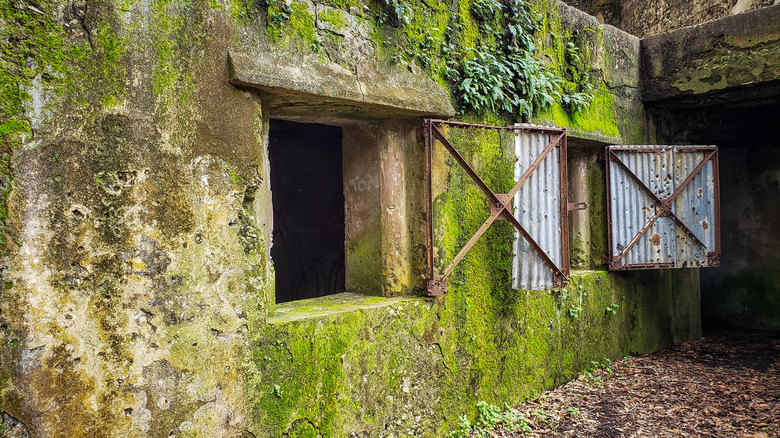
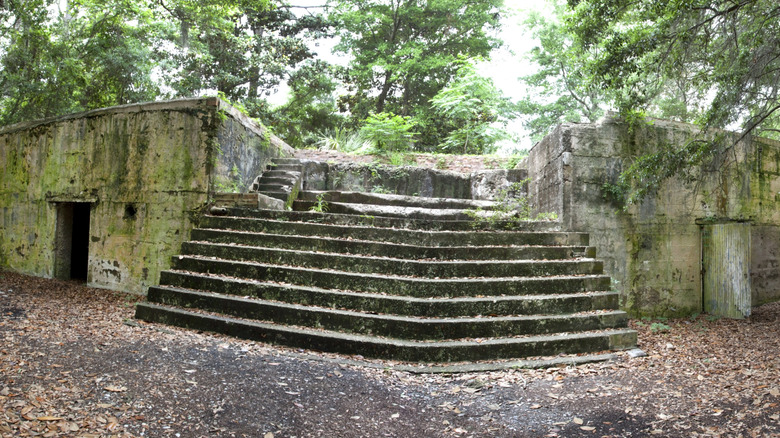
Fort Fremont dates back to the late 1800s, but it was only in operation for a little over a decade. The site was nearly forgotten but has been turned into a historic destination for locals and tourists to enjoy. Remnants of the old military structures, now covered with Spanish moss, look like something out of a post-apocalyptic movie, and two historic artillery batteries remain relatively intact. Just steps away from the fort is a small stretch of sand known as Lands End Beach, where you can enjoy scenic views of the Intracoastal Waterway.
Fort Fremont Historical Preserve provides a fascinating look at facilities that would have been state-of-the-art during their time, so it's a wonderful destination for fans of U.S. military history. Visitors can wander the grounds on a self-guided tour, attend a guided tour with a local expert, or visit the history center, which has replicas of what the site would have looked like before it was abandoned. When you're done exploring the fort, you can relax on the beach preserve and enjoy the scenery.
The history of Fort Fremont and Saint Helena Island
Fort Fremont is located in South Carolina's Lowcountry region, which has a rich cultural history that dates back to precolonial times. Saint Helena Island, where the former military site was constructed, was home to Indigenous communities for thousands of years before Europeans arrived. Spanish colonizers arrived in the 1500s, and over the decades that followed, control of the area passed between the hands of the French, Spanish, British, and finally the Americans. Just over three decades after the American Civil War ended, the Spanish-American War broke out. Fort Fremont was constructed on Saint Helena Island in 1899 to defend the Port Royal Naval Station during the conflict. Its prime location near the Atlantic Ocean and across the Beaufort River from Paris Island and Port Royal Naval Station made it the perfect defensive spot.
Fort Fremont once covered 170 acres and was built by the Army Corp of Engineers. It was one of several coastal fortifications that were built during the Spanish-American War era under Harbor Fortification Defense Act. The fort was named after John C. Fremont, who served as a Union general during the Civil War.
Two massive concrete batteries served as Fort Fremont's main defenses. Battery Jesup was the larger of the two, and it was outfitted with three large cannons on disappearing carriages. Whenever the cannons were fired, the force of the recoil would move them back and hide them from view. The cannons were capable of hitting enemy ships up to 8 miles away and were extremely technologically advanced for the time period. The original fort was home to multiple buildings, including a guard house, barracks, a hospital, a stable, a mess hall, and a bakery. Around 110 military personnel were stationed at Fort Fremont during its heyday.
Visiting Fort Fremont Preserve
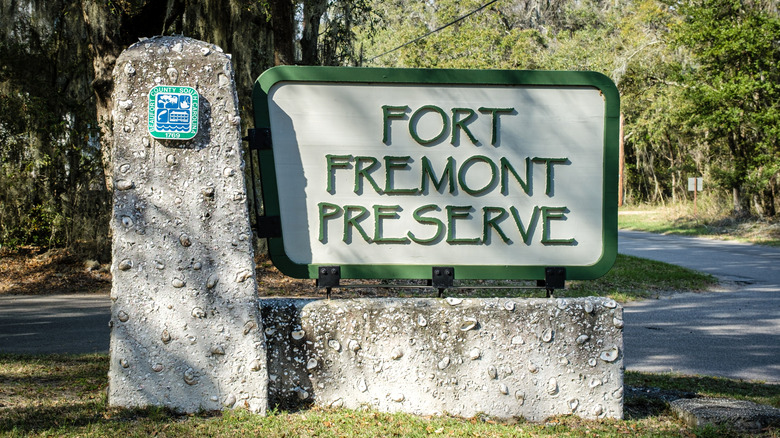
Fort Fremont was officially deactivated in 1912, just 13 years after it was constructed. Over the decades that followed, the land was sold off to various private investors. Most of the original structures at Fort Fremont have been lost to time, but the batteries remain relatively well preserved. Between 2004 and 2010, Beaufort County purchased 18 acres of the original property, which included the two original batteries. The site was added to the National Register of Historic Places in 2010. After acquiring the land, the county got to work constructing a history center on the property. It opened to the public in 2021 and houses a 16-foot-long diorama that allows visitors to see what the original fort would have looked like.
Visitors can explore the grounds of Fort Fremont Monday through Sunday from dawn to dusk. It's completely free to visit, and informational signage makes it easy to take a self-guided tour. The Fort Fremont History Center is open from 1 p.m. until 4 p.m. on Thursday, Friday, and Sunday. On Saturday it is open from 10 a.m. and closes at 4 p.m., and complimentary guided tours are available by request. Lands End Beach is accessible from the grounds and is a wonderful spot for picnicking, sunbathing, swimming, or just admiring the scenery. South Carolina is one of the most hurricane-prone states, with peak season between August and October, so keep that in mind when planning your visit for the best weather.
Savannah Hilton Head International Airport (SAV) in Georgia is an hour away from Fort Fremont, and Charleston International Airport (CHS) in South Carolina is about two hours away. Car rentals usually cost around $50 per day. If you really want to immerse yourself in the history of Fort Fremont, consider booking a room at The Beaufort Inn. The historic inn was first constructed in 1897, just a few years before Fort Fremont. It's located about 20 minutes from the fort, and rooms start at around $150 per night.