

South Carolina's Former Army Base Is Now A Coastal Hotspot In A National Historical Park
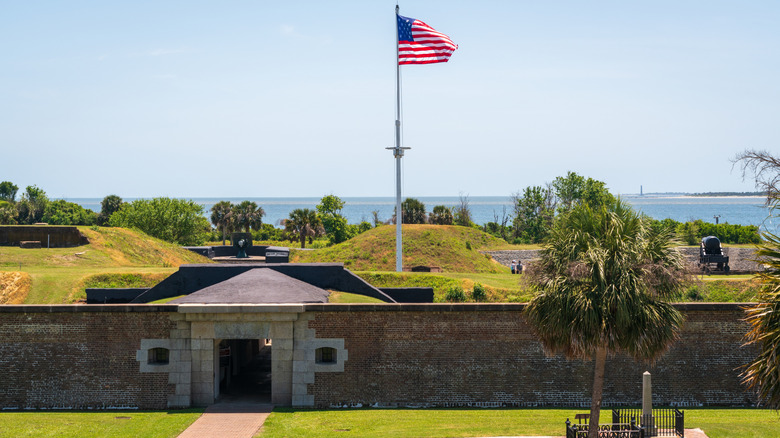
For years, Charleston has been a regular candidate on numerous "best of" lists, drawing visitors with its family-friendly attractions, delicious Southern cuisine, and more than enough history to keep even the most dedicated historians happy. This city perched along South Carolina's coast has always been an important part of U.S. military history, seeing action throughout the American Revolution, the American Civil War, and both World Wars. While Fort Sumter gets the most attention, known for being where the Civil War began, the overlooked Fort Moultrie has just as fascinating a past, and together they make up Fort Sumter and Fort Moultrie National Historical Park.
Located on Sullivan's Island, the roughly 3.5-mile-long sandy island overlooking both Charleston Harbor and the Atlantic Ocean, has seen three forts come and go since its beginnings as a Palmetto palm tree log and sand fort. It wasn't yet complete when, under the command of Colonel William Moultrie, it held off a British naval attack in 1776. Not to be defeated, the Brits returned and finally captured Fort Moultrie and Charleston in 1780, after which the fort fell into disrepair. Fort number two was completed in 1798 but didn't last long, being wiped out by a hurricane six years later.
The brick fort that remains was abandoned just before the Civil War but later modernized to defend against attacks from submarines and aircraft during both World Wars. Like many coastal forts, Fort Moultrie became obsolete as nuclear weapons changed the country's defense system. Operations finally came to an end in 1947, but it has since been lovingly restored, with museum displays showing a fascinating look back over some of the most important periods in American history. Fort Moultrie is around a 20-minute drive from Charleston by way of the Ben Sawyer Bridge, which connects the mainland to Sullivan's Island. Charleston International Airport is also just outside of the city.
Exploring Fort Moultrie
You don't have to be a big history fan to be impressed by a visit to Fort Moultrie. The location itself is enough to delight with views over Charleston Harbor and the marshland habitat of the Intracoastal Waterway between Sullivan's Island and the mainland, particularly scenic if you time your visit at sunset. That said, a stop by the visitor center should be the first port of call to get you fired up for what's to come.
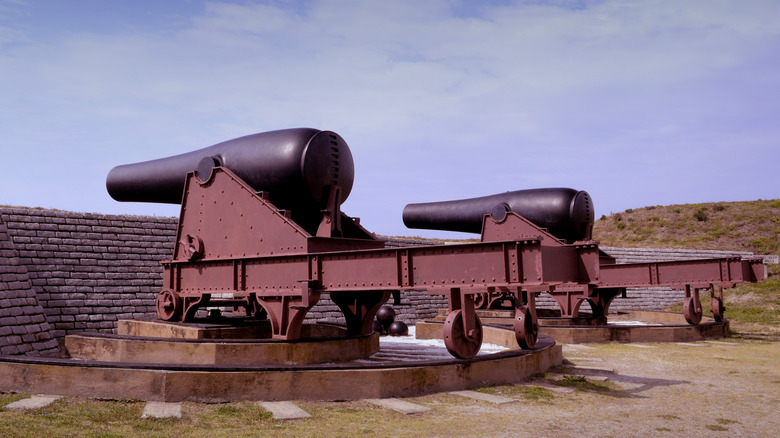
Open daily from 9 a.m. to 4.30 p.m., the exhibits cover the fort's 171-year history, taking you on a journey back through time. Pick up the self-guided brochure here if you want to wander around in your own time, or the guided visits are well worth taking to hear the stories brought to life. Displays around Fort Moultrie have been restored to show different time periods. Highlights include the Harbor Entrance Control Post from 1944, containing three floors of signal rooms and observation decks used to help protect the harbor from enemy attack during WWII. Battery Jasper, with its disappearing 55-ton rifles, and the cannons on display along Cannon Walk impress with their sheer size.
As well as being a military site, Sullivan's Island was an entry point for enslaved Africans during the 18th century. Before leaving, take a moment to visit the Bench by the Road near the visitor center, installed in 2008 to commemorate those who lost their lives here. Entry to Fort Moultrie costs $10 or is free with an America the Beautiful Pass.
Visiting Sullivan's Island
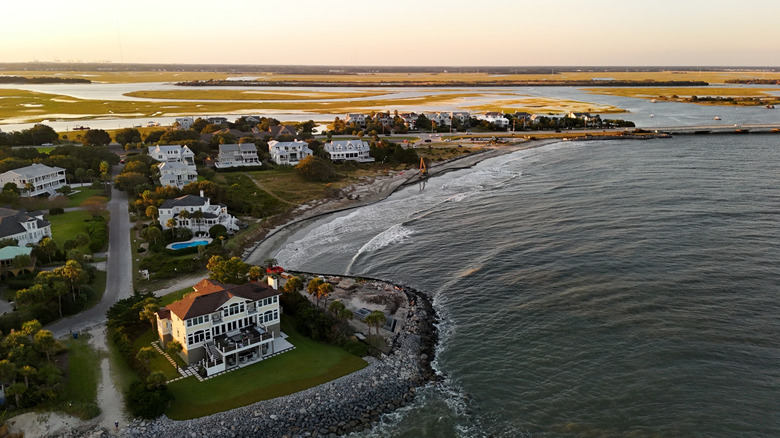
A visit to the fort will take a couple of hours, and if you're up for some more history, take the ferry from Charleston or Mount Pleasant out to Fort Sumter, one of South Carolina's other top tourist attractions. If you've had your fill of war stories, stay and explore Sullivan's Island instead. First stop, the beaches, which you can access from the fort. About halfway along the shoreline, have a wander up to Charleston Light, the island's lighthouse. The unusual 162-foot-high triangular-shaped building is worth the detour just to see the last major lighthouse built in the U.S.
The 0.7-mile Sullivan's Island Nature Trail is a short walk through sand dunes, wildflowers, and woodland, with several benches along the route to stop and look out for pelicans, mockingbirds, and dragonflies. Also within the national historical park is Sullivan's Island Life-Saving Station. Built back in 1894, it was the only one ever built in South Carolina. It later became Coast Guard headquarters before being given to the NPS after Hurricane Hugo hit the area in 1989. At the time of writing, both the lighthouse and life-saving station can only be seen from the outside.
Being a small island, there are limited places to stay. Try your luck with Airbnb, go further north to Isle of Palms, or head into Charleston, the ultimate vacation destination for foodies. There are a decent amount of dining options on Sullivan's Island too, from the award-winning southern cuisine at the Obstinate Daughter to gourmet burgers at Poe's Tavern. Named after Edgar Allan Poe, who served at Fort Moultrie in 1827, and took inspiration from Sullivan's Island for his short story, "The Gold-Bug."