

Goodbye Crater Lake, So Long Trillium Lake: Oregon's Remote Mountain Gem Is A Quiet Getaway
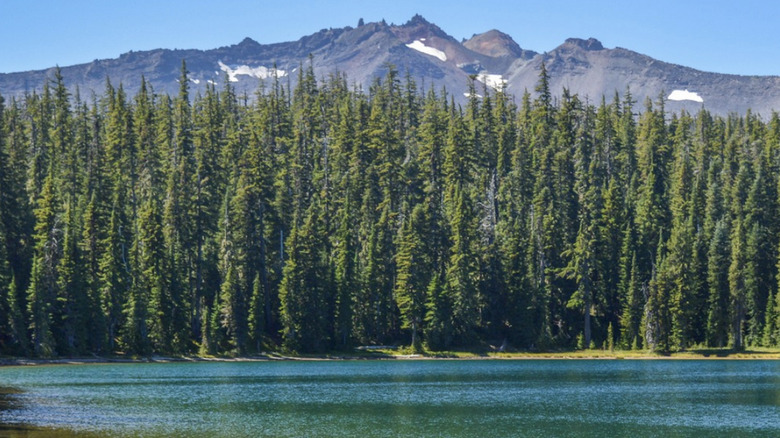
Oregon is home to some extraordinary bodies of water. Although Crater Lake, the deepest in the United States, often finds itself on bucket lists of travelers, if you head about 75 miles north, you'll find Yoran Lake. Located in the Diamond Peak Wilderness of Crescent, Oregon, Yoran Lake is a great alternative to both the well-known Crater and Trillium Lakes because its location makes it a remote mountain gem and a wonderful place for an idyllic quiet getaway.
Like most of the lakes in Oregon, Yoran Lake has gorgeous crystal-clear water that's perfect for swimming, as well as other activities like canoeing and kayaking — motorized boats of any kind are not allowed. Yoran Lake is also great for fishing, with a variety of species like yellow perch, largemouth bass, cutthroat trout, and coho salmon. One of the highlights in the area is the Yoran Lake Trail with its stunning views of the lake and surrounding mountains — it's also the only way to access the lake up close.
When getting to Yoran Lake, you're going to have your work cut out for you, as the closest airport is Eugene Airport (EUG), a regional airport just a little ways from downtown Eugene. From there, you'll need to rent a car and drive roughly 70 miles to the lake. Portland International Airport (PDX) is also an option, but the drive from Portland is about 175 miles to Lake Yoran.
Enjoying Yoran Lake's scenic trails
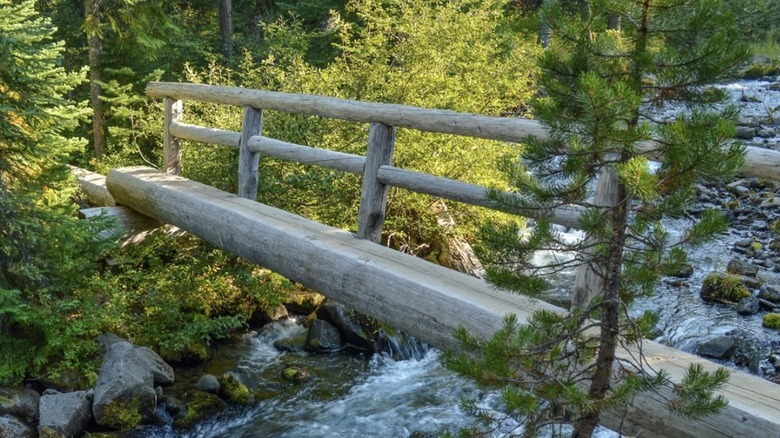
Although it would be nice if, after all that driving, you could just park at the edge of Yoran Lake and begin your exploring, that's not the case. In fact, the only way to get to the lake is to take the Yoran Lake Trail in, then back out again when you're ready. The moderately difficult trail starts at Trapper Creek Trailhead and is 9.3 miles round-trip, taking about four hours to complete.
If you're looking for more of a challenge, there are a few more trails to choose from, all of which are more difficult and can even become multi-day journeys. There's the 13-mile Midnight Lake, Hidden Lake, and Yoran Lake via PCT route, and the 11.4-mile Odell Lake, Yoran Lake, and Midnight Lake Loop, which take between five and six hours to finish. The longest trail, spanning 27 miles and requiring up to 13 hours to hike in its entirety, takes you along Yoran Lake Trail, Marie Lake, Crater Butte Trail, and Whitefish Creek.
The best time to tackle these trails is spring through early fall for the best conditions — it does snow occasionally in the winter. Despite the fact that Yoran Lake is on the Pacific Crest Trail, usage is considered low. So when you do see someone out there, you want to keep in mind the unspoken hiker etiquette, in case you find yourself in need of help at some point.
Other recreational activities to enjoy at Yoran Lake
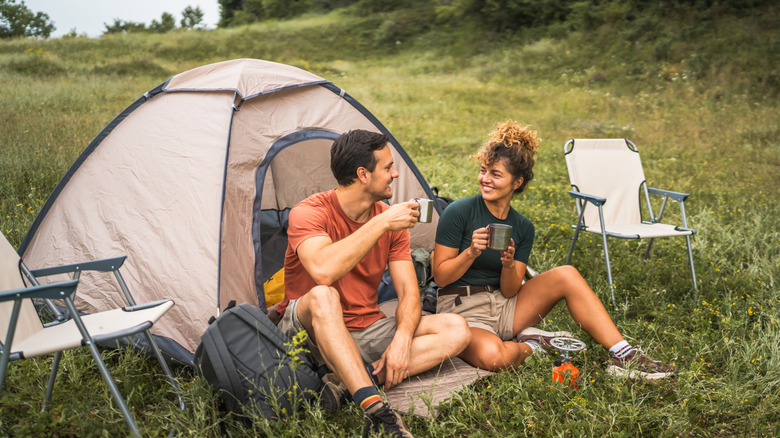
While there are plenty of trails to keep you busy for a few days, if you plan to tackle all of them, there's still more fun to be had in and around Yoran Lake — and it's all for free. From June 15 to October 15, you just need to get yourself a self-issue wilderness permit at the kiosk before entering the premises, but once you do, Yoran Lake is yours, so to speak. This also means that you can pitch a tent in one of the several campsites in the area and at any of the nearby lakes. However, it's worth noting that it's backcountry camping, so don't expect access to running water or toilets. You also can't have a campfire if you're more than 6,000 feet up in the Diamond Peak Wilderness, due to forest fire concerns. Both horses and dogs are permitted on the grounds, with some areas being off-leash for dogs.
Yoran Lake is noted for its remoteness and scenery, with one AllTrails reviewer saying, "Serene and peaceful hike through the woods. Plenty of fallen trees that are fairly manageable to navigate. Lovely, lovely views of the lakes." However, there is an issue with bugs. Mosquitoes in particular are a problem in the area, especially in the summer. Because of this, if you want to hike and camp in peace, consider essential tips for preventing mosquito bites. If you can keep the little bloodsuckers at bay, you'll be doing yourself a favor in the moment and for the drive back home.