

Washington's Former Army Base Is Now A State Park Reclaimed By Nature With Camping And Fishing
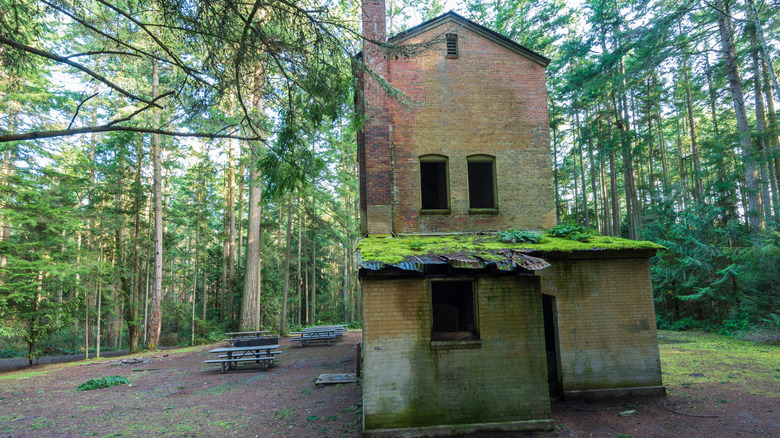
Hidden amongst a forest of tall Douglas firs, western hemlock, and red cedars on the shores of Port Townsend Bay in Washington, are the forgotten remains of a former coastal army base. Once one of the first military posts on the Salish Sea, Fort Townsend Historical State Park is now a 367-acre marine camping park with lots of activities, both in and out of the water.
For thousands of years, the area was the territory of Indigenous peoples including the S'Klallam, Quileute, and Suquamish tribes. The land was "procured" by the U.S. federal government under the Treaty of Point no Point in 1855, leading to ongoing conflicts between the natives and government forces. In 1856, not long after the treaty, the military fort was established. But in 1895, fire destroyed the entire barracks, and it was abandoned soon after, leaving nature to reclaim the land. After a brief stint as a military munitions disposal site during WWII, it eventually became a Washington state park in 1953.
Making the most of its coastal location, a range of water-based activities are on offer in and around the park, including boating, scuba diving, beachcombing, and fishing. On dry land, several short hiking trails await and more than 40 campsites are available April through October. Open year-round from 8 a.m. until dusk, Fort Townsend Historical State Park lies just south of the unique, Victorian-era seaside town of Port Townsend, and around 53 miles via ferry connection from the highly walkable city of Seattle, or 108 miles if you take the long road around.
Exploring Fort Townsend Historic State Park
Before arriving at the park, you'll need a Washington State Discover Pass. This costs either $10 per day, or $45 for an annual pass which grants vehicle access to more than 140 state parks within Washington, making it well worth the investment. There are also several free days throughout the year.
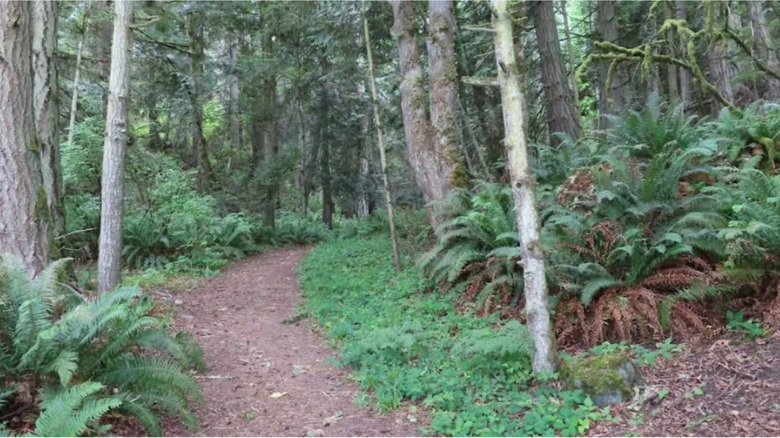
The park covers around a third of the original fort, with the few remaining military remnants reachable by the trail network. The trails in Fort Townsend Historic State Park are all fairly short, meaning you could fit several into one day. If you head along the Cemetery Trail, you'll pass the site of an abandoned military cemetery, but keep going until you reach the Torpedo X-Ray Tower. The largely intact 65-foot-tall brick tower was used as an enemy munitions diffusing station during WWII, where torpedoes and mines were taken to be deactivated. Take the Interactive Historical Walk through the former parade grounds, with signs indicating where the former buildings were located. Also worth a look is the Friends Barn, a replica of an old military stable that is available to hire for special occasions.
The campground consists of 40 sites for tents and RVs, with two primitive walk-in sites, and one group campsite for up to 60 people. Open from April through October, campsites should be reserved on the Washington State Parks website. Even if just coming for the day, there are plenty of picnic tables in the heart of the forest. For somewhere to stay out of season, there are several charming historic hotels in Port Townsend. Or, if you want to stick to camping, the Beach Campground at Fort Worden Historical State Park, just seven miles away on the other side of town, stays open in winter.
Water activities around Fort Townsend
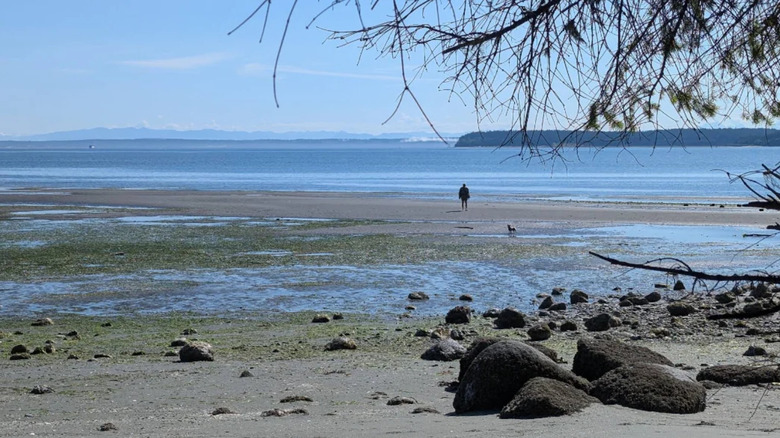
Puget Sound is a popular spot with anglers, with several options for fishing near Fort Townsend Historic State Park, both on and offshore. Along the 3,960-foot shoreline, chinook, coho, and pink salmon appear to be the main catches, while you may find halibut out in the deeper waters of Admiralty Inlet. You'll need a fishing license, available from the Washington Department of Fish & Wildlife.
Scuba diving is also popular in these waters, and while there is no dedicated dive center at the park, you can head further up the coast to the underwater park beside Port Townsend Marine Science Center. From here, divers have been known to spot giant Pacific octopuses and schools of sand lances, as well as a few historic artifacts. The waters here are suitable for beginners and advanced divers alike, although currents can sometimes be strong. The beaches too are a veritable treasure chest when it comes to beachcombing, but the shells and rocks are there for everyone to see rather than collect.
For nature lovers, the best time of year to go to Fort Townsend Historical State Park is in late spring or fall when seasonal wildflowers or fascinating fungi are out on display. On the Botany Trail, rhododendrons, fairy slippers, and ghost plants show off their blooms in spring, while fairy fingers and devil's tooth pop up along the forest floor in fall. There's plenty of wildlife too, with Douglas squirrels, salamanders, and cougars to look out for. Here's what you should do if you encounter a cougar while hiking.