

One Of Europe's Best National Parks Is A Remote Destination With Endless Outdoor Beauty
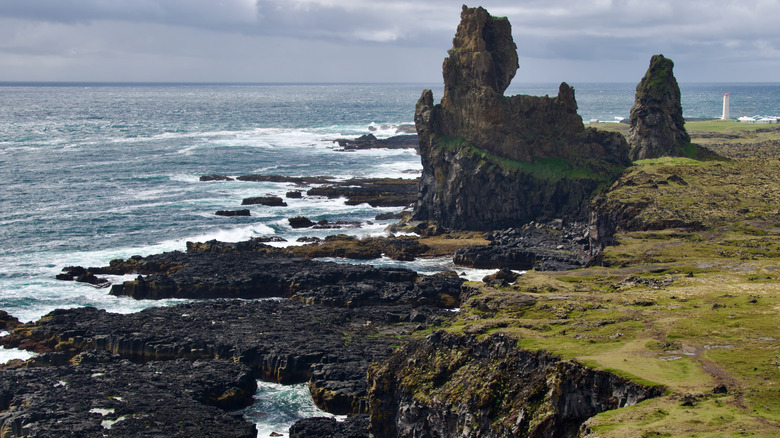
Known as the land of fire and ice, Iceland has a reputation for its dramatic landscapes and otherworldly scenery. From mystical black-sand beaches to lava fields stretching for miles, visitors flock to Iceland for its untamed volcanic and glacial beauty. Around three hours northwest of the capital of Reykjavik, the remote Snæfellsjökull National Park is often called "Iceland in Miniature" for its wide variety of landscapes in one location. Spanning 71 square miles at the westernmost edge of the Snæfellsnes Peninsula, the park consistently tops lists of best national parks in Europe, being home to some of the country's most iconic landmarks, with hiking trails that lead past stunning coastlines and sweeping cliffs.
The park takes its name from the towering 4,744-foot Snæfellsjökull glacier and stratovolcano, which serves as the main focal point. Although it has been an official national park since 2001, Snæfellsjökull has inspired artists and writers with its beauty for far longer. In fact, French author Jules Verne featured the glacier in his 19th-century novel "Journey to the Center of the Earth." There might not actually be a secret passage to Earth's core within the volcano, but it adds to the park's mythical nature. According to Icelandic folklore, the area is home to trolls and other legendary creatures.
If you're looking for amazing budget-friendly things to do on your trip to Iceland, Snæfellsjökull National Park charges no extra admission fee, except for $9 for 24-hour parking as of this writing. Within that time, you can wander across lava fields, bury your feet in black and golden sand beaches, and explore underground by descending into a cave. Here's what to know if you want to visit Iceland's all-in-one national park.
Snæfellsjökull's volcanic landscapes, beaches, and hiking trails
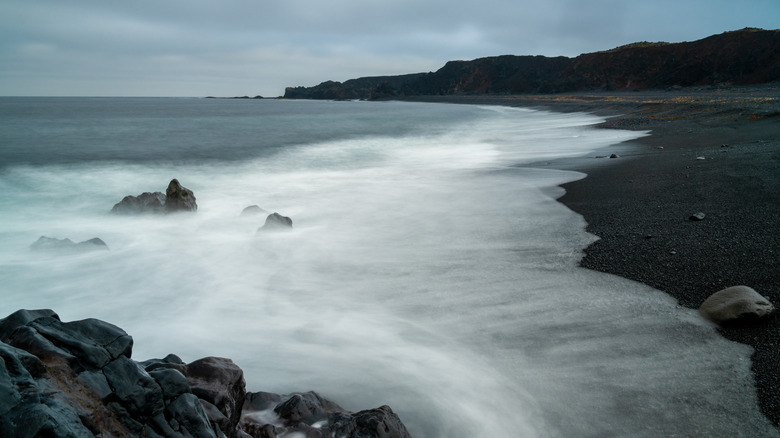
It's a well-known fact that Iceland's breathtaking landscapes are among the world's safest places to visit. Travelers can get a little taste of everything Iceland has to offer in Snæfellsjökull National Park, so it really depends on how each person in your travel party prefers to explore. The park is famous for its unique landscapes, such as Djúpalónssandur Beach. Covered in smooth black pebbles sometimes called the pearls of Djupalon, the beach gets its name from two nearby lagoons. On the shoreline, you can find four ancient lifting stones used by sailors back when the area was a fishing village. If you think you're strong enough, you can try lifting the stones, which weigh between 50 and 342 pounds.
One of Iceland's most popular viewpoints and a stop along many tours is the Lóndrangar Cliffs, two massive stone pillars that jut out from the ocean. Because of the panoramic seaside views, the area is popular among photographers and birdwatchers who stake out for glimpses of puffins and other seabirds nesting. For adrenaline junkies, the national park also offers guided tours into the Vatnshellir lava cave, where visitors must descend down a spiral staircase into a sprawling network of lava tubes formed thousands of years ago. Visitors will learn more about the cave's history as they navigate through tight passages, colorful cave walls, and secret rooms.
Hiking is also popular, and Snæfellsjökull National Park's official website lists several trails in the area. Arnarstapi and Hellnar are two local fishing villages connected by a well-frequented 1.5-mile pathway, offering idyllic views along the way. Here, tourists will pass Valasnös Cliff and Badstofa Cave, which changes color depending on lighting conditions. Snæfellsjökull National Park is a launch point for touring nearby glaciers, marveling at volcanic craters, and keeping an eye out for local wildlife such as seabirds, whales, and Arctic foxes, which are sometimes spotted on the lava fields.
Planning a visit to Snæfellsjökull National Park
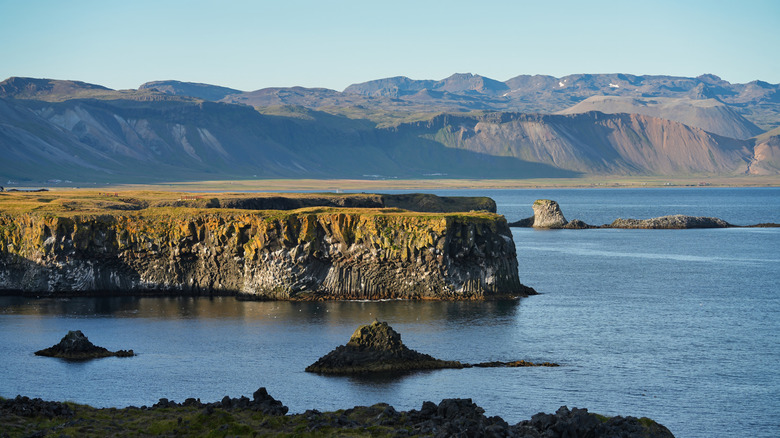
With nearly 80% of the country being uninhabited and ruled by nature, Iceland is best explored on a road trip. The best way to reach Snæfellsjökull National Park is to drive the 125 miles from Reykjavik, which should take around three hours. It's a straightforward trip northwest on the country's "Ring Road," with the best conditions in the summer months. Winter brings snow, wind, and the potential for dangerous conditions and road closures; make sure to plan accordingly if you are interested in going in the colder months. While the park is open year-round, summer is generally the best time to visit Iceland, with longer daylight hours and optimal hiking conditions.
Before you head into the park, make sure to swing by a Visitor Center (there's one each in the towns of Malarrif and Hellissandur) for information about the area and to pick up any helpful brochures or maps. The main visitor center in Hellisandur is open from 10 a.m. to 4 p.m. every day with informative displays about the national park and a cafeteria, while the Malarrif visitor center on the southern coast is open from 10:30 a.m. to 4:30 p.m. daily, with interactive exhibits, an area for kids, and an outdoor picnic space.
While you can reach and explore the park on a day trip from Reykjavik, Snæfellsjökull National Park is a world-class location worth exploring for more than a few hours. Most visitors who spend the night stay in Hellnar or one of the nearby fishing villages. One option is the Fosshotel Hellnar, located near the hiking trail entrance, for around $230 a night as of this writing. Camping and any overnight stays inside the park are strictly prohibited.