

Forget Sleeping Bags — Campers Are Opting For This Underrated Alternative Instead
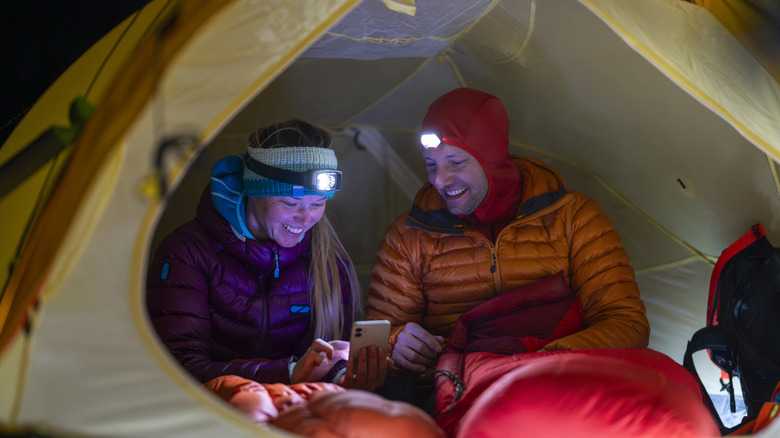
When it comes to camping, one of the most important things to consider isn't just where you're going to sleep, but how you're going to sleep. While top-rated sleeping bags had become the go-to for many for a long time, campers are now opting for a less restrictive alternative: sleeping quilts. Although the word "quilt" might be throwing you for a loop, as you picture a patchwork quilt that your grandmother made, sleeping quilts designed for camping are very different. In fact, from the outside, they look like sleeping bags, but like a traditional quilt, they don't have the bottom piece of fabric. But that doesn't mean they can't be just as toasty as sleeping bags.
"Quilts offer adaptable warmth, serving as a cozy blanket during mild nights or securing tightly around the body for enhanced insulation in chillier conditions," explains retail sales manager at REI Farmington, Tim Bird. Quilts also provide versatility, meaning they're not just suitable for backcountry camping but can be used during vehicle camping — either in a car or RV — or even at home, in the yard or inside the house.
Unlike sleeping bags, quilts let you get cozy the way you do in your bed without feeling constrained — something that people look for when they're preparing their sleep system for camping. Upgrade your camping gear with an insulated sleeping pad, a game-changing item for a much sounder sleep in nature, and combine it with a sleeping quilt.
What to know about sleeping quilts

Not only are sleeping quilts going to help you feel more free when you sleep, but if you're someone whose body naturally runs hot, it's easier to cool down with a quilt than a sleeping bag that has you wrapped up in a little cocoon. As younger generations abandon boomer camping habits, like packing household cooking items and heavy tents, moving toward investing in ultra-lightweight camping gear, this is another benefit of using sleeping quilts instead. For example, a sleeping bag made for 0-degree weather can weigh as much as 14 pounds, whereas a sleeping quilt designed for the same temperature often weighs just 1.5 pounds. This is something that makes a huge difference not just when you're putting together your pack but when you have it on your back for hours. Sleeping quilts are also more affordable because less material equals a lower price for you.
As much as there are pros to sleeping in a quilt, as opposed to a sleeping bag, there are a few cons too. The big one to keep in mind, especially if you're heading into conditions that are below zero, is that because quilts don't wrap all the way around the body, you can expect drafts. There's also the fact that because they involve a bit more time to set up, as you need to attach them to the underneath of your sleeping pad, making for a frustrating situation if you just want to go to sleep, sleep quilts may require a few practice rounds before getting it right. Although sleeping quilts aren't perfect, they're certainly a better option for many, especially long-distance backpackers.