

The Boomer Camping Habits Younger Generations Abandoned

People have been traveling, sleeping outdoors, and cooking over a fire since the earliest days of humanity, but camping first became a recreational activity during the 1800s. When the National Forest Service and the National Park Service were established in the United States, camping became very popular. The first modern-day tents were marketed in the early 20th century. Between the 1920s and the 1960s, there were multiple recreational tents available on the market, and families who enjoyed spending time outdoors began going on camping trips. The boomer generation formed their camping habits based on early adventures with their parents, but many of those customs are being forgotten by younger generations of campers.
Baby boomers were born between 1946 and 1964 during a time when camping was becoming an increasingly popular type of family vacation. Some families decided to camp with modern luxuries by opting for snazzy RVs with old-school vibes. National parks were pristine and uncrowded, and many members of the boomer generation fell in love with camping at an early age, whether it be RV trips, car camping, or wild camping excursions.
Some camping habits have remained the same since our grandparents' heyday. Others have been abandoned by younger generations. For one, camping gear has become more lightweight. Younger generations might not be able to drink water from an unpolluted stream like their parents and grandparents, but they have high-tech water filtration systems. Clothing that used to be made from cotton or wool is now crafted from synthetic fabrics. In some ways, new technology like digital maps have replaced old-school skills.
Heavy tents crafted from natural materials aren't used by younger generations
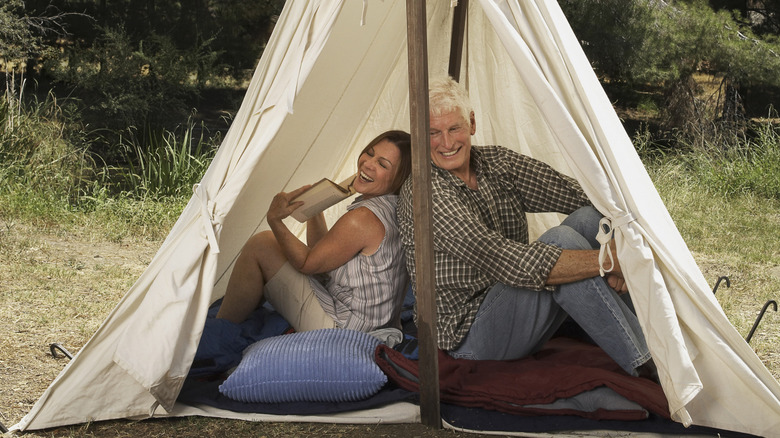
The tents that were used by baby boomers are quite different from the super lightweight tents we choose for our camping adventures today. After WWII, the interest in camping skyrocketed, and military surplus tents were often used for family campouts. Those early tents were crafted from thick canvas.
The high-quality, durable materials that were used in military-grade tents were made to last a lifetime. "My family was still using them in the 1950s and early 1960s," Irv Oslin wrote in an article published by the Times-Gazette. The poles that were used to assemble the tents were made from metal, and according to Oslin, they were quite heavy. "They appeared to be made of angle iron that had been ground to a point at one end and notched at the other to attach guy ropes. If you lost one, you replaced it with a piece of iron pipe," Oslin wrote.
Oslin explained that these early tents didn't usually have floors, so unless you had a cot, you were sleeping in the dirt. Dealing with rain, insects, and other issues was part of the experience. In order to stay dry, some campers would dig a trench around their tent. The canvas material wasn't waterproof like many modern tents are today. Oslin claimed that, "if you touched the inside of the roof while it was raining, the canvas leaked. We spent many a rainy night inflicting water torture on our sleepy siblings."
Packing heavy household items
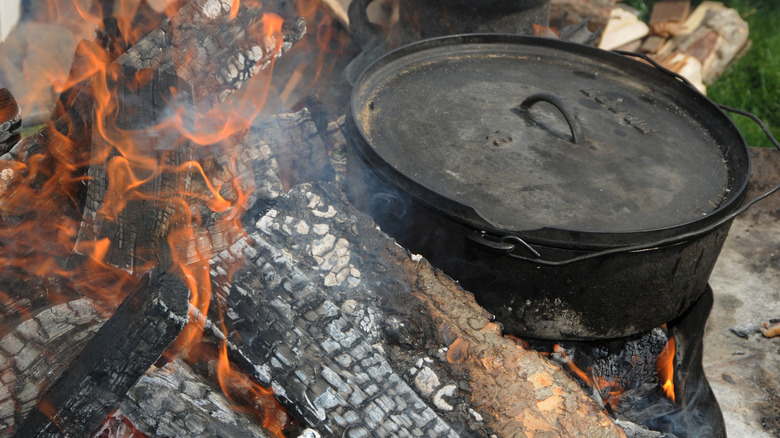
There wasn't a ton of specialty camping gear available for boomers during their early camping experiences. Families would pack things from around the house to use at their campsites instead. My father's family operated an outdoor recreation business and would take groups on multi-week wilderness expeditions in Canada. My dad recalls his parents making breakfast in a massive cast iron skillet that still remains in our family. It measures around 32 inches in diameter and weighs at least 35 pounds. They would use it to cook big meals for the hungry group — everything from eggs, bacon, and pancakes to fried fish that they caught on the lake. Regular pots, pans, plates, flatware, and the old tea kettle often made their way straight from the kitchen to the campsite.
Sleeping bags were available for purchase, but some families didn't bother spending the money and instead packed blankets and pillows from home. They tossed candles, cards, and whatever else they thought looked useful into the car. You didn't need to visit an REI to purchase the latest trendy camping gadgets. Boomers used what they had available.
These days, most younger generations opt to buy items specifically made for camping. There are tons of lightweight camping cooking utensils available for every different budget that make cooking fun meals while camping easy. Although bringing household items to the campsite has gone out of style, it's good to remember that you don't always need fancy stuff to have a good time. If you're car camping, there's no reason you can't bring your cast iron pan instead of some fancy lightweight option that's marketed towards campers.
Drinking water straight from the source

Out of all the camping habits that boomers enjoyed, I am the most jealous of the way they were able to drink fresh water from natural sources. If you were camping in the backcountry, many boomers believed the water was pure and safe to drink. My dad remembers drinking ice-cold water directly from mountain streams. He claims that no water has ever tasted so good.
Today, campers have to purify water from any natural source. "Never drink water from a natural source that you haven't purified, even if the water looks clean. Water in a stream, river or lake may look clean, but it can still be filled with bacteria, viruses, and parasites that can result in waterborne diseases," the United States National Park Service website states. "It is essential that you purify natural water." Doctors warn campers to never drink rain water either.
Today hikers and backcountry campers use equipment and chemicals to purify water. Additionally, you'll have to disinfect it by boiling it or putting chemicals in the water. You shouldn't even brush your teeth with water from a stream. On popular routes like the Pacific Crest Trail (PCT) in California, campers often become sick from drinking water that is contaminated. In May of 2026, dozens of PCT hikers fell ill with norovirus. A severe stomach bug can quickly become deadly when you're in the backcountry. If you become dehydrated, you'll need to seek medical attention immediately. On the Pacific Crest Trail at least one hiker had to be evacuated via air rescue. Sadly, we now know that drinking water from natural bodies of water simply isn't safe.
Wearing cotton clothing
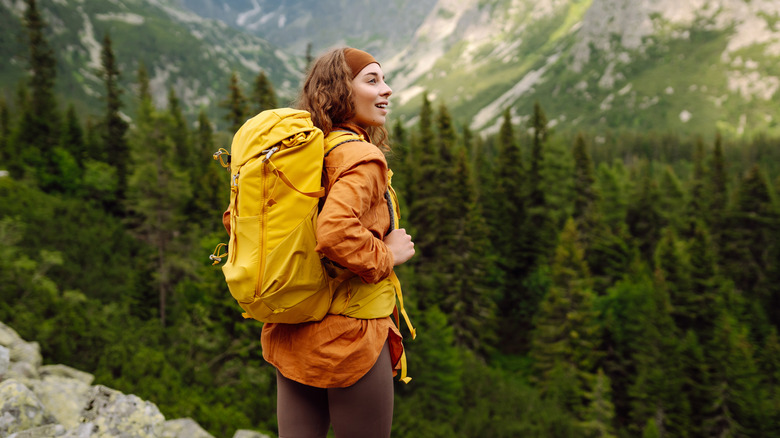
High-performance outdoor clothing crafted from synthetic (plastic) materials like nylon and polyester have become so popular that we're seeing it on fashion runways in 2026. Gore-tex wasn't something that most boomers had access to when they started camping. Instead, they just wore regular clothing. Most of the time it was crafted from natural fibers like cotton. Some hikers and campers would even wear their blue jeans.
In a post that garnered thousands of likes on Facebook, an outdoor enthusiast named Lori Forest posted a picture of herself in a beautiful natural setting overlooking a lake. She has a long blond braid down her back and is wearing rolled-up sweatpants that appear to be made from cotton, a bandeau crop top, and a bandana tied around her head. "43 years ago I did my first backpacking trip with my first boyfriend. Long before the days of goretex and gps. Back then it was bandannas and sweats," she wrote in the caption.
Natural fibers are still available, but most younger generations opt for synthetic clothes for hiking and camping. The phrase "Cotton Kills" is popular amongst the outdoor community because cotton clothing can absorb water. It doesn't dry quickly, and in freezing temperatures it can contribute to dangerous medical issues like frostbite and hypothermia. Wool is a great alternative, but it can be expensive. Fleece is a synthetic version of wool that has become extremely popular. My mom, who is a younger member of the boomer generation, always tells me to bring my fleece camping. "It will keep you warm even if you get wet," she often says. I assume she had more than a few chilly and damp nights camping in her cotton clothing back in the day.
Using paper maps to navigate trails
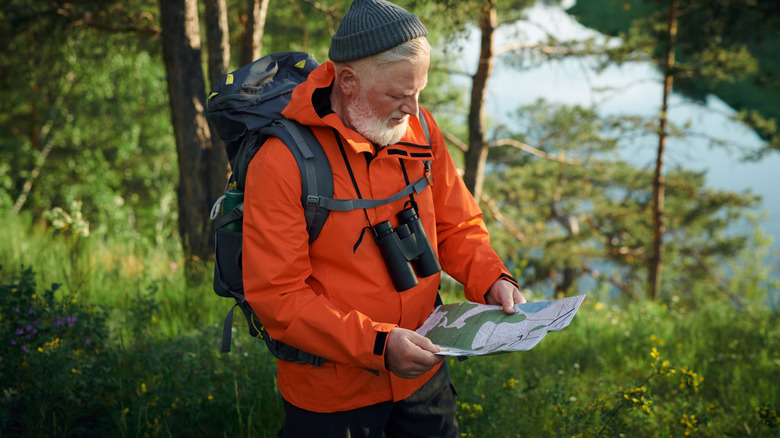
Maps have been used for thousands of years. In fact, the oldest map that has ever been discovered is around 25,000 years old. The boomer generation explored paths unknown long before modern technology made it simple. They relied on traditional maps and a compass to find their way, but many members of younger generations have abandoned maps altogether.
Most modern-day travelers are extremely reliant on technology. Smartphones and tablets provide us with unlimited information at the tips of our fingers. As a millennial, I only had the opportunity to embark on one road trip as an adult before I got my first iPhone equipped with GPS. Even then, I used printed step-by-step instructions from MapQuest as opposed to a fold-out sheet map. Some of us have almost no idea how to navigate using a traditional map or road atlas. Instead, we rely on GPS technology to help us drive to our campsite. When hiking into the backcountry, apps like AllTrails or Gaia GPS offer directions.
Even though paper maps may have fallen out of style, it's still a good idea to familiarize yourself with how to use them. If you find yourself in a situation where your devices aren't working or in a remote area where signal isn't available, you'll be glad you have a map and the skills to read it. Plus, GPS isn't always reliable. "Many popular online maps and GPS apps may provide inaccurate information in the mountains, sending visitors the wrong way down one-way roads or to dead ends in remote areas of the park," the National Park Service web page for Great Smoky Mountains National Park states. If you want to master camping on your own, it's crucial that you know how to use a map and compass in case you become lost.