

Kentucky's Former National Park Is Now A Historic Gem With Easy Trails And An Original Memorial
From a simple log cabin to the White House. Not the route taken by every president of the United States. Yet for Abraham Lincoln, this is how his journey began. From his humble beginnings near Hodgenville, Kentucky, to becoming one of the most influential presidents in American history, visitors to Abraham Lincoln Birthplace National Historical Park can explore the sites where Lincoln was born and spent his early childhood.
Born in 1809 in a one-room cabin on his family's Sinking Spring Farm, Lincoln spent the first two years of his life in this corner of Hardin County (now LaRue County). This location forms the Birthplace Unit of the park and contains a unique neoclassical Memorial Building celebrating his life. It also contains the Boundary Oak site, where a tree once marked the property's boundary, and Sinking Spring, the Lincoln family's water source from which the farm is named. The Boyhood Home Unit, around 10 miles away at Knob Creek, is where Lincoln lived from 1811 until 1816, when the family moved to Indiana. It contains a reconstructed wooden cabin and the historic Knob Creek Tavern. There are a few short trails, from easy woodland walks to a more challenging hike through the valley near his childhood home.
Originally designated Abraham Lincoln National Park in 1916, the site has since changed names several times. The Knob Creek unit was added in 2001, and the site became a national historical park in 2009. The Birthplace Unit is open daily from 9 a.m. until 5 p.m., with the Memorial Building closing at 4:30 p.m., while the Boyhood Home Unit is open from dawn until dusk. The park, which is free to enter, is around 16 miles south of Elizabethtown and around 54 miles from Louisville Muhammad Ali International Airport (SDF), making it a possible side trip for travelers visiting one of America's most underrated cities.
A wander through Abraham Lincoln Birthplace National Historical Park
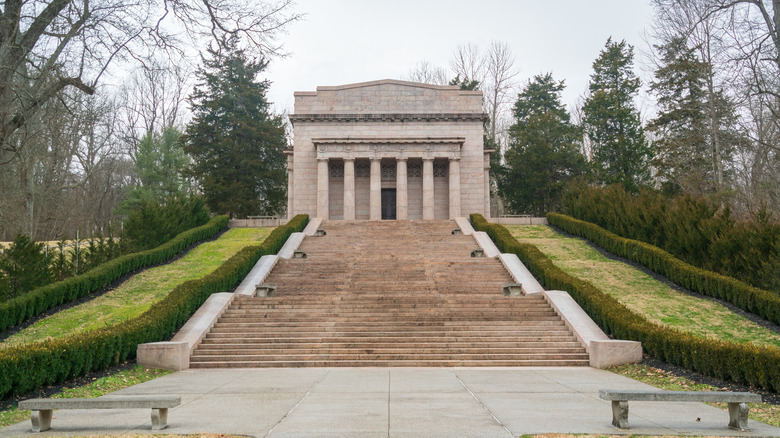
Located just off Highway 31E, start your visit at the Birthplace Unit visitor center, which contains several exhibits, including the Lincoln family Bible and a 15-minute film recounting his early years in Kentucky. From here, follow the wheelchair-accessible Pathway of a President to the main attraction, the First Lincoln Memorial. This impressive neoclassical monument, designed by John Russell Pope, was begun in 1909 to celebrate the centennial of Lincoln's birth and dedicated in 1911, making it the country's first memorial building dedicated to Lincoln. The 56 steps, one for each year of Lincoln's life, lead to the large columned building, its pink tinge coming from the granite and marble used to build it.
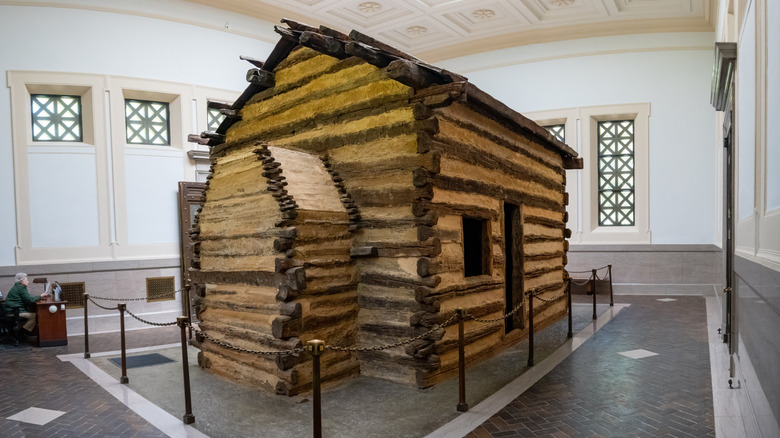
The symbolism continues with 16 windows and ceiling rosettes representing Lincoln's place as the 16th president. Within is the Symbolic Birth Cabin, once believed to be Lincoln's original birthplace cabin and even taken on a tour around the country. However, tree-ring analysis later showed that the logs dated to around 40 years after his birth. Nevertheless, it has become a symbol of his life. Outside, beside the Memorial Building steps, is Sinking Spring, where the Lincoln family fetched their water.
A couple of short trails let you explore further. The 0.3-mile Boundary Oak Trail passes by the site where a white oak used to stand as a boundary marker. Unfortunately, the tree died in 1976 and was removed a decade later. It's a pleasant walk through quiet woodland, where you may see deer, wild turkeys, and squirrels, although the trail is rated moderate. The Big Sink Trail is on the other side of the highway and takes you on a nice, shady woodland stroll. Made up of three loops totaling 1.36 miles, you can walk it in its entirety or in individual loops, with the 0.36-mile Loop B wheelchair accessible. The picnic area here is a convenient place to have a spot of lunch and has its own parking area.
Visiting Abraham Lincoln's boyhood home
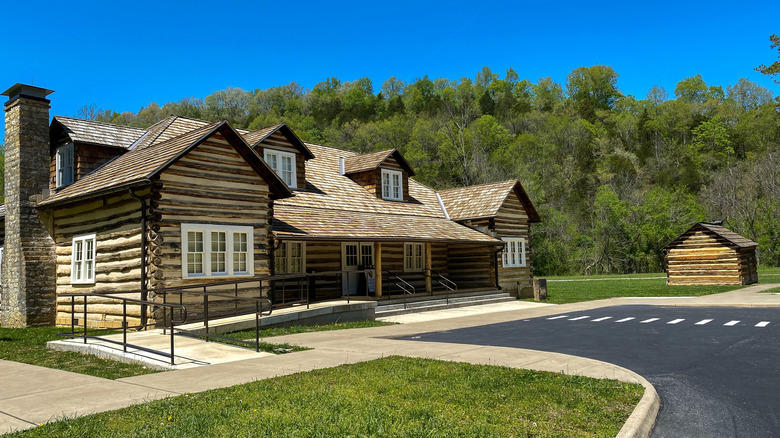
The second half of the visit starts with a 10-mile drive up to Knob Creek, the site of the Kentucky Boyhood Home Unit. Although smaller, it's still worth visiting and is where Lincoln recalled some of his first childhood memories, such as helping his father plant pumpkin seeds and fishing in the creek.
From the visitor center in Knob Creek Tavern, head to the reconstructed cabin representing Lincoln's childhood home. Although not the original, its logs come from a cabin belonging to the Gollaher family. Austin Gollaher was one of the young Abraham's childhood friends who is said to have saved him from drowning in the nearby creek. For some fantastic views over Knob Creek Valley and the land the Lincoln family farmed, take the 3-mile there-and-back Overlook Trail. A more strenuous walk than the other trails, it's steep in places and can get quite slippery, so wear sturdy shoes and allow two to three hours to complete it.
While you're in the area, head into Hodgenville to continue your historical visit. The Lincoln Museum has an impressive collection of life-size dioramas with wax figures, original artwork, and Civil War memorabilia. It's open daily, with an admission fee of $8 for visitors ages 13 to 59 as of this writing. If you're peckish, grab a bite to eat at Laha's Red Castle, a longtime local burger spot. Or, the Lincoln Jamboree near the Birthplace Unit hosts live music and is home to the Jamboree Jay's Family Restaurant, so it's worth checking out what's on before you go. You'll find a selection of accommodations in Hodgenville, from campsites to cozy vacation rentals, before heading out on a Kentucky Bourbon Trail road trip or perhaps a spooky Kentucky road trip through some of the Bluegrass State's ghost towns.