

Between Modesto And Mammoth Lakes Is A California Mountain Village Inside A National Park
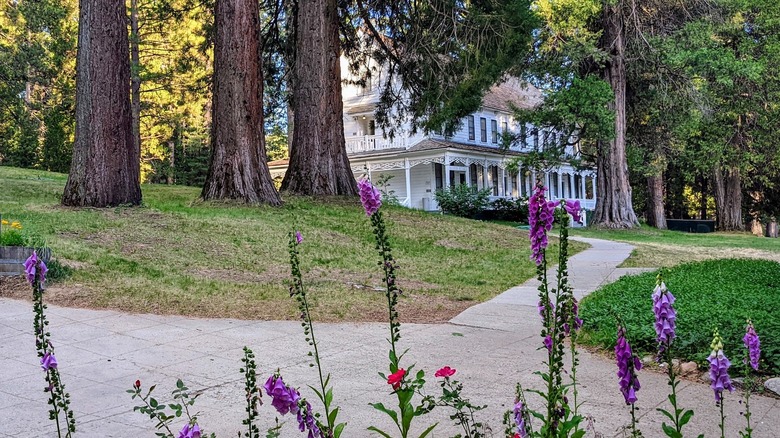
Across the U.S., a handful of communities sit completely within national parks. Several of these are in California. In the southern part of the state, Death Valley National Park harbors the desert oasis of Furnace Creek, while Wilsonia is nestled inside Kings Canyon, a park that houses some of the world's biggest trees. Also in California, Yosemite National Park encompasses several residential hamlets, including the bustling tourism hub of Yosemite Village and the little mountain town of Wawona: "a bright green emerald set between the sparkling diamonds of Yosemite Valley's waterfalls and the red rubies of the Sequoias in the Mariposa Grove," according to an early 1900s visitor (per the National Park Service). Wawona is tucked into California's Sierra Nevada mountain range near the south entrance to Yosemite National Park, around 2.5 hours east of Modesto and three hours west of Mammoth Lakes.
The first residents of Wawona were Native Americans. Journalist Stephen Powers, who studied California's Native American tribes in the late 1800s, offered one explanation for the town's name. In his 1877 account, he described "Wah Who Nau" as a word "formed in imitation of the hoot of the great horned owl," which was believed to be the guardian spirit of giant sequoias.
In the 19th century, the town became a stagecoach stop for sightseers heading to Yosemite Valley. As stables, blacksmith shops, hotels, and other businesses sprang up to support the new tourism trade, the town began to flourish. Wawona is quieter these days, with fewer than 120 year-round residents as of 2026. But its historic sites stand as reminders of the region's colorful past, creating a fascinating stop for today's Yosemite National Park visitors.
Top experiences in Wawona
After arriving in town, a good place to start is the Wawona Visitor Center. The center is located in the former studio of Thomas Hill, a British-born artist who spent summers in Wawona during the late 1800s and is known for his landscape paintings of Yosemite Valley. In addition to an information desk, a wilderness permit station, and a bookstore, the visitor center houses an exhibit featuring reproductions of Hill's atmospheric paintings, hung floor to ceiling in the tradition of 19th-century Victorian art galleries.
Next door to the visitor center is the majestic Wawona Hotel — one of California's oldest mountain lodges — whose buildings were constructed between 1876 and 1918 during the town's emergence as a tourist destination. As of October 2026, the entire property remains closed as it undergoes a long-term condition assessment. Hopefully, staying here will be possible again in the future, though no reopening date has been announced. Check the hotel website for updates.
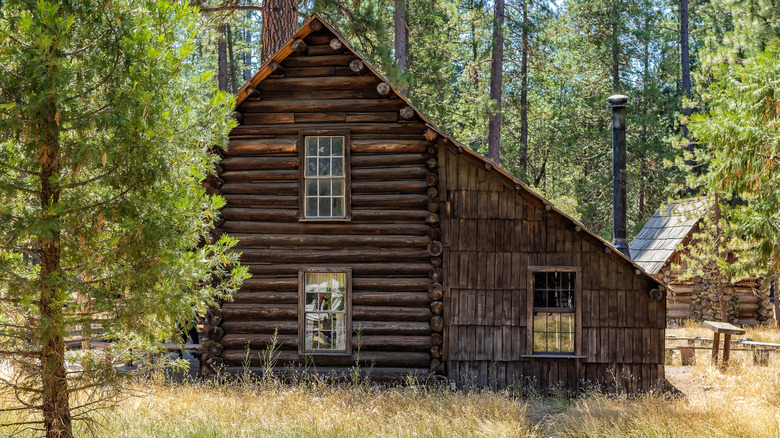
To learn more about Wawona's fascinating past, head to the Yosemite History Center (formerly the Pioneer History Center): a living history museum that showcases the early days of Yosemite National Park and some of its initial movers and shakers. The structures here, some of which were moved from other parts of the park in the 1950s and 1960s, include a covered bridge — used by travelers from 1857 to 1931 — along with pioneer cabins, a blacksmith shop, an Army superintendent's office, a bakery, a powder house that once doubled as a jail, and even a Chinese Laundry. While wandering through the historic grounds, gaze through the windows of buildings to glimpse the furnished interiors and read the outdoor interpretive signs to fill in the blanks left behind by your imagination. In summer, the History Center comes alive with activities such as horse-drawn wagon rides and lively square dances, while period actors stroll the streets and live blacksmiths hammer glowing metal alongside coal-fired forges.
Exploring the southern part of Yosemite National Park
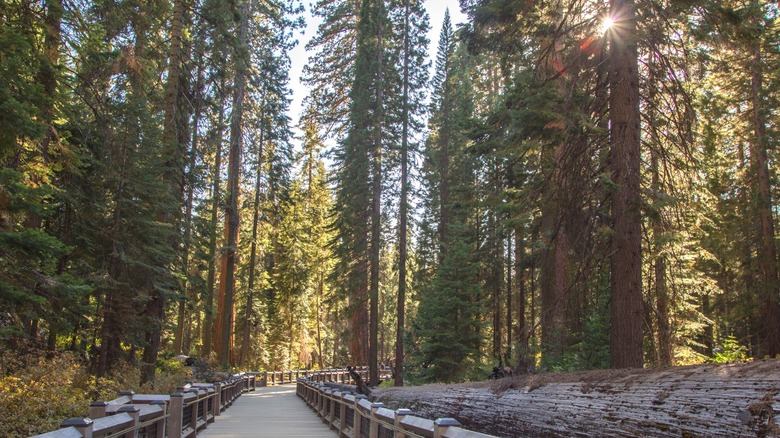
Beyond Wawona, there are a few other must-visit spots in this part of Yosemite National Park. A short drive south brings you to the Mariposa Grove of the Giant Sequoias, Yosemite's largest sequoia grove, with over 500 of these giant trees in one special location. A number of hiking routes weave through here, including the 0.3-mile accessible Big Trees Loop, one of the best trails in Yosemite National Park for beginner hikers, the moderate 2-mile Grizzly Giant Loop, the more strenuous 6.5-mile Guardians Loop Trail, and the roughly 7-mile Mariposa Grove Trail for those who are more advanced. Since Yosemite got rid of its reservation system, this popular destination can get crowded, so arrive as early as you can to find a parking spot.
For an even more challenging hike with 2,400 feet of elevation gain, consider the 8.2-mile round-trip trek to Chilnualna Falls, a year-round waterfall with five separate cascades. The trailhead for this hike is in Wawona, about 2 miles from the Yosemite History Center. The best time to embark on this adventure is in late spring or early summer, when the waterfall is at peak flow and colorful wildflowers like Hartweg's iris, purple milkweed, harlequin lupine, and wood strawberry line the trail.
For campers, Wawona Campground is only about a mile north of town. It sits along a lovely stretch of the South Fork Merced River, with year-round sites for tents, RVs, and trailers. Reservations are required from mid-April through much of the fall, while Loop A offers first-come, first-served camping in winter. At this time, traditional accommodation options in Wawona mainly consist of cabins and vacation home rentals, as the Wawona Hotel is closed until further notice. Dining options are also limited, but visitors can purchase snacks, groceries, and other supplies from either the Wawona General Store or the Pine Tree Market.