

This Underrated National Monument Offers A Scenic Drive With Dramatic, Close-Up Monoliths

When it comes to jaw-dropping natural beauty, few states can compare to Colorado. From incredible sand dunes and beautiful canyons to gorgeous mountain towns like Ouray, there's plenty to take in all over the Centennial State. It's a place that draws in outdoor lovers of all kinds: hikers, skiers, mountain bikers, and rock climbers. But did you know it also offers breathtaking scenic drives? For a truly rewarding one, head to Colorado National Monument, where Rim Rock Drive winds past towering sandstone monoliths and deep red rock canyons.
This underrated national monument contains rocks that are billions of years old, along with younger rock layers that hold dinosaur fossils. Though the Ute and Navajo have longstanding cultural ties to this land, the monument itself was established in 1911 through the efforts of a man named John Otto, who fundraised on its behalf and appealed to multiple presidents. Today, the monument draws around half a million visitors annually who come to view its unique rock formations and spend time in the great outdoors.
Not only do visitors get to check out superb views while here, but there's also some great wildlife viewing to be had. Road cycling, hiking, and camping are other ways to enjoy your time here. Whether you're simply looking to take in one of the state's most scenic drives or want to make it part of a longer Colorado vacation, this national monument is worth a visit.
Historic Rim Rock Drive will take your breath away
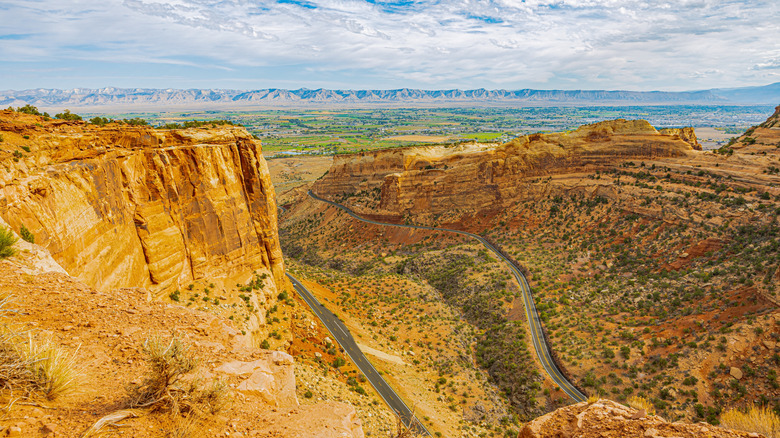
It's not hard to find an epic road trip with iconic natural wonders in Colorado, but each offers distinct experiences worth exploring. If you're on the far end of the Western Slope, though, the historic, 23-mile Rim Rock Drive is hard to beat. There are two entrances: one off Highway 340 in Fruita and another off Monument Road in Grand Junction. The former is near the Saddlehorn Visitor Center, so you can check out the exhibits and learn more about what you're about to see. If you're traveling with kiddos, it's also where you can get a Junior Ranger activity book to make the experience a bit more interactive.
The drive takes about an hour without stops, though most first-time visitors will want to enjoy the vistas, snap photographs, and generally take their time. It's also a fairly challenging drive, climbing from 4,690 feet in the valley to elevations as high as 6,640 feet at the mesa, with a number of switchbacks (tight, zigzagging turns) along the way. Less experienced motorists will certainly want to be mindful, especially as bikes and cars share the road here.
Once you're on your route, though, you'll be gifted with spectacular views of sandstone monoliths, red rock canyons and pinyon-juniper woodlands. Among the best stops are Independence Monument View and Grand View, both of which offer impressive views of the monument's towering rock formations. Depending on what time of day you're visiting, you might also enjoy blue skies or blankets of stars. In fact, many stargazers head here for night photography. There's also a chance you'll encounter animals along the way, including gray foxes, Hopi chipmunks, and desert bighorn sheep. And don't forget to keep your headlights on while driving through the three tunnels along the way.
Hiking and logistics for visiting Colorado National Monument
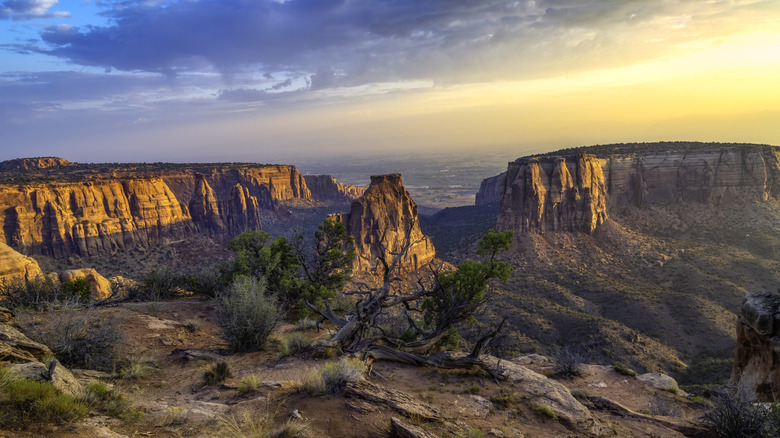
After a drive, budding geologists will certainly want to explore Colorado National Monument on foot. There are nine short hikes ranging from a quarter mile to nearly 2 miles one way. Window Rock Trail and Canyon Rim Trail both offer great views of Wedding Canyon and Independence Monument, while Otto's Trail rewards you with views of rock formations like Praying Hands, Pipe Organ, and Sentinel Spire. More challenging backcountry hikes, like the Old Gordon Trail, also let you see various rock layers from thousands to billions of years ago up close.
Open 24 hours, seven days a week, Colorado National Monument is worth visiting in any season, though winter can be more challenging due to road conditions. Check the latest road conditions prior to embarking on your trip. The Saddlehorn Visitor Center is only closed on major holidays and typically operates from 9 a.m. to 4 p.m., with extended hours until 5 p.m. from April through September. For camping, the Saddlehorn Campground features 79 campsites, all of which must be booked through Recreation.gov, including same-day reservations. Other private campgrounds are available in nearby Grand Junction and Fruita. For more experienced outdoorspeople, backcountry camping is also possible, though you'll need to procure a free permit from the visitor center and bring your own water.
If you're flying in from out of the area, Grand Junction Regional Airport (GJT) is the closest airport, around 40 minutes northeast of the monument. Direct flights connect GJT with cities including Denver, Phoenix, Dallas, Salt Lake City, and Las Vegas. If you're making this a larger part of a Colorado vacation, however, you can always take the 4-hour road trip from Denver via I-70. It's a great trip that takes you past unique cities full of outdoor adventure, like Golden, and popular ski destinations, like Vail.