

California's Underrated National Monument In The Mojave Desert Is A Remote Camping Escape
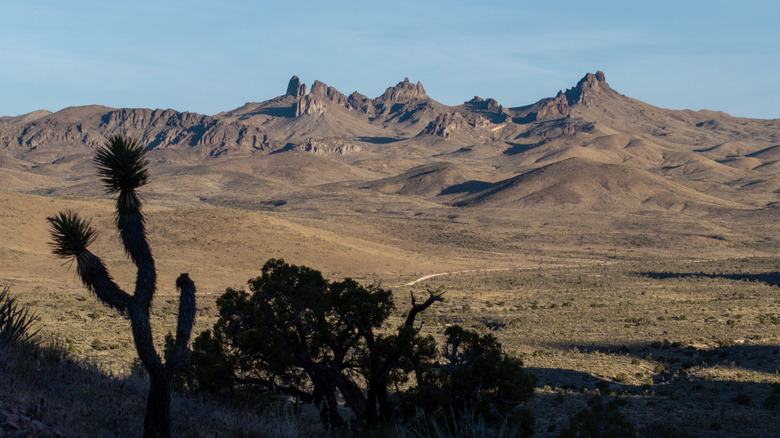
California's best national parks and national monuments are world-famous. Destinations like Death Valley, Yosemite, Joshua Tree, and Redwood National Park roll off the tongue when discussing great outdoor adventure spots in the Golden State, and it is no surprise that California is seen as one of the best places to hike and camp in the U.S. But if you are looking for a weekend road trip to spend time under canvas, away from the hustle and bustle of city life, the most famous national parks and national monuments aren't the only option. There are plenty of lesser-known spots that are worth exploring, from underrated state parks filled with redwoods to amazing mountainous national monuments crisscrossed with hiking trails. For anyone looking for a remote camping experience, Castle Mountains National Monument is an overlooked, secluded, and bleakly beautiful spot.
The monument is located right on the edge of the Mojave National Preserve, close to the Nevada state border, and surrounded by the arid splendor of the Mojave Desert. This desert landscape is only accessible by dirt roads and requires a high-clearance, four-wheel-drive vehicle, and there is no public transport access to the park. You won't find too many people here; the national reserve only has 24 ratings on Google Reviews at the time of writing.
You can reach the park from Nevada State Road 164 or Lanfair Road in the Mojave National Preserve. It is roughly a 90-minute drive from Harry Reid International Airport (LAS) in Las Vegas, Nevada.
Castle Mountains National Monument: A desert wilderness filled with life
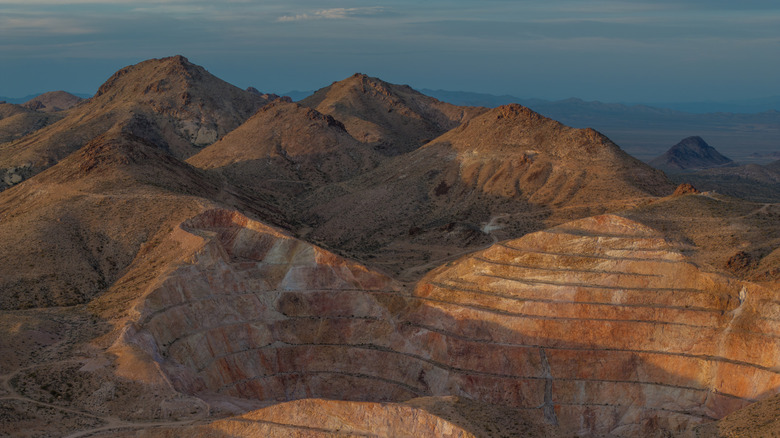
The stunning beauty of Castle Mountains National Monument has to be seen to be believed. Covering nearly 21,000 acres of the Mojave Desert, this rugged, otherworldly landscape is an underrated gem. It boasts some magnificent Joshua tree forests, and camping and hiking in this excellent wilderness offers unbeatable views that rival those of Joshua Tree National Park. There are no marked trails, and walkers can wander freely among the cacti and rough brush of twisted juniper and Joshua trees, but this means you need some level of orientation skills.
The highlight of the park is Castle Peaks, a dramatic cluster of towering volcanic spires that erupt from the desert like the craggy walls of some ancient alien castle. But the rest of the national monument is pretty impressive, too. Desert wildflowers bloom in abundance after spring rains, and despite its somewhat barren appearance, Castle Mountains National Monument is filled with wildlife, from desert bighorn sheep and mountain lions to golden eagles and prairie falcons.
One surprising element of Castle Mountains National Monument is its rich history of human habitation, considering how challenging the environment seems at first glance. The town of Hart, a gold-mining community, was founded in 1908 and abandoned just seven years later, and exploring the remaining structures shows just how difficult survival out here is. But there are several archaeological sites and rock art in the park that show that Native American communities, specifically the Fort Mojave and Chemehuevi Tribes, have lived and traveled in the region for thousands of years.
Planning a visit Castle Mountains National Monument
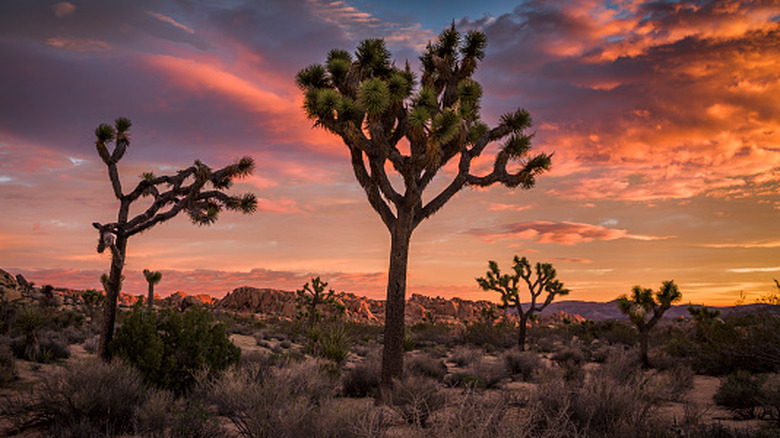
While there aren't any marked trails or visitor centers, there are several official campgrounds, which make camping in the park a fantastic experience. It is the ideal way to immerse yourself in the landscape and discover the unique serenity and solitude, rare natural soundscapes, and dark night skies that make this place such a wonderful jewel. Mid-Hills Campground and Hole-in-the-Wall Campground offer space for 8 people and 2 vehicles on a first-come, first-served basis, while Black Canyon Equestrian and Group Campground is larger, but requires booking in advance. Dispersed camping is also permitted throughout the national monument, as long as visitors adhere to Leave No Trace principles.
As a desert landscape, Castle Mountains National Monument experiences extremes of temperature, with freezing temperatures in the winter and scorching heat in the summer. As a result, the best time of the year to visit is in spring or fall, when the weather is milder, and you can explore in more comfort.
There are no amenities within the park, so you will need to bring plenty of water, food, and quality hiking gear, including boots and warm clothes. The national monument is free to enter, unlike many national parks, so you won't need cash for anything.