

These Pristine Caribbean Beaches Offer Spectacular Reef Snorkeling Without A Boat
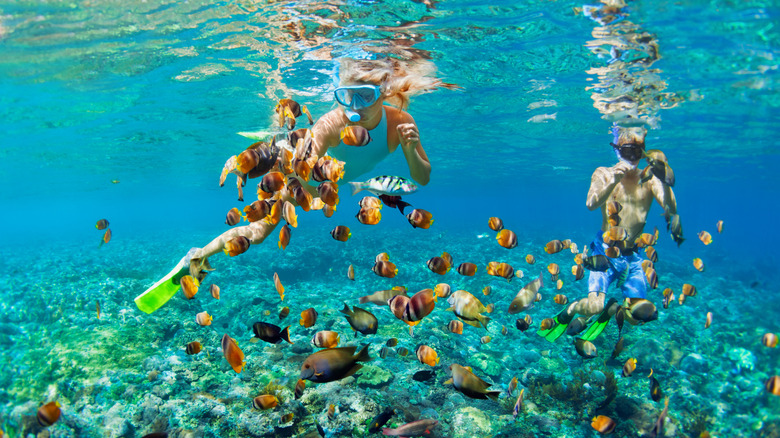
The Caribbean's incredible beaches grant access to clear water, thriving coral reefs, and colorful sea life. It's no surprise, then, that the region is home to some of the world's best snorkeling spots – some of which are located right off a beach, making exploring the underwater world easy. Off-shore snorkeling means that you don't need a boat, just fins, a mask, a swimsuit, and a healthy sense of adventure — along with solid swimming skills.
From Antigua to Honduras, Dominica to Bonaire, there are dozens of beaches that offer spectacular reef snorkeling without the need for a boat. Many are well-discovered, and some are under-the-radar beaches you need to visit; some are right in town, while others require a car. A few have equipment rentals and other amenities; others don't have an umbrella in sight. Whatever the beach, though, you'll be guaranteed pristine reefs, clean water, unique wildlife, and plenty of that Caribbean sun.
Deep Bay, Antigua and Barbuda
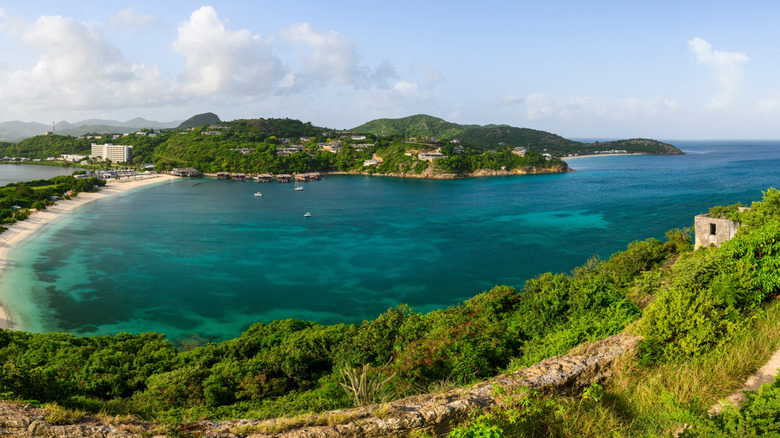
Antigua, part of the nation of Antigua and Barbuda, makes for a stunning Caribbean beach vacation. It claims to have 365 beaches — one for each day of the year — and with its sheltered coves and bright reefs, the island is a favorite spot for snorkelers.
Antigua's protected west side has the island's most popular beaches, such as Deep Bay, which is known for its unspoilt sands, horseshoe-shaped bay, and fort ruins that stand sentinel. It also happens to be a highlight for snorkelers, thanks to its calm water and reef access right from the shore. There's even a shipwreck that sank offshore in 1905 that snorkelers can spot — usually reserved for divers. However, it's important to note that snorkelers and novice divers should only view the shipwreck from the outside; if you're dying to explore inside, you'll need a PADI Wreck Driver certificate.
Like all of Antigua's beaches, Deep Bay is open to the public and free to access. It's a 10-minute drive or taxi ride from the capital, St. John's. There are also limited bus options from West Bus Station Terminal; expect a 35-minute trip.
Playa Lagun, Curaçao
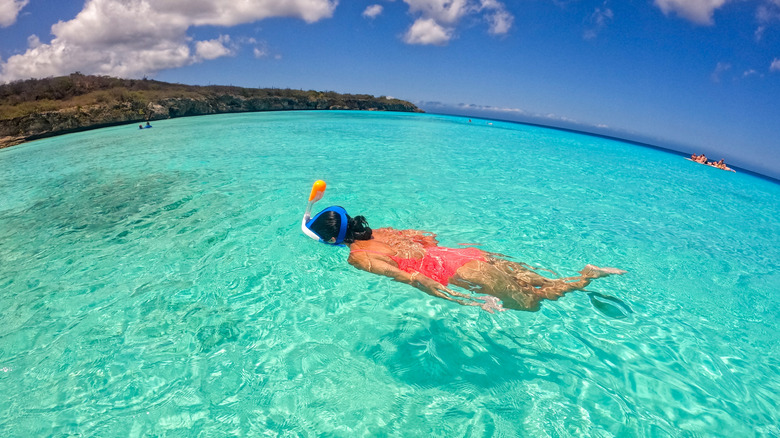
Curaçao is a budget-friendly Caribbean destination which is great for outdoor adventures, including snorkeling. The best snorkeling is on the island's southwestern edge, which has calm, clear water. The idyllic beaches on its eastern side are exposed to trade winds and stronger waves — not ideal for snorkeling.
Playa Lagun stands out from the crowd as it's one of the island's narrowest beaches. The beach is free and so is parking, but there are few amenities; take your gear and water shoes, as the rocky entrance into the water tends to have sea urchins. The water is calm enough for inexperienced snorkelers, but even experts will appreciate the plethora of turtles, parrotfish, moray eels, and healthy coral that's within an easy swim from the shore. Make the most of Playa Lagun by heading there in the morning for the best chance to spot turtles; afterward, hike up to Bahia Beach Bar for stellar views.
Playa Lagun is approximately 45 minutes northwest of Willemstad — Curaçao's colorful, historic capital — and about 35 minutes' drive northwest of Curaçao International Airport.
West Bay Beach, Honduras
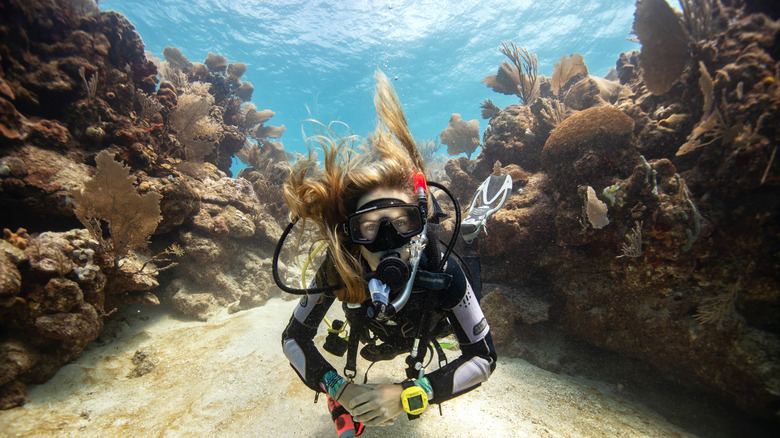
The Mesoamerican Reef stretches 700 miles along Central America, from Mexico to Honduras' Bay Islands. It is one of the world's most beautiful coral reefs and the second largest after Australia's Great Barrier Reef.
Head to Roatán Island to snorkel right off the coast of West Bay Beach, which is at the southern end of the Mesoamerican Reef. This perfect Honduran beach has direct access to 500 types of fish, 60 species of coral, turtles and rays, and whale sharks, especially in April.
Thanks to its sandy entry, gin-clear water, and weak current, West Bay Beach can get busy. Luckily, Roatán's year-round tropical weather means you can still snorkel "off-season" (May to November) when you may have the reef to yourself. Otherwise, go early for more visibility and fewer people. To access West Bay Beach, expect a 25-minute taxi ride or drive from Juan Manuel Gálvez International Airport in Coxen Hole.
Smith's Reef, Turks and Caicos
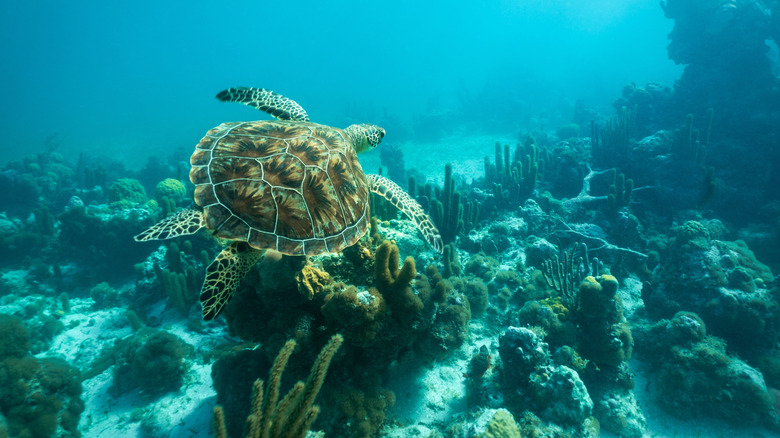
The third largest barrier reef system in the world also lies in the Caribbean. Turks and Caicos' vibrant barrier reef — which is known as the Florida Keys Reef Tract — is a top snorkeling destination. To dive off-shore, head to Smith's Reef in Providenciales, the country's main tourist hub. Strap on your snorkeling gear or rent some at Turtle Cove Marina, then head to the beach to explore the lively, variegated reef — avoiding the boat traffic by the marina.
The beach at Smith's Reef is free. There are three main access points for snorkeling: West, Central, and East. Consider wading in from the west as the current naturally takes you eastward down the beach, past the rest of the snorkeling opportunities. Look out for green turtles and rays feeding in the seagrass beds.
Howard Hamilton Providenciales International Airport in Providenciales is 10 to 15 minutes' drive west of Smith's Reef.
Champagne Reef, Dominica
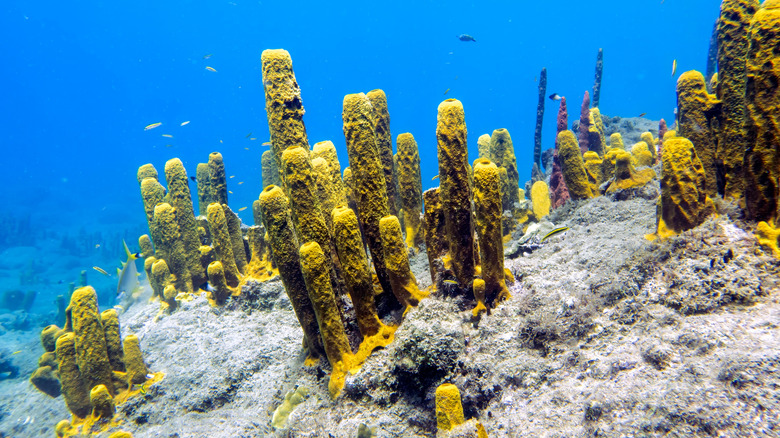
Champagne Reef off Dominica is among the world's best places for a snorkeling adventure – it feels as if you're snorkeling in your own glass of bubbly. Geothermal air under the ocean floor escapes through cracks, forming warm bubbles that float past colorful fish to the surface. There are few places where that occurs, folks, making "Nature Island" worth the trip.
Even better, Champagne Reef is accessible directly from the shore in the protected Soufriere-Scott's Head Marine Reserve. The accompanying black-sand Champagne Beach is approximately 20 minutes south of Dominica's capital, Roseau. Most of the reef is shallow enough for snorkelers, but if you have a hankering to follow those bubbles deeper, it really is time for that PADI certification.