

Colorado's Former Weapons Plant Is Now A 15,000-Acre Refuge With A Free 11-Mile Wildlife Drive
When factories, power plants, or water treatment facilities are shut down, they often sit empty for decades as a symbol of post-industrial decay, without a purpose but not worth demolishing. However, the last few years have seen a boom in what is known as adaptive reuse, developing historic buildings and unused spaces for new purposes, rather than destroying them or leaving them to crumble. Reusing old industrial buildings is pretty popular these days, with iconic buildings like Battersea Power Station in London, England, La Piscine in Lille, France, and the stunning train station hotel in Missouri's St. Louis Union Station all reimagining historic spaces and breathing new life into them.
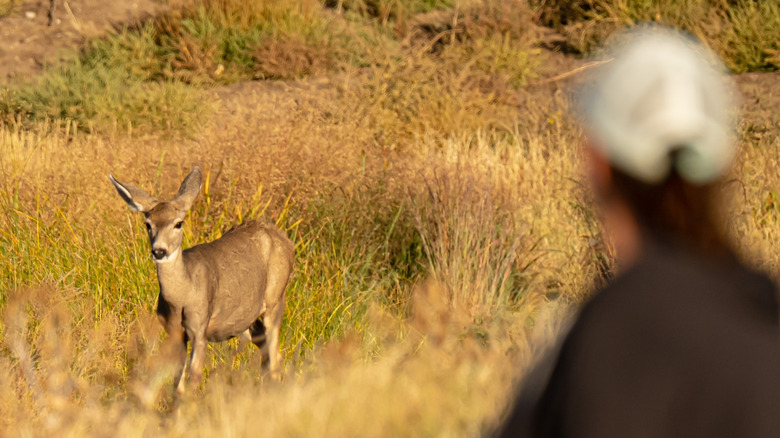
One of the most interesting examples of adaptive reuse in the United States is situated just outside Denver, Colorado. The Rocky Mountain Arsenal National Wildlife Refuge was once a chemical weapons plant for the U.S. Army, which has been transformed into an environmental reserve on the outskirts of Denver and now provides an extraordinary sanctuary for deer, coyotes, prairie dogs, black-footed ferrets, and a herd of free-roaming bison.
The Rocky Mountain Arsenal National Wildlife Refuge is just 10 minutes northeast of downtown Denver, stretching across 15,000 acres of ex-industrial landscape between the city and Denver International Airport (DEN), the most sustainable airport in America. It is one of the largest urban wildlife reserves in the country and also one of the most accessible. The park is open from sunrise to sunset almost every day of the year, with some exceptions on major national holidays.
An American safari in sight of the city
The Rocky Mountain Arsenal was built after the attack on Pearl Harbor during World War II to produce chemical weapons. It continued to produce agricultural chemicals after the war ended and was also used to make weapons throughout the Cold War. When bald eagles were discovered nesting here in the late 1980s, the site was handed over to the U.S. Fish and Wildlife Service, and following an intensive environmental cleanup, Rocky Mountain Arsenal National Wildlife Refuge was designated in 1992. However, it wasn't until 2004 that the site was finally fit for purpose and fully transitioned to become a National Wildlife Refuge.
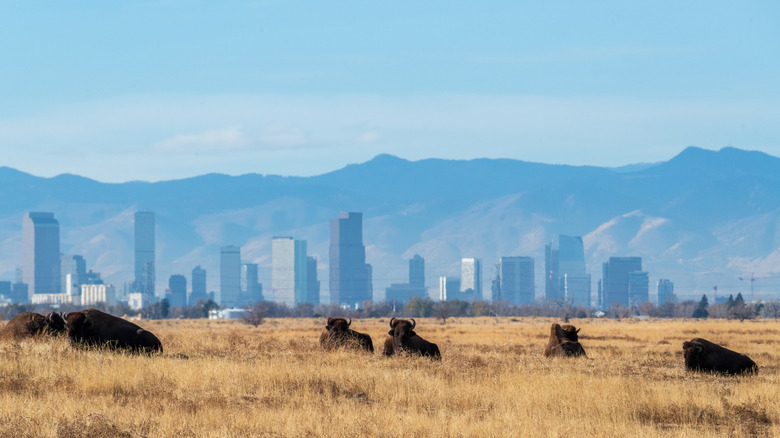
These days, the main highlight of the Refuge is its spectacular 11-mile wildlife drive. Colorado boasts a ton of magnificent open spaces and great opportunities for wildlife watching, but it is rare that you can essentially go on safari within driving distance of a major city center. The route takes you through open prairie, past fields of abundant wildflowers, and around picturesque lakes and rivers. It is the ideal way to see the herd of bison that was reintroduced to the area in 2007, and it offers fantastic opportunities for bird watchers as well. The views of the open spaces of the Refuge with the city skyline in the background are unbeatable.
Although the Refuge is definitely best seen by car, it is also a great place to explore on foot, with around 20 miles of hiking trails to explore. Heading out on foot gives you the chance to see the smaller creatures that call the Refuge home, and the routes are well-marked and well-maintained. Don't miss the Discovery Trail, which offers visitors the chance to see black-footed ferrets, one of the most endangered mammals in North America.
Rocky Mountain Arsenal National Wildlife Refuge is open for year-round recreation
The Rocky Mountain Arsenal National Wildlife Refuge offers an array of other exciting outdoor activities for visitors to enjoy. Catch-and-release fishing is permitted on Lake Mary and Lake Ladora from April to November, and anglers can expect to land pike, bass, bluegill, catfish, crappie, and yellow perch. Many of the trails are great for biking as well as hiking, and exploring the park by bicycle is a great way to get around and see as much of the site as possible while getting closer to the natural world than you would inside a car.
The site boasts an archery range with 15 lanes, so families can bring their bows and arrows and try their hand at this exciting outdoor sport. For families with younger kids, there are a number of excellent, free, ranger-led nature programs where kids can earn their Junior Ranger badge and learn fun outdoor skills.
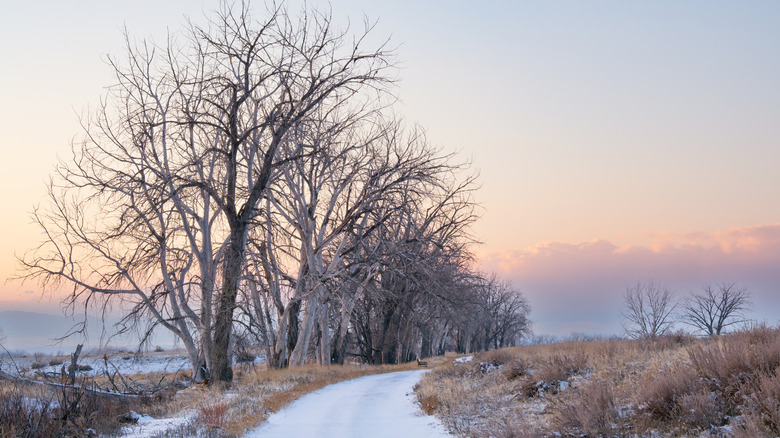
Denver is a popular Western winter destination, and the Refuge is a great place to visit in the colder months. When the site is covered by snow, it's time to strap on snowshoes and get a different perspective on the Refuge's trails. Cross-country skiing is also permitted, and gliding across fresh powder in this gorgeous, open expanse of nature while taking in the contrast of Denver's cityscape in the background is a delightfully unusual experience.