

New Jersey's Former Army Base Is Now Part Of A Vast Recreation Area With A Scenic Lighthouse
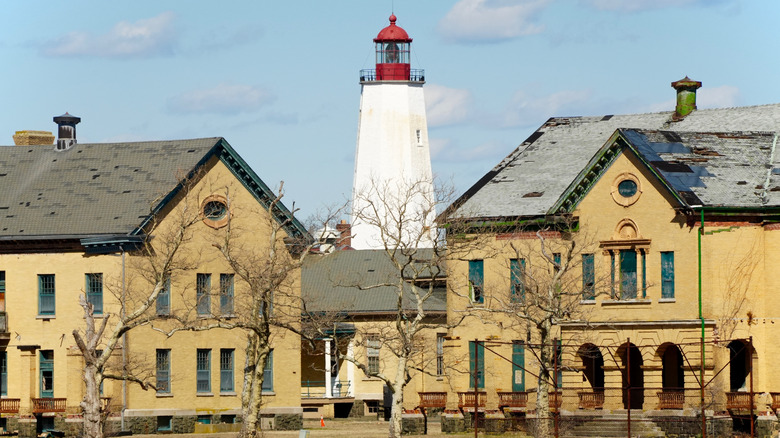
An hour and a half drive outside of New York City, New Jersey's Sandy Hook peninsula combines centuries-old military history with long beaches, scenic hiking paths, and the country's oldest continually operating lighthouse. Sandy Hook, in Monmouth County, New Jersey, is part of the Gateway National Recreation Area and is home to the Fort Hancock and Sandy Hook Proving Ground Historical Landmark, a destination loved by nature enthusiasts and history buffs alike. Easily reachable from lower Manhattan, the oldest part of New York City, visitors can explore a former U.S. Army post, learn about its historic military gun batteries, and ascend the steps of the Sandy Hook Lighthouse.
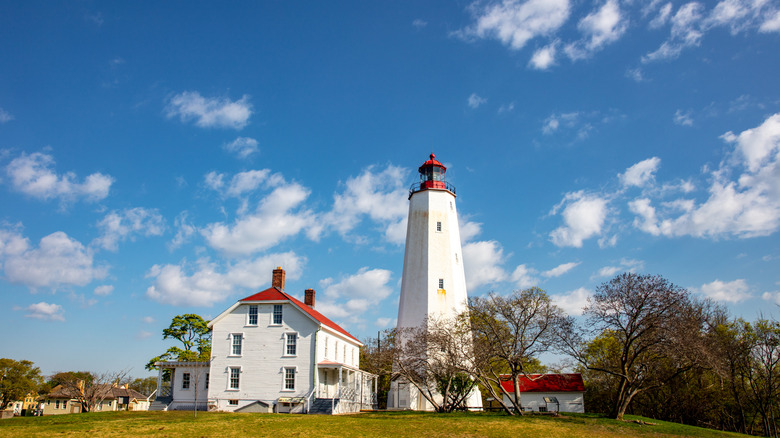
The Sandy Hook peninsula has been an integral part of defending New York Harbor since colonial times, with its iconic white-and-red lighthouse first built in 1764. The British took control of the peninsula in 1776 and held it until the American Revolution ended in 1783. The peninsula was turned over to the United States government for military use in 1806. The U.S. Army built a series of defenses throughout the 19th century, including an unfinished granite fortification that began construction in 1859, until the permanent, then-named Fortifications at Sandy Hook began construction in 1894.
In 1874, the Sandy Hook Proving Ground was established, where the military began testing and experimenting with new weapons before they went into official use. After the Fortifications at Sandy Hook were renamed Fort Hancock in 1895, the fort and proving ground coexisted on the Sandy Hook peninsula until the proving ground was officially closed in 1919.
Experiencing history at Fort Hancock
While the Sandy Hook Proving Ground closed in 1919, Fort Hancock remained active well into the 20th century. In World War II, more than 7,000 soldiers, including members of the Women's Army Corps as well as African American soldiers before the army was desegregated, lived at Fort Hancock, providing support to New York Harbor's coastal defense. As warfare evolved during the Cold War, Fort Hancock's anti-aircraft guns were removed to make room for long-range missiles. In 1974, after nearly 200 years of military activity on Sandy Hook, Fort Hancock was officially deactivated and opened to the public as part of the Sandy Hook section (or "unit") of the Gateway National Recreation Area.
Like America's first national historical park in Morristown, visitors to Sandy Hook peninsula have a chance to step back in time with free guided walking tours of most of what Fort Hancock has to offer, including the Fort Hancock Museum, Sandy Hook Lighthouse, the Potter and Granger Batteries, and more. Check the site's calendar listings for the various tours. You can also pick up a brochure at the Sandy Hook Visitor Center for a self-guided tour that visits up to 39 historic stops, including the Officer's Row, Post Theater, the World War II Victory Garden, and the Mess Hall.
The lighthouse grounds are open year-round from 6 a.m. to 9 p.m., though you'll need to take a free, ranger-led tour to climb the lighthouse. Available Friday through Monday from 1 p.m. to 3:30 p.m., you can sign up for a tour upon arrival to the visitor center. Just make sure you go early, as tours are limited to eight people and fill up fast in the summer.
Other activities at Sandy Hook
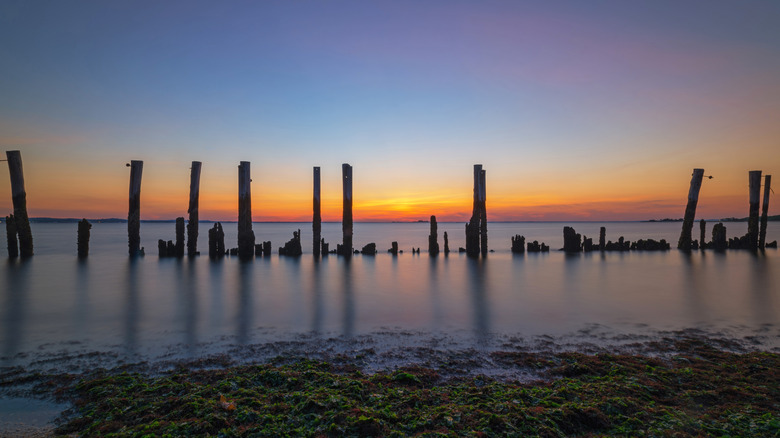
Created in 1972 and managed by the National Park Service, Gateway National Recreation Area encompasses 27,000 acres across three New York City boroughs and parts of northern New Jersey, including the Sandy Hook Unit. Fort Hancock might serve as Sandy Hook's historic centerpiece, but there is plenty more to do on this 6-mile peninsula. Similar to New Jersey's underrated Island Beach State Park, Sandy Hook is a barrier beach peninsula with sandy shores and endless water activities. Over 2 million beachgoers choose Sandy Hook every year as an escape from the tristate area's summer heat and humidity.
With views of the New York Skyline, Sandy Hook is a beautiful place for swimming and relaxing on the beach. Many beaches even allow you to bring your furry friends, making Sandy Hook popular among dog owners. If you're interested in boating, Sandy Hook Kayaks rents kayaks and paddleboards starting at $25 for one hour. Sandy Hook also has a 7-mile multi-use path, open year-round for walking, running, and biking, plus three hiking trails, and a short boardwalk. Its three trails offer diverse ways to explore the peninsula, leading you along long stretches of beach, through coastal forests, and past historical landmarks, like Fort Hancock's missile launch site.
Located at the tip of the Jersey Shore, the greater Sandy Hook peninsula is an easy ferry ride away from New York City's Financial District. The scenic ride, which departs from the Battery Maritime Building during the summer months only, takes about an hour, but driving is the most direct way to get there. If you plan to visit by car, parking is $20 in summer months.