

Forget The Crowds, This Less-Visited California Lake Is An Outdoor Gem With Sapphire Waters And High-Alpine Hiking
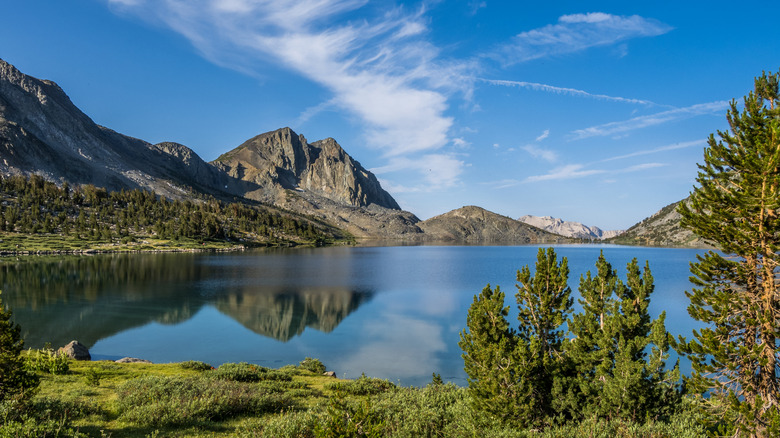
There's no shortage of stunning lakes to visit in California, but that doesn't mean you'll always get to enjoy them in relative or total silence. Many of the state's most popular lakes, like Lake Tahoe in the north and Big Bear Lake in the south, attract millions of visitors each year. Not exactly the most serene getaway. Luckily, California is also home to some pretty remote destinations where you can truly get away from the crowds. Cue Duck Lake, an absolutely pristine alpine lake located in the Inyo National Forest and John Muir Wilderness.
Alpine lakes, by definition, are lakes that lie above or near the tree line of a mountainous region. The elevated geographical position gives these lakes the ability to stay relatively untouched from natural dust and pollutants. And because they are at such high elevations, they also tend to lack direct vehicle access, keeping tourism to a minimum. Despite its proximity to the tourist-friendly Mammoth Lakes Basin, Duck Lake's remoteness means it is a less visited destination you should add to your travel list.
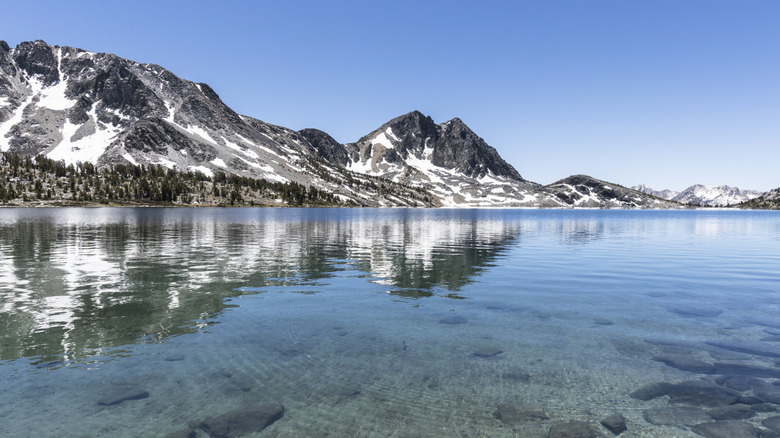
Duck Lake is impressive in size, but if its 222 acres of crystalline waters don't take your breath away, the altitude might. At nearly 10,500 feet, the area is almost otherworldly, with only another thousand or so feet of ridges and peaks standing between you and the sky. If you're feeling able and up to the challenge of a lengthy, scenic hike (which, depending on the trail, can take anywhere from five-to-ten hours), here is what you have to look forward to and how to prepare.
How to prepare for visiting Duck Lake
If you're visiting from afar, fly into Mammoth Yosemite Airport, about a half hour drive northeast of Duck Lake, or Eastern Sierra Regional Airport, an hour southeast of your destination. While it's possible to take shuttles and taxis into nearby towns, consider just renting an all-wheel or four-wheel drive vehicle outright, which handle best when driving up inclines and in more challenging conditions. Drive through Lake Mary Road and get to either Mammoth Lakes or Bishop (for overnight accommodations) or straight to Duck Pass trailhead.
Speaking of accommodations, hotels in the Mammoth Lakes Basin range between $200-500 a night, with an average of about $300 per night. More affordable accommodations can be found in nearby Bishop, with hotels and motels ballparking at around $150 a night. Camping at the Coldwater Creek Campground, however, is also an option with plenty of parking and easy access to Duck Pass Trailhead. Alternately, obtaining a wilderness permit allows you to camp right along the trail, save for the Duck Lake outlet. Due to snowy conditions in the winter that can last into springtime, you'll want to save your visit for the summer and early fall (roughly May through November).
Reviewers on AllTrails have suggested packing the best hiking boots you can for rocky terrain, lots of water and food, as well as bug repellant. Some suggest a swim suit as well for the summer months (though the lake is still cold), and layers for one the weather gets chillier. Other potentially useful items reviewers have recommended include hiking poles (for navigating uneven terrain), as well as bear canisters and other precautions for added safety. Costco sells wildlife safety essentials for protection on your camping trip so you can be prepared for whatever you may or may not encounter.
Why a trip to Duck Lake will be worth it
Whether you take Duck Pass, the Emerald Lake Trail, or the more challenging Mammoth Crest Trail to Duck Lake, those who have made the trek all say it's absolutely worth it. It's not only Duck Lake that draws folks in, but the actual hike to and from the destination. If you opt for the more approachable Duck Pass trail, the journey begins with time well-spent among the shady pines until you reach Arrowhead Lake — the first of many lakes you'll see. Each lake is a little bit different, but distinctly beautiful with see-thru waters you can cool off in along the way.
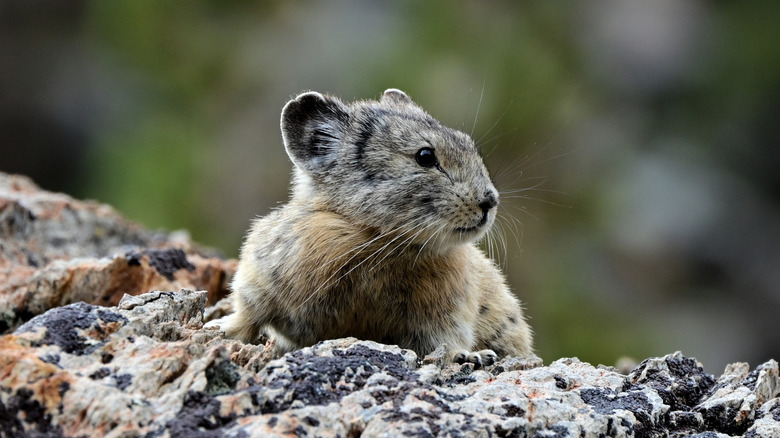
If picturesque wildflowers along the trails and relative silence aren't enough to convince you, be aware that you'll also have the chance to see some adorable creatures as you approach your destination. Or rather, you'll probably hear them first. Pikas make their home in alpine terrain, frequently making high-pitched noises signaling everything from mating to warning of potential dangers. These sweet little mammals have big, round ears and small, brownish-black furry bodies, and are just slightly larger than the palm of your hand. One of the lakes on the trail is even named after the little critters.
It's hard to beat an outdoor gem like Duck Lake when it comes to a challenging-yet-rewarding hike sans crowds. If you're local to the area, pack a picnic for a delightfully peaceful day trip. And if you're coming in from afar, make it the crowning final jewel of a longer trip to Mammoth Lakess, which offers small town vibes but plenty of adventure.