

Upstate New York's Iconic Trail Has Been Ranked One Of The Top 100 'Hikes Of A Lifetime'
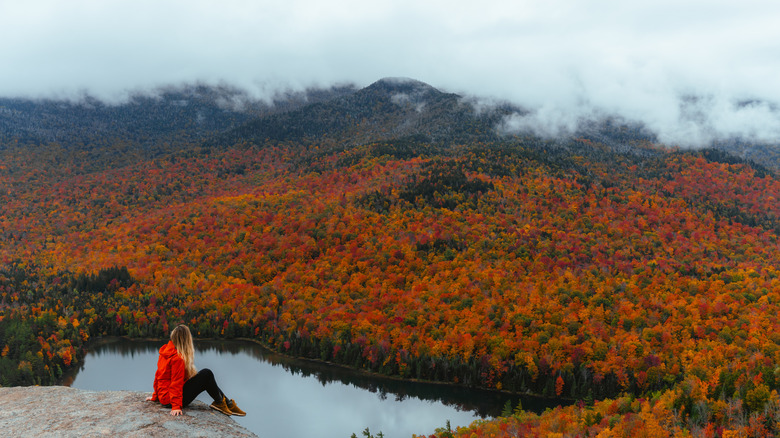
The high peaks of the Adirondack Mountains in upstate New York are filled with more than 2,000 miles of magnificent hiking trails. Home to all of New York State's tallest mountains, it is a glorious area of beautiful wilderness, spanning an area bigger than Yosemite, Yellowstone, Grand Canyon, and Great Smoky Mountains National Parks put together. The Adirondack Park covers 6 million acres, an area larger than the neighboring state of Vermont, and boasts wonderful forests, waterfalls, rolling hills, perilous summits, and one of the best lakes on the East Coast.
Although it is well known as a hiking destination, the Adirondack trails don't always get mentioned in the same breath as more celebrated routes like the Appalachian Trail, the John Muir Trail, Angels Landing, or the Skyline Trail. However, one iconic trail in the Adirondacks is finally getting the plaudits it deserves. The Algonquin Trail in the MacIntyre Range in upstate New York's High Peaks Wilderness has been named by National Geographic (via Secret NYC) as one of the best scenic trails in the U.S.
The Algonquin Trail is a 10.3-mile out-and-back route near Lake Placid in upstate New York. It is roughly two hours drive from Montreal, across the border in Canada, two and a half hours drive to Albany, NY, and three and a half hours drive from Syracuse, NY. The nearest international airports are Albany (ALB), Burlington, Vermont (BTV), and Montreal (YUL), all approximately two hours away by car.
A bucket-list trail with impressive summits
While the Algonquin Trail has been a local favorite for years, its recent fame comes from being featured in a new book, "100 Hikes of a Lifetime U.S.A.," by National Geographic Explorer Stephanie Pearson. This book highlights the trails across the country that should be on every passionate hiker's bucket list, including California's Lost Coast Trail, the American Discovery Trail, the Guadalupe Peak Trail, and the Adirondacks' own Algonquin Trail.
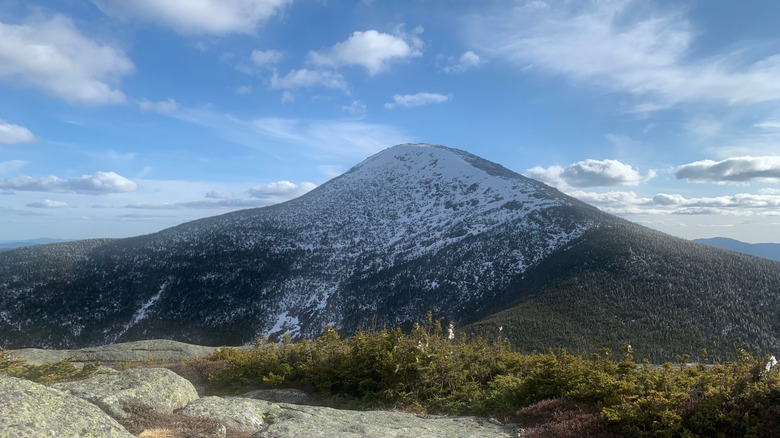
The Algonquin Trail is a challenging route, taking in three of the four peaks that make up the MacIntyre range: the 4,580-foot Wright Peak, the 5,114-foot Algonquin Peak (the second-highest mountain in New York State), and the 4,840-foot Iroquois Peak. The trail takes between 8 and 10 hours to complete, and is best done in the drier months between July and October.
The trail is steeped in history. It was first founded and mapped by legendary forester, mountain walker, and founder of the Wilderness Society, Bob Marshall, who was the first person to reach the summit of all 46 High Peaks of the Adirondacks. It also offers walkers the chance to see debris from a ruined WWII-era B-47E strategic bomber, which crashed just off the path in 1962, on the first section of the trail climbing up to Wright Peak. The trail also boasts some of the best views in the state, including glorious vistas from the top of Algonquin Peak, and a magnificent 360-degree panorama of the Adirondack High Peaks from Iroquois Peak.
Winter sports and upstate New York charm
Part of the charm of the Algonquin Trail is where it is situated. While the trail itself might only appeal to serious hikers, the wilderness regions around Lake Placid are a fantastic destination for pretty much any traveler, with a wide variety of things to see and do.
Lake Placid is a New York State gem, a former Winter Olympics village filled with upstate charm, and one of the most romantic getaway destinations in upstate New York. There are plenty of delightful boutiques and cozy cafes, as well as some excellent restaurants and craft breweries. The Lake Placid Olympic Museum is worth a look, with some interesting exhibits including team uniforms and medals.
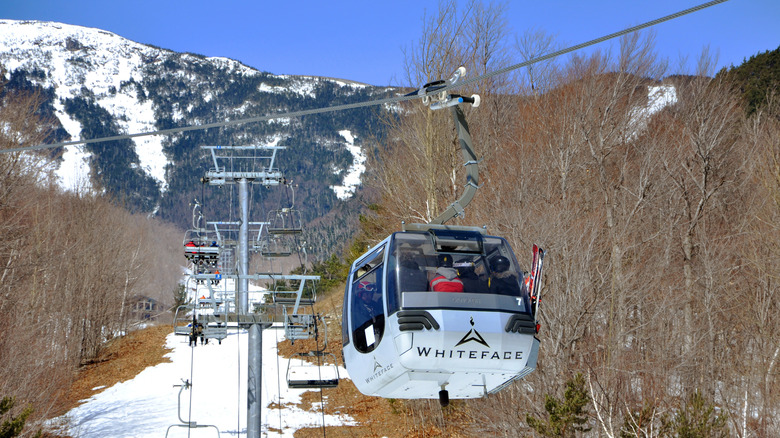
Mirror Lake is wonderfully picturesque, while Lake Placid itself offers great opportunities for kayaking, canoeing, and even whitewater rafting on the mountain rivers that feed it. The region is also famous as a winter sports destination — having held two Winter Olympics here, in 1932 and 1980 — with some fantastic resorts and slopes, including Whiteface Mountain, the greatest vertical drop east of the Rockies.