
The U.S. State With The Most Lakes By Far Is A Scenic Paradise For Kayakers
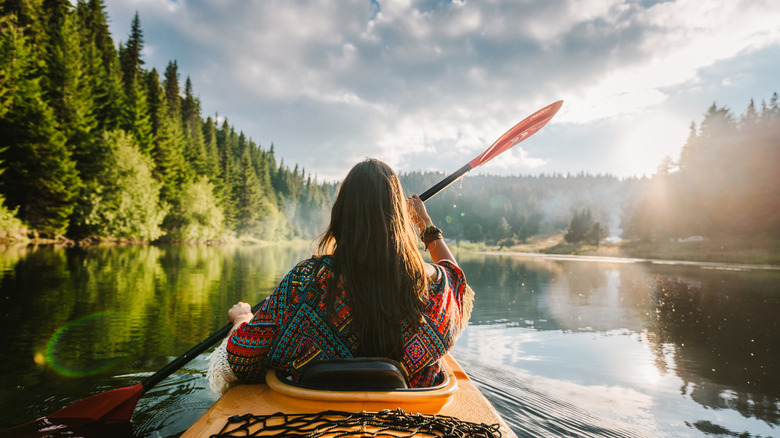
Alaska is truly "The Last Frontier," in part because the sheer amount of space makes it difficult to explore. At 600,000 square miles, all of Texas, California, and Montana could fit into Alaska's boundaries, with room to spare. Even its adventures are outsize, and that's especially true for kayakers.
While there's plenty of sea kayaking to be had along Alaska's 6,600-plus mile coastline, paddlers shouldn't sleep on its lakes. In fact, Alaska has the most lakes of any other U.S. state, with a whopping 3 million. In second place is Kansas, with a respectable 120,000. According to the Alaska Department of Fish and Game, the state has 40% of the country's surface water thanks to said lakes (and approximately 12,000 rivers). So you can add kayaking to the many reasons why Alaska should be on your bucket list.
Alaska's lakes are scattered across the state, in places first-time visitors in particular shouldn't miss. Many of them are in Katmai National Park & Preserve, which has more lakes than any other U.S. national park.
Alaska: 3 million lakes and more
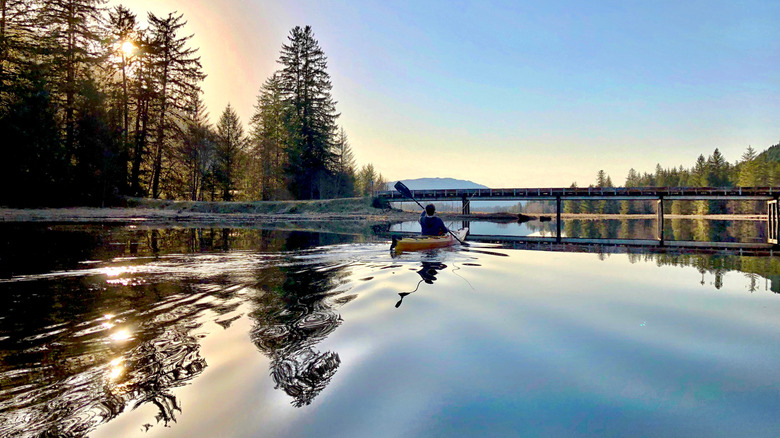
The exact number of Alaska's bodies of water varies, depending on lake metrics. Apparently categorizing a lake is not an exact science. However, the Alaska Department of Fish & Game notes that the state's 3 million lakes are all "greater than five acres." Anything below that is classified as a pond (and Alaska has a lot of those, too). Only about 3,100 of the state's 3 million lakes are named, however, which again gives you an idea of how wild Alaska is.
If you have the impression that with all of these lakes and coastline, Alaska must be nothing but water, trees, mountains, and cold beaches, well, you're not totally wrong. It has a lot of space. And in this great expanse, several unique conditions happened to form all of these lakes that are so ideal for kayaking.
Alaska's myriad lakes were carved millions of years ago by glaciers retreating or expanding throughout the landscape – and because they're rapidly melting, Alaska is essentially forming its own lake country. Patches of melted permafrost are also now lakes, many of which are growing. These expanding lakes will certainly change the state's landscape, but not just in negative ways: They'll bring more lush habitat and more kayaking acreage, for example.
The best lakes in Alaska for kayaking
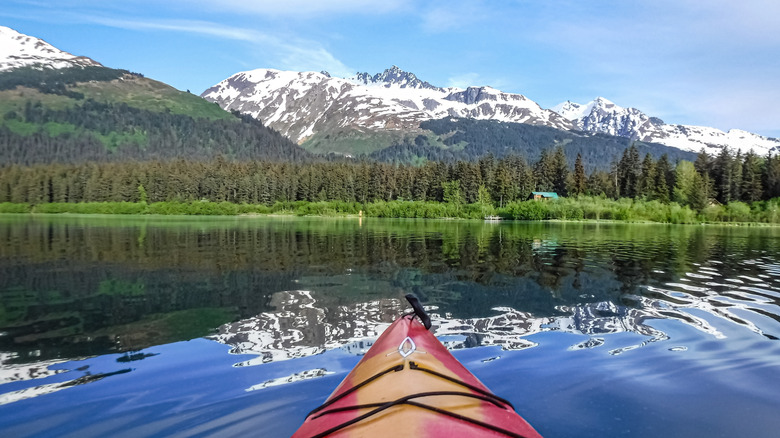
A few of Alaska's lakes stand out from the rest. A good portion are accessible from cities or other oft-visited spots such as national and state parks. These include Chugach, which is known for its stunning lake views. Eklutna Lake in Chugach is just an hour outside of Anchorage, Alaska's biggest city, and it's one of the state's best bodies of water for kayaking due to its glacial-fed H₂O. Take your own kayak or rent one in the park.
Mendenhall Glacier Lake, 12 miles north of the Alaskan capital of Juneau, is another prime kayaking spot. The Mendenhall Glacier looms over its namesake lake, regularly calving icebergs into the water as it retreats. This is quintessential Alaskan lake kayaking: paddling under glaciers and past waterfalls, wildlife, and icebergs. Use of the lake is highly regulated because of the threat of calving glaciers and black bears. Its cold water also makes it dangerous, so it's best to take a kayaking tour with an outfitter such as Alaska Travel Adventures.
Many travelers visit Alaska's incredible Denali National Park. However, Denali State Park, which is adjacent to it, is just as stunning. The latter is home to Byers Lake, where you can spot wildlife from bald eagles to moose. It also offers a family-friendly kayaking experience because of its calm waters, views of Mount McKinley, and on-site kayaking rentals for half or full days. It lies about an hour's drive north of the gateway settlement of Talkeetna.